
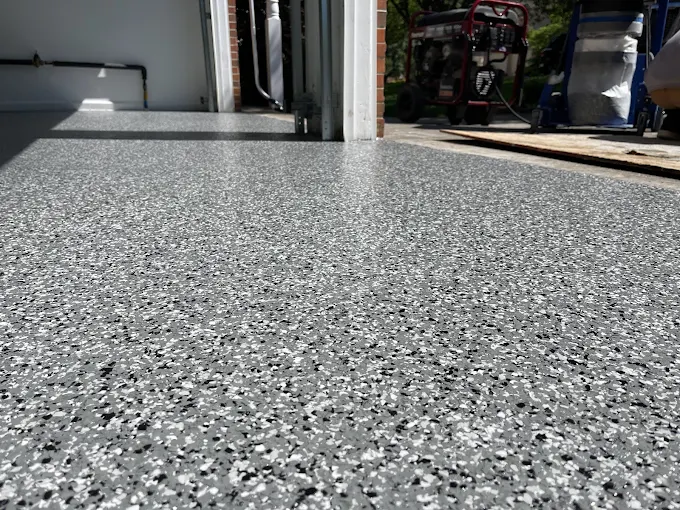
A High Gloss Epoxy Floor Coating Creates a Showroom-Ready Garage
A high gloss epoxy floor coating is a multi-layer, two-part resin system that seals concrete and leaves a smooth, reflective finish. It can turn a stained, dusty garage slab into a brighter, easier-to-clean space while adding protection against oil, road salt, moisture, and everyday wear.
For the best result, the concrete must be properly cleaned, repaired, and mechanically prepared before coating. The epoxy then needs to be mixed accurately, spread evenly, and allowed to cure under the right temperature and humidity conditions. The shine is not just about the product – it depends on the preparation beneath it.
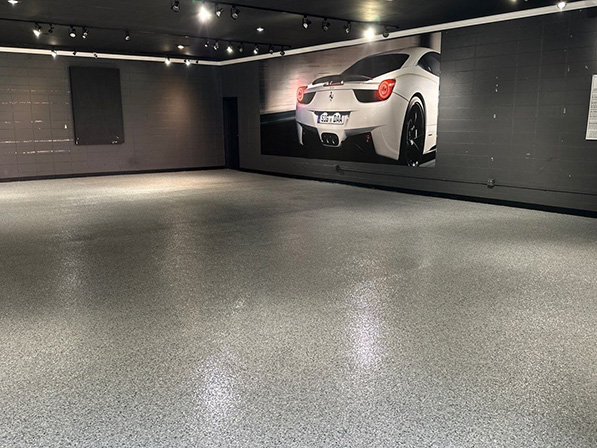
Unlike a basic clear epoxy that mainly preserves the look of bare concrete, a high-gloss system is designed to build a more uniform, light-reflecting surface. It can be clear, colored, or installed over decorative flakes, giving your garage a clean finish that looks more like a showroom than a storage space.
I’m Lev Golosov, and this guide will explain how high-gloss epoxy works, where it fits best, and what it takes to keep it looking great.
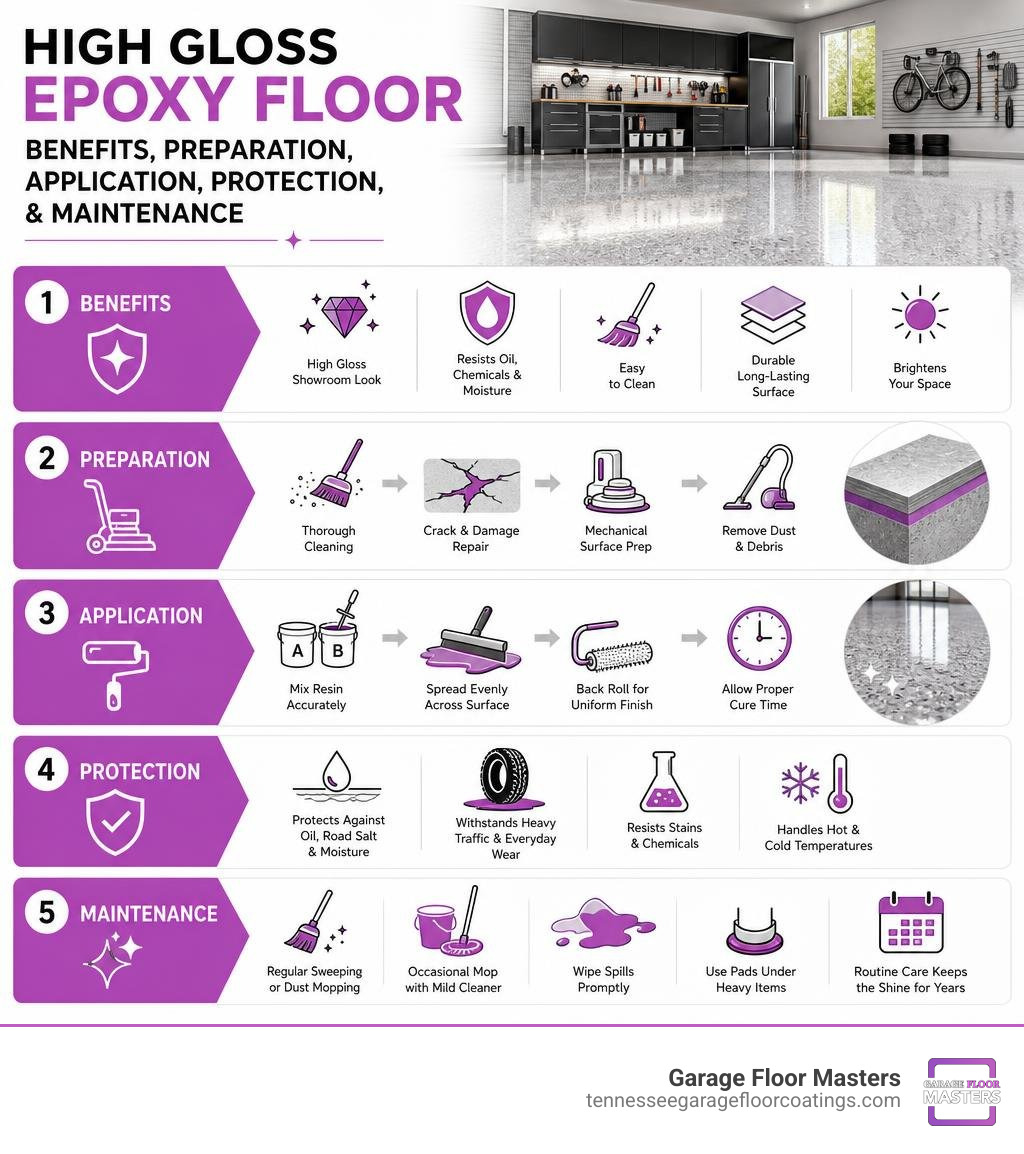
Simple high gloss epoxy floor coating word guide:
What Is a High Gloss Epoxy Floor Coating and How Does It Work?
A true high-gloss resin system creates a seamless, non-porous shield across your concrete substrate. When measured on a precision optical glossmeter, top-tier formulations achieve a gloss value of 99, which easily surpasses the standard 85% threshold required to be considered a genuine high-gloss finish.
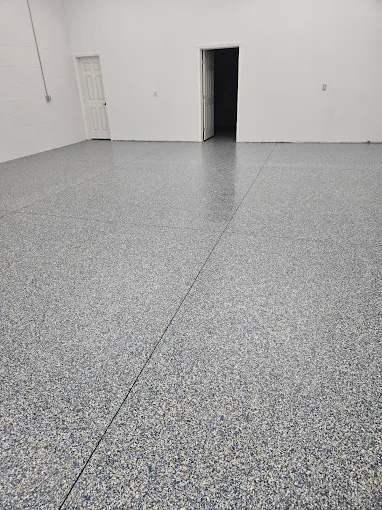
This finish works by converting liquid polymers into a solid, impenetrable plastic sheet through an exothermic chemical reaction. When the epoxy resin cross-links with the amine hardener, it bonds deep inside the open pores of the concrete slab. Instead of resting loosely on top like standard hardware-store paint, it becomes an integral part of the floor itself. To dive deeper into the basics of these systems, check out The Definitive Guide To Epoxy Garage Floor Coating.
High Gloss Epoxy vs. Standard Clear Epoxy
While both formulations protect concrete, their film builds, aesthetic properties, and surface leveling characteristics differ:
- Film Build and Depth: Standard clear epoxy provides a thin, protective layer that highlights the underlying concrete texture, aggregate, and minor imperfections. High-gloss epoxy systems utilize high-solids resins that build greater film thickness, producing a mirror-like finish that evens out surface textures.
- Light Reflectivity: Clear epoxy creates a clean, semi-reflective sheen. A high-gloss coating is engineered to maximize light bounce, significantly brightening interior spaces without requiring extra lighting fixtures.
- Self-Leveling Capability: High-gloss formulas flow and level across the surface to eliminate roller marks and surface orange-peel textures, ensuring a liquid-glass look.
For property owners exploring various coating formulations, exploring our broad range of epoxy floor coatings can help you select the exact level of sheen and build suited to your space.
The Chemistry: High-Solids Resins and Siloxane Hybrids
Modern industrial coatings have evolved far beyond standard low-solids floor paints. Premium setups use high-solids, two-part resin polymers, advanced water-based formulas, or hybrid epoxy-siloxane chemistries.
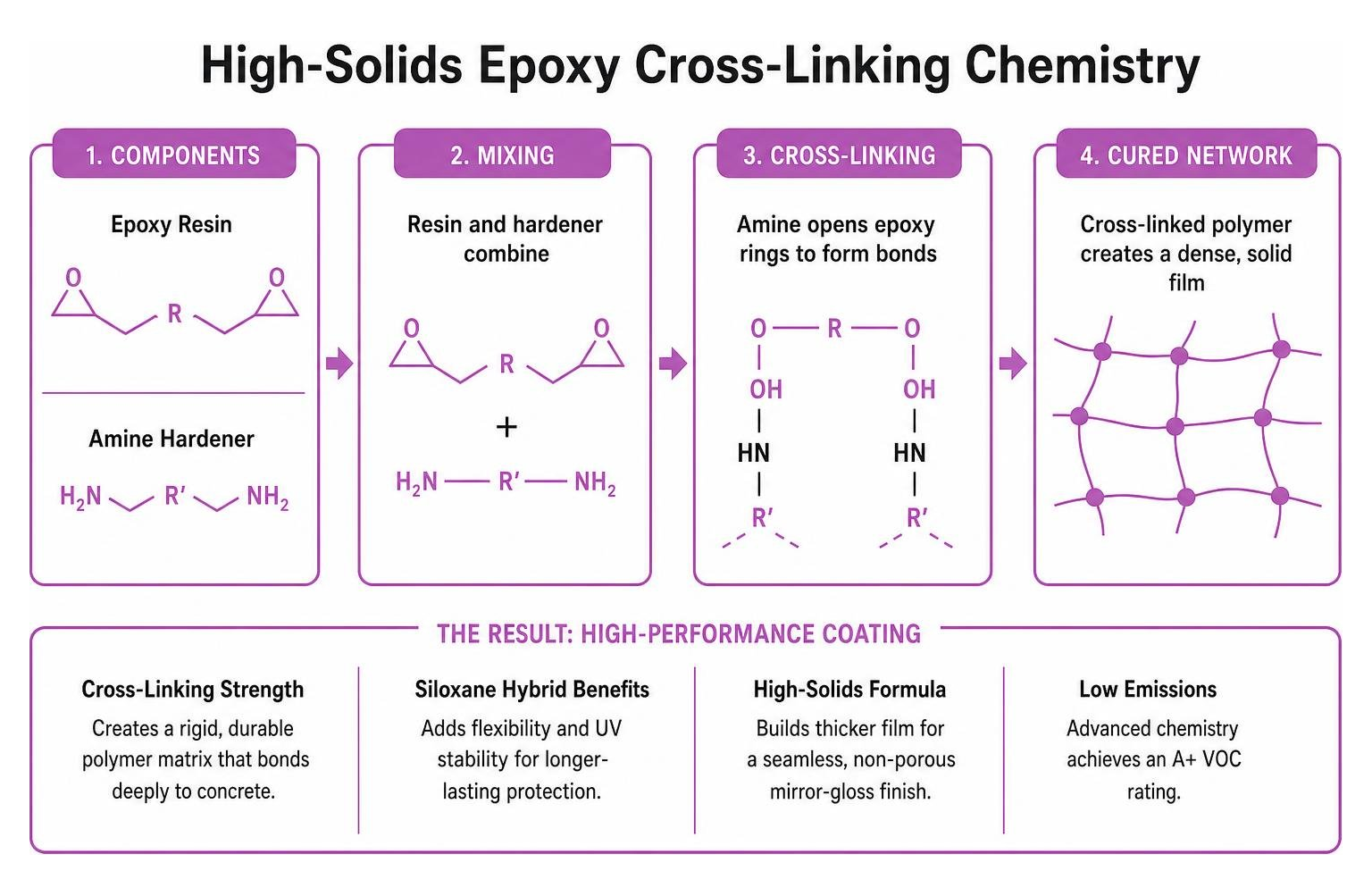
By combining the cross-linking strength and bond performance of epoxy with the flexibility and UV stability of siloxane hybrids, these systems deliver dense chemical resistance without dangerous volatile emissions. Modern formulations achieve an A+ VOC rating, meaning you won’t have to deal with lingering chemical odors in your home or facility.
Key Benefits of Mirror-Finish Garage Flooring
Transforming a dull gray slab into a polished, high-gloss surface delivers both visual appeal and structural performance.
| Performance Feature | Standard Concrete Paint | High Gloss Epoxy Coating | Polyaspartic System |
|---|---|---|---|
| Wolff-Wilborn Hardness | 2H – 3H | 9H (Maximum Rating) | 9H+ |
| Taber Abrasion (Wear Loss) | > 200 mg loss | 57 mg loss (ISO 5470-1) | < 35 mg loss |
| Impact Resistance | Poor (Chips easily) | Class 3 (ISO 6272 Passed) | Class 3+ (Superior) |
| Light Reflectivity | Low (Dull matte) | Ultra-High (Gloss Value 99) | High Gloss / Satin Options |
| Chemical & Salt Resistance | Minimal | High Resistance | Maximum Resistance |
Durability, Hardness, and Impact Resistance
The physical strength of a premium gloss coat comes from its tight polymer network. Top formulations achieve a 9H rating on the Wolff-Wilborn pencil hardness test—the hardest rating possible.
In standardized Taber abrasion testing (ISO 5470-1), high-performance gloss epoxy yields a wear loss result of just 57 mg (where 0 mg represents absolute resistance and 3000 mg represents rapid failure). Furthermore, its Class 3 impact resistance rating under ISO 6272 means dropping heavy hand tools, floor jacks, or steel equipment won’t shatter or delaminate the coating. If you want to compare these heavy-duty physical specs with faster-curing alternatives, take a look at A Quick Start Guide To Polyaspartic Vs Epoxy Floor Coatings.
Ideal Spaces for a High Gloss Epoxy Floor Coating
High-gloss flooring delivers dependable durability across many residential and commercial spaces:
- Residential Garages: Protects concrete from hot tires, motor oil, and heavy vehicle traffic while turning work bays into clean extensions of the home.
- Automotive Showrooms: Reflects overhead spotlights directly onto vehicle paint, highlighting body lines and color depth.
- Commercial Workshops & Hangars: Resists hydraulic fluids, cleans up quickly, and improves ambient visibility.
- Retail & Food Prep Spaces: Creates a hygienic, non-porous floor that meets strict Bfl-S1 fire classification standards.
To see how different visual blends match your space, you can review available garage floor coating colors to find the ideal match for your home or business.
Chemical, Stain, and Moisture Protection
Unprotected concrete acts like a sponge, absorbing brake fluid, transmission fluid, road brine, and motor oil. High-gloss epoxy creates a sealed barrier across the slab. Spills remain on the surface for easy cleanup with a dry rag or mop. If you are researching overall floor protection, learning about durable garage floor coatings is the best way to safeguard your concrete foundation.
Professional Application Process for a Flawless Finish
Achieving a flat, glass-smooth finish requires careful attention to detail during surface preparation, mixing, and curing.
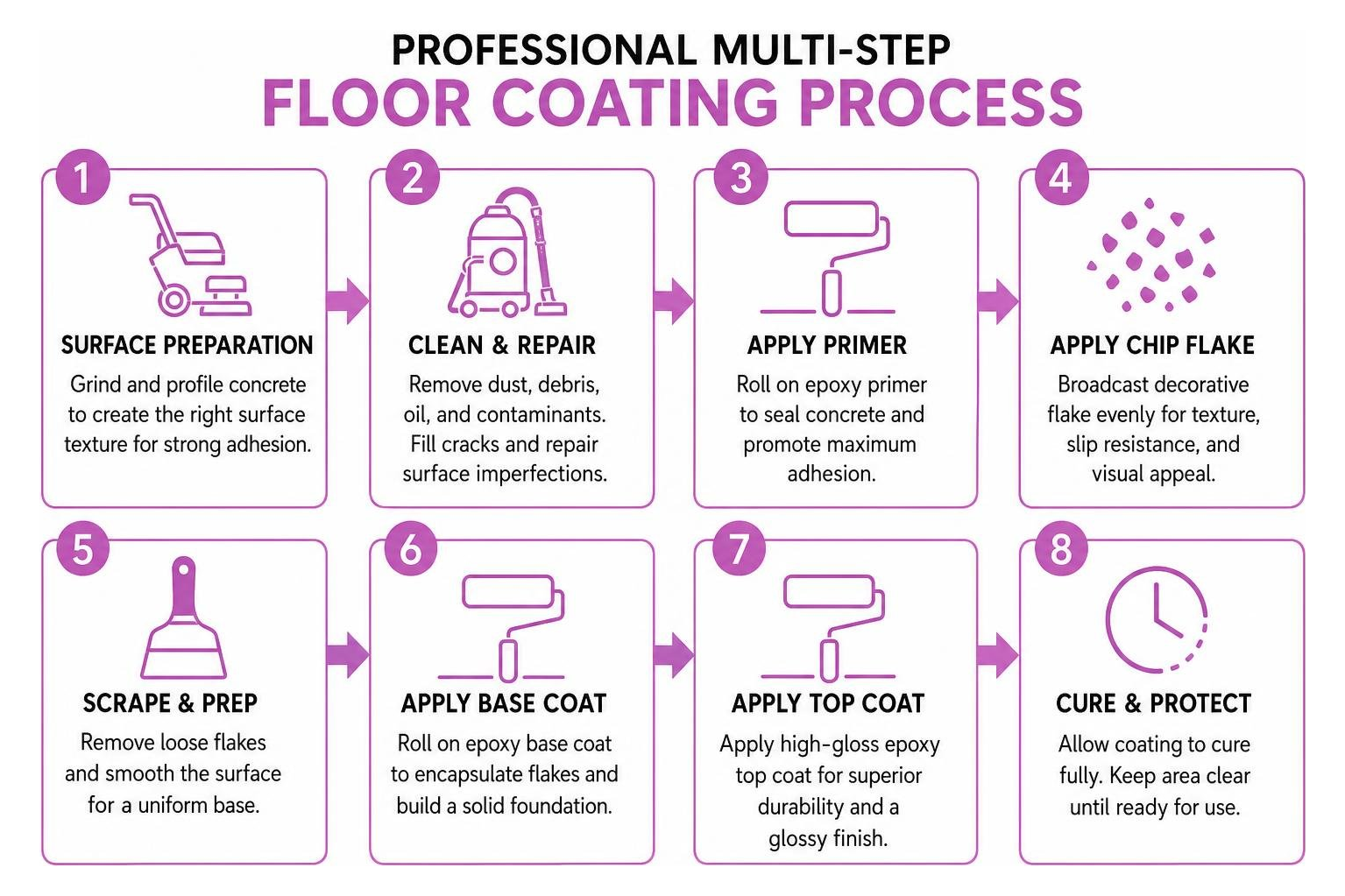
Understanding the complete garage floor installation process helps explain why professional installation provides such durable results. You can also view our process to see our full prep-to-finish workflow.
Concrete Surface Preparation and Profiling
A coating is only as reliable as the concrete profile underneath:
- Mechanical Diamond Grinding: We grind the concrete using commercial diamond-tooled floor machines to remove the weak surface layer (laitance) and create a Concrete Surface Profile (CSP) of 2 to 3.
- Moisture & Contaminant Testing: Slabs are inspected for moisture vapor transmission and deep-set hydrocarbon contamination.
- Deep Crack & Spall Repair: All expansion joints, pits, spider cracks, and divots are routed out and filled with structural polyurea or epoxy patch compounds, then ground flush with the slab.
- Industrial Dust Extraction: Continuous HEPA-filtered vacuum systems capture dust particles so the resin can bond directly to bare concrete pores.
Step-by-Step Mixing and Leveling Techniques
Once prepped, the resin and hardener must be mixed at the exact chemical ratio (such as a 100:120 or 2:1 ratio by volume depending on the product) using a mechanical spiral mixer at controlled speeds to avoid whipping air into the material.
The material is poured onto the floor in ribbons, moved with a notched squeegee at a uniform depth, and back-rolled using a lint-free roller. This ensures even self-leveling across the floor. For projects requiring rapid turnaround times, property owners often rely on fast dry epoxy flooring durable surfaces in record time to minimize downtime.
UV Stability and Preventing Ambering Over Time
Standard aromatic epoxy molecules naturally break down and turn yellow when exposed to direct sunlight. You can discover why epoxy floors turn yellow to understand how UV light impacts standard epoxy resins.
To prevent this discoloration, we apply UV-stable topcoats or hybrid siloxane shields over the base. Learn more about how to keep your epoxy floor from turning yellow and explore all about garage floor UV protection products to protect your floor from ambient sunlight exposure.
Durability, Safety, and Long-Term Maintenance
A professionally installed floor is designed to handle daily use while remaining simple to clean.
Our installations are backed by the Garage Floor Masters warranty, protecting your investment against peeling, bubbling, and hot-tire lift.
Balancing High Reflectivity with Slip Resistance
A mirror-like gloss finish can become slick when wet. To balance high reflectivity with traction, we can broadcast ultra-fine micro-aggregates or clear aluminum oxide into the topcoat. These translucent additives provide slip resistance without clouding the mirror finish.
Routine Cleaning and Protective Care
Maintaining your high-gloss floor is straightforward:
- The First 7 Days: Do not wash the floor with liquid cleaners during the first 7 days following application to allow the cross-linking process to fully finish.
- Daily Sweeping: Use a soft microfiber dust mop to quickly sweep away loose dirt, grit, and sand.
- Routine Mopping: Clean with warm water and a pH-neutral cleaner. Avoid harsh citrus degreasers, bleach, or acidic solutions that can dull the gloss over time.
- Spill Removal: Wipe up automotive fluids, battery acids, or chemical spills promptly with a soft towel.
Cost and Coverage Rates for High Gloss Epoxy Floor Coating Projects
Quality industrial gloss coatings typically cover roughly 30 m² per 5-liter unit per coat, with two full coats required over primed concrete.
Total investment depends on the concrete’s initial condition, required surface repairs, moisture levels, square footage, and the specific topcoat system you select. Review our guide on garage floor coating cost and break down the specifics with how much does epoxy flooring cost per square foot. We offer free on-site estimates across Knoxville, TN, Maryville, Sevierville, Oak Ridge, and nearby communities to inspect your concrete slab and provide accurate pricing.
Frequently Asked Questions About High Gloss Epoxy Floors
Is a high gloss epoxy floor slippery when wet?
Smooth high-gloss floors have lower traction when covered in water or oil. However, incorporating clear anti-slip aggregate into the top layer provides safe, dependable footing without sacrificing the floor’s glossy appearance.
How long does a high gloss epoxy floor take to cure?
At a standard temperature of 20°C (68°F), high-solids gloss epoxy accepts light foot traffic in approximately 12 hours and heavy vehicle traffic in 24 to 48 hours. Lower temperatures extend these curing windows, while warmer conditions accelerate them.
Will sunlight turn my high gloss epoxy floor yellow?
Standard interior epoxy will amber when exposed to direct sunlight over time. To ensure your garage floor remains clear and bright, we install UV-stable topcoats. Read about the best UV resistant epoxy for your next outdoor project and check out everything you need to know about polyaspartic base and top coats to see how aliphatic polyaspartic clear coats keep your floor looking like new.
Conclusion
A high-gloss floor system turns a dark, dusty concrete garage into a bright, clean, showroom-quality space. With a 9H surface hardness, resistance to automotive chemicals, and high light reflectivity, it combines eye-catching style with dependable floor protection.
At Garage Floor Masters, we serve homeowners and business owners throughout Knoxville, TN, Oak Ridge, Crossville, Vonore, Sevierville, Lenoir City, Maryville, Tazewell, LaFollette, Loudon, Friendsville, Powell, Jefferson City, Pigeon Forge, Clinton, Andersonville, and White Pine. Our polyaspartic and epoxy coating systems are UV stable, 4x stronger than standard epoxy, and installed by experienced professionals with over 140 custom colors to choose from.
Ready to give your garage a durable, showroom-level upgrade? Contact our local team today to schedule your free on-site estimate and explore our full lineup of epoxy garage floor coatings.