
What Are Polyaspartic Floor Coatings — And Are They Right for Your Garage?
Polyaspartic floor coatings are a fast-curing, highly durable resin finish applied directly to concrete — and they’ve become one of the most popular choices for garage floors in 2026.
Here’s a quick snapshot before we dive in:
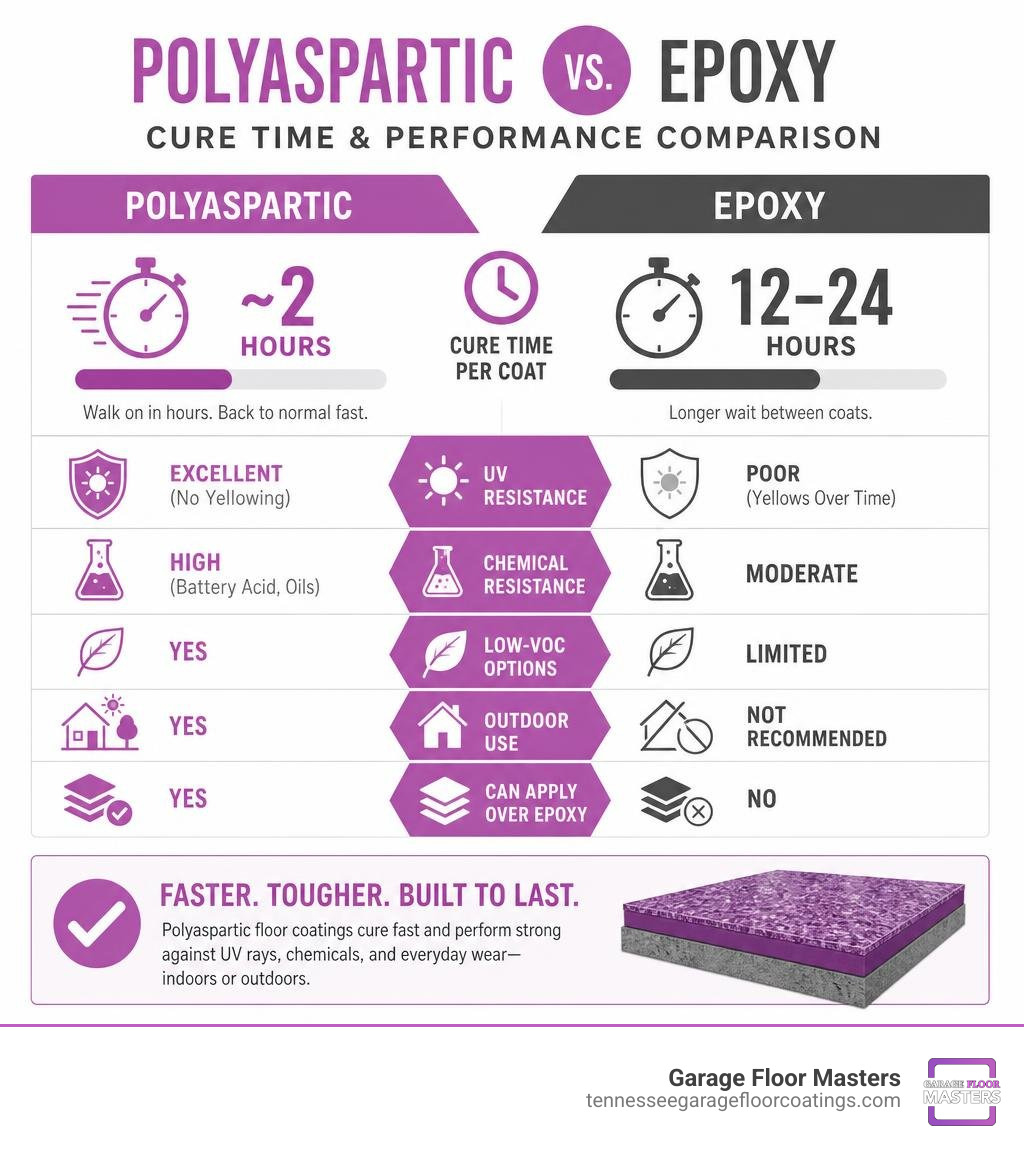
| Feature | Polyaspartic | Epoxy |
|---|---|---|
| Cure time per coat | ~2 hours | 12–24 hours |
| UV resistance | Excellent (no yellowing) | Poor (yellows over time) |
| Chemical resistance | High (battery acid, oils) | Moderate |
| Low-VOC options | Yes | Limited |
| Outdoor use | Yes | Not recommended |
| Can apply over epoxy | Yes | No |
If your garage floor is stained, cracking, or just an eyesore, you’re not alone. Most concrete floors weren’t built to handle years of hot tires, oil spills, and Tennessee weather. The good news? A quality floor coating can fix that — fast.
The big question most homeowners face is: polyaspartic or epoxy? Both protect your floor. But they behave very differently in terms of cure time, durability, and long-term appearance.
I’m Lev Golosov from Garage Floor Masters, and in this guide I’ll walk you through everything you need to know to make the right call for your space.
Polyaspartic floor coatings terms to know:
Understanding Polyaspartic Floor Coatings and Their Chemistry
To really understand why polyaspartic floor coatings perform so exceptionally well, it helps to look under the hood at the chemistry. Polyaspartic is actually an aliphatic polyurea coating material. Developed originally in the 1990s to protect steel bridge structures from aggressive environmental corrosion, chemical engineers modified the formulation to control its cure rate and make it ideal for concrete floor applications.
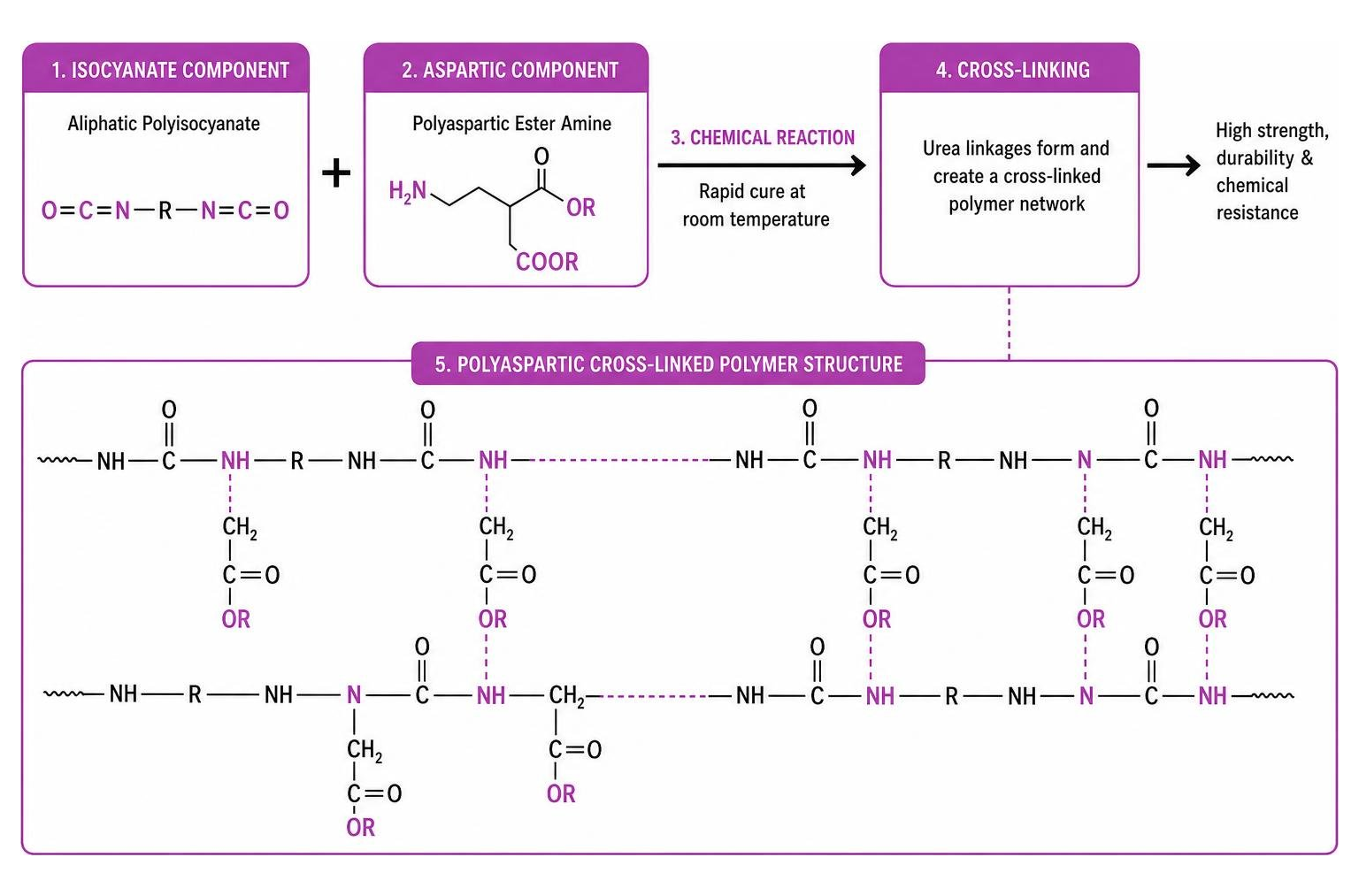
Unlike traditional materials that dry purely by solvent evaporation, polyaspartics undergo a sophisticated chemical reaction between an aliphatic polyisocyanate component and a polyaspartic ester amine component. This creates a tight, highly cross-linked polymer network that exhibits extraordinary tensile strength, superior flexural strength, and incredible physical toughness.
When applied to professionally prepared concrete, polyaspartic resins wet out the porous substrate, penetrating deep into the capillaries of the slab before cross-linking. This creates a mechanical root system deep inside the concrete rather than merely sitting on top like a thin coat of traditional paint. Check out The Complete Guide to Polyaspartic Concrete Sealer and Coatings for an in-depth look at how these chemical bonds preserve concrete over decades.
Polyaspartic Resins vs Traditional Polyurethane and Epoxy
For decades, standard epoxy polymers were the go-to standard for concrete protection. Epoxy works by mixing resin with a hardener, creating a thick, hard plastic surface. However, epoxies are rigid, thermosetting plastics that cure slowly—often taking 24 to 72 hours before light foot traffic is even allowed, and up to a week before you can park a vehicle. Epoxies are also prone to yellowing under light exposure and can become brittle over time.
Traditional polyurethane finishes offered better flexural property and UV protection than epoxy, but polyurethane cannot easily be applied in thick build coats and still suffers from extended dry times.
Polyaspartic technology combines the best traits of both while eliminating their downfalls. By tweaking the chemical composition of polyurea, scientists created a formulation that yields high film builds like epoxy, superior flexibility and light stability like polyurethane, and rapid cure dynamics that surpass both.
Furthermore, polyaspartic resins are far superior during cold-temperature installation. While standard epoxy struggles or completely fails to cure when temperatures dip below 50°F, polyaspartic coatings can cure in freezing conditions, making year-round floor upgrades in East Tennessee seamless and hassle-free. For a detailed comparative breakdown, read our analysis on Polyurea vs Polyaspartic Coat.
Thickness, Adhesion, and Multi-Surface Versatility
A common misconception is that a thicker floor coating automatically equals a better coating. Epoxy systems often rely on sheer bulk thickness to achieve strength because the physical bond strength of epoxy resin to concrete is lower. In contrast, polyaspartics achieve four times the strength of standard epoxy with optimized film thickness due to their superior structural bond strength and polymer density.
Polyaspartic coatings generally measure between 10 to 12 mils per layer when applied as a clear or solid coat, though decorative flake broadcast systems build out to 30 to 45 mils thick. Because of its incredible flexibility, polyaspartic expands and contracts alongside concrete during seasonal temperature swings without cracking or delaminating.
This exceptional adhesion isn’t limited to concrete garage floors either. Polyaspartic coatings bond tenaciously to:
- Concrete slabs, walkways, and patios
- Decorative vinyl chips and quartz aggregate systems
- Interior wood surfaces and subfloors
- Natural stone and masonry
- Cast concrete surfaces, detailed in The Secret to Durable Concrete Countertops is Polyaspartic
Polyaspartic vs Epoxy: Performance and Durability Comparison
When evaluating long-term performance, comparing physical metrics highlights why polyaspartic coatings outperform traditional epoxies across every major structural standard:
| Performance Metric | Polyaspartic Coating | Traditional Epoxy Coating |
|---|---|---|
| Hardness / Abrasion Resistance | High (Taber Abrasion < 20 mg loss) | Moderate (Taber Abrasion > 70 mg loss) |
| Impact Resistance | Superior (High elastic memory) | Fair to Poor (Prone to chipping) |
| Thermal Shock Resistance | Excellent (-30°F to 140°F) | Poor (Brittle in temperature extremes) |
| UV Light Stability | 100% Non-yellowing Aliphatic | Chalks and turns yellow with light |
| Full Vehicle Cure Time | 24 Hours | 5 to 7 Days |
Key Benefits of Polyaspartic Floor Coatings for Fast Turnaround
The single biggest operational advantage of polyaspartic floor coatings is cure speed. Polyaspartic formulations can cure in as fast as 2 hours per coat!
For homeowners, this means our team at Garage Floor Masters can walk onto your raw garage floor at 8:00 AM, execute complete surface preparation, repair cracks, lay down the base coat, broadcast decorative flakes, apply the heavy-duty clear protective topcoat, and hand you back a finished, dry garage by late afternoon. You can walk on your new floor in 4 to 6 hours and park your car inside the very next day.
Compare that to epoxy, where you have to move your lawnmower, tools, and cars into the driveway for an entire week while coat after coat slowly dries. For active families, that extended delay simply isn’t practical. Discover how easy rapid installation can be with Blink and Its Dry with Fast Drying Polyaspartic Floors and see why homeowners are choosing to Stop Waiting for Epoxy and Buy a Polyaspartic Garage Floor Sealer.
Durability, Chemical Resistance, and Outdoor UV Stability
A garage floor endures severe punishment. From hot tires pulling off the highway to battery acid leaks, road salt, and harsh cleaners, lower-grade coatings fail quickly under daily commercial and residential stress.
Polyaspartic floor coatings provide supreme defense against these exact vulnerabilities:
- Hot Tire Pickup Resistance: When tires get hot from driving, the rubber expands. When parked on standard epoxy or DIY paint, the cooling rubber contracts, grabbing the paint and peeling it right off the concrete. Polyaspartic’s superior tensile strength and heat tolerance eliminate hot tire pickup completely.
- Harsh Chemical Defense: Polyaspartics are impervious to motor oil, transmission fluid, road salt, gasoline, brake cleaner, and even battery acid spills.
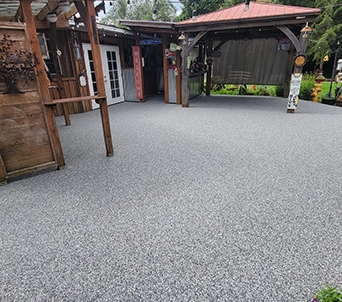
- 100% Outdoor UV Stability: Epoxies are aromatic polymers, meaning ultraviolet light breaks down their chemical bonds, turning clear tops yellow and making solid colors fade into an unsightly amber tint within months. Polyaspartic coatings are 100% aliphatic, meaning they are completely color-stable and UV-resistant. They won’t yellow, fade, or chalk, even when installed on open outdoor patios, driveways, or sunny shop bays.
To read more about keeping outdoor surfaces crystal clear under direct sunlight, visit UV Resistant Polyaspartic Coatings for a Sunproof Garage.
Applications, Aesthetics, and Technical Specifications
While garage floors are our primary specialty in East Tennessee, polyaspartic coatings are heavily specified across demanding commercial and industrial sectors due to their incredible resilience and strict regulatory compliance.
Because polyaspartic finishes create a non-porous, seamless surface that prevents dirt, liquids, and bacteria from penetrating, they meet strict regulatory requirements across several sensitive industries:
- Food & Beverage Facilities: Polyaspartic coatings meet all FDA and USDA requirements for sanitary environment compliance, and hold approval from the Canadian Food Inspection Agency (CFIA).
- 24-Hour Healthcare Facilities: Hospitals, emergency clinics, and urgent care facilities utilize polyaspartic floors because maintenance crews can resurface corridors without shutting down air ventilation systems or displacing patients.
- Educational & Public Facilities: Schools, fire stations, and municipal buildings upgrade floors during brief weekend windows.
- Commercial & Aviation Hangars: Aircraft maintenance shops choose polyaspartics because of their unmatched resistance to corrosive hydraulic fluids and battery acids.
Color, Flake, and Design Options for Polyaspartic Floor Coatings
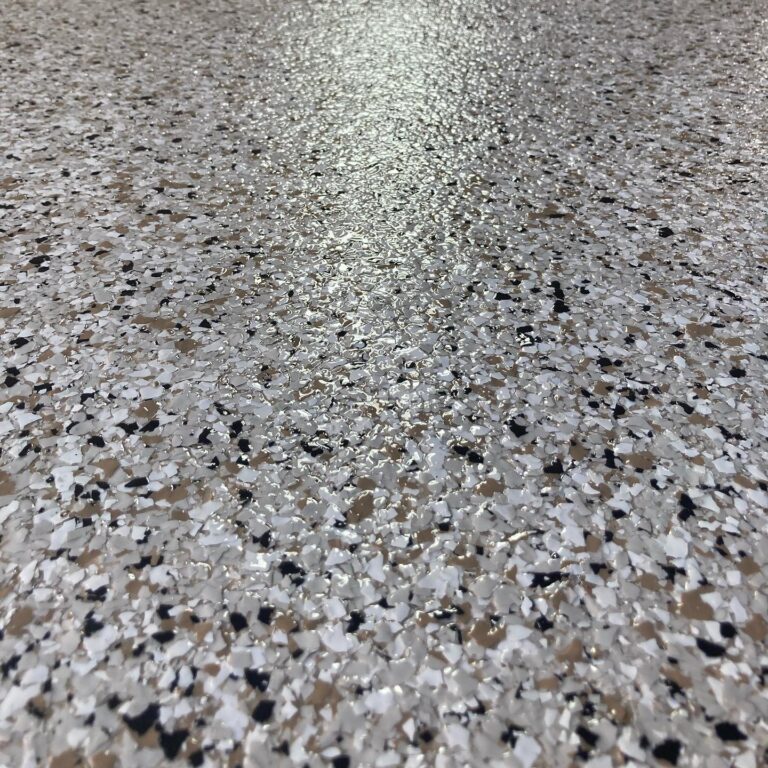
Function is essential, but style matters just as much! At Garage Floor Masters, we offer over 140+ color choices and style combinations to perfectly match your home or facility aesthetic.
You can choose from several distinct aesthetic flooring styles:
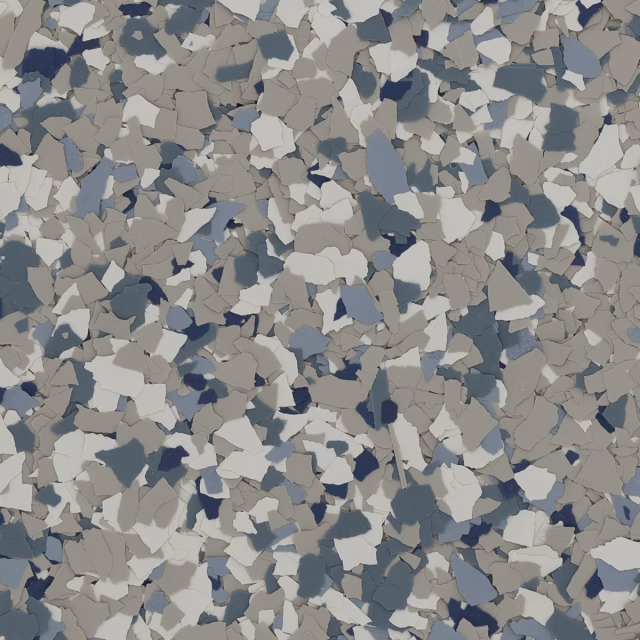
- Full Decorative Vinyl Flake Systems: Vinyl chip flakes are broadcast to 100% saturation into the wet base coat, creating a stone-like texture that hides dirt and provides natural slip resistance.
- Colored Quartz Blends: Industrial-grade quartz aggregates are embedded for ultra-heavy duty environments requiring superior grip and extreme durability.
- Solid High-Gloss Colors: Sleek, clean solid colors (ranging from modern charcoal and safety gray to vibrant red) ideal for commercial showrooms, warehouses, or minimalists.
- Metallic Resin Finishes: Flowing, three-dimensional metallic pigments trapped inside clear polyaspartic topcoats create custom, marble-like art floors.
Base Coats, Topcoats, Recoating, and Over-Epoxy Application
Achieving a lifetime floor requires a precise application system. A standard installation consists of a dedicated high-adhesion polyaspartic base coat, an optional broadcast layer of aggregate or vinyl chips, and a resilient clear polyaspartic top coat.
Can you apply polyaspartic over an old epoxy floor? Yes! If you have an existing epoxy coating that is structurally sound and tightly adhered to the concrete, you don’t always have to strip it to the bare concrete. However, you must mechanically profile the existing epoxy using mechanical floor sanders or diamond grinding to create a rough texture, allowing the new polyaspartic top coat to form a physical bond.
For a full breakdown of clear topcoats and base layer mechanics, check out Everything You Need to Know About Polyaspartic Base and Top Coats.
Low-VOC Formulations, Coverage Rates, and Costs
Modern polyaspartic floor coatings feature low-VOC (Volatile Organic Compound) and ultra-low odor formulations. This allows us to apply these coatings inside residential garages or active commercial facilities without filling your home or business with dangerous chemical fumes. Low-VOC formulations can also help commercial projects qualify for valuable LEED green building points.
From a technical material perspective, standard contractors using commercial 3-gallon kit systems calculate coverage based on application style:
- Flake Floor Base & Topcoats: Covers approximately 360–390 sq. ft. per kit (approx. 120–130 sq. ft. per gallon).
- Solid Color Smooth Systems: Covers approximately 525–750 sq. ft. per kit (approx. 175–250 sq. ft. per gallon).
When considering cost, polyaspartic coatings generally carry a higher upfront material cost than low-grade epoxy kits found at big-box home improvement stores. However, when you factor in that epoxy lasts only a few years before peeling, while polyaspartic provides decades of worry-free service with zero downtime, polyaspartic is by far the most budget-friendly choice over time.
Pricing varies based on the exact condition of your concrete slab (cracks, spalling, moisture levels) and the specific design features and flake densities you select. That is why we provide a clear cost breakdown during a free on-site estimate. Read our detailed cost guides on Top Budget-Friendly Polyaspartic and Epoxy Coatings for Your Workshop and The Real Cost of Polyaspartic Garage Floors.
Frequently Asked Questions
Is polyaspartic coating waterproof and suitable for outdoor concrete?
Yes, polyaspartic coatings create an entirely waterproof, non-porous barrier over concrete. They protect outdoor walkways, pool decks, and patios from water intrusion, moisture damage, and severe freeze-thaw cracking during East Tennessee winters. Because polyaspartic resin is 100% UV-stable, outdoor applications will never yellow or fade under direct sunlight.
Can polyaspartic coatings be applied over an existing epoxy floor?
Yes, polyaspartic coatings can be applied directly over an existing epoxy coating, provided the old epoxy is firmly bonded to the underlying concrete without peeling or bubbling. The surface must be thoroughly cleaned and mechanically abraded with diamond grinding pads or coarse sand paper to create a mechanical profile so the new coat can adhere properly.
Are polyaspartic floors slippery when wet?
High-gloss seamless floors can become slick when wet, just like tile or polished marble. However, during installation, we incorporate anti-slip micro-additives or aluminum oxide aggregate into the final clear topcoat layer. Full vinyl chip flake systems also naturally produce a gentle orange-peel texture that offers excellent traction and safety under wet shoes or car tires.
Conclusion
When upgrading your garage or commercial concrete floor, choosing between epoxy and polyaspartic comes down to longevity, speed, and long-term beauty. While epoxy was once the industry standard, modern polyaspartic technology offers four times the strength, rapid same-day installation, superior chemical resistance, and 100% UV stability that keeps your floor looking brand new for decades.
At Garage Floor Masters, we take pride in transforming tired concrete into clean, highly durable, low-maintenance surfaces. We proudly serve homeowners and commercial facility owners across East Tennessee, including Knoxville, Oak Ridge, Crossville, Vonore, Sevierville, Lenoir City, Maryville, Tazewell, LaFollette, Loudon, Friendsville, Powell, Jefferson City, Pigeon Forge, Clinton, Andersonville, and White Pine.
To see why local homeowners trust our team, read Why Polyaspartic is the Knoxville King of Concrete Coatings and explore our regional service capabilities on Polyaspartic Floor Coatings Knoxville Tennessee. If you’re comparing local professionals, check out our guide on Finding the Best Polyaspartic Floor Specialists in Tennessee.
Ready to upgrade your floor with a fast-curing, UV-stable polyaspartic system installed in just one day? Visit our core Polyaspartic Floor Coatings service page today to schedule your free, no-obligation on-site estimate!