
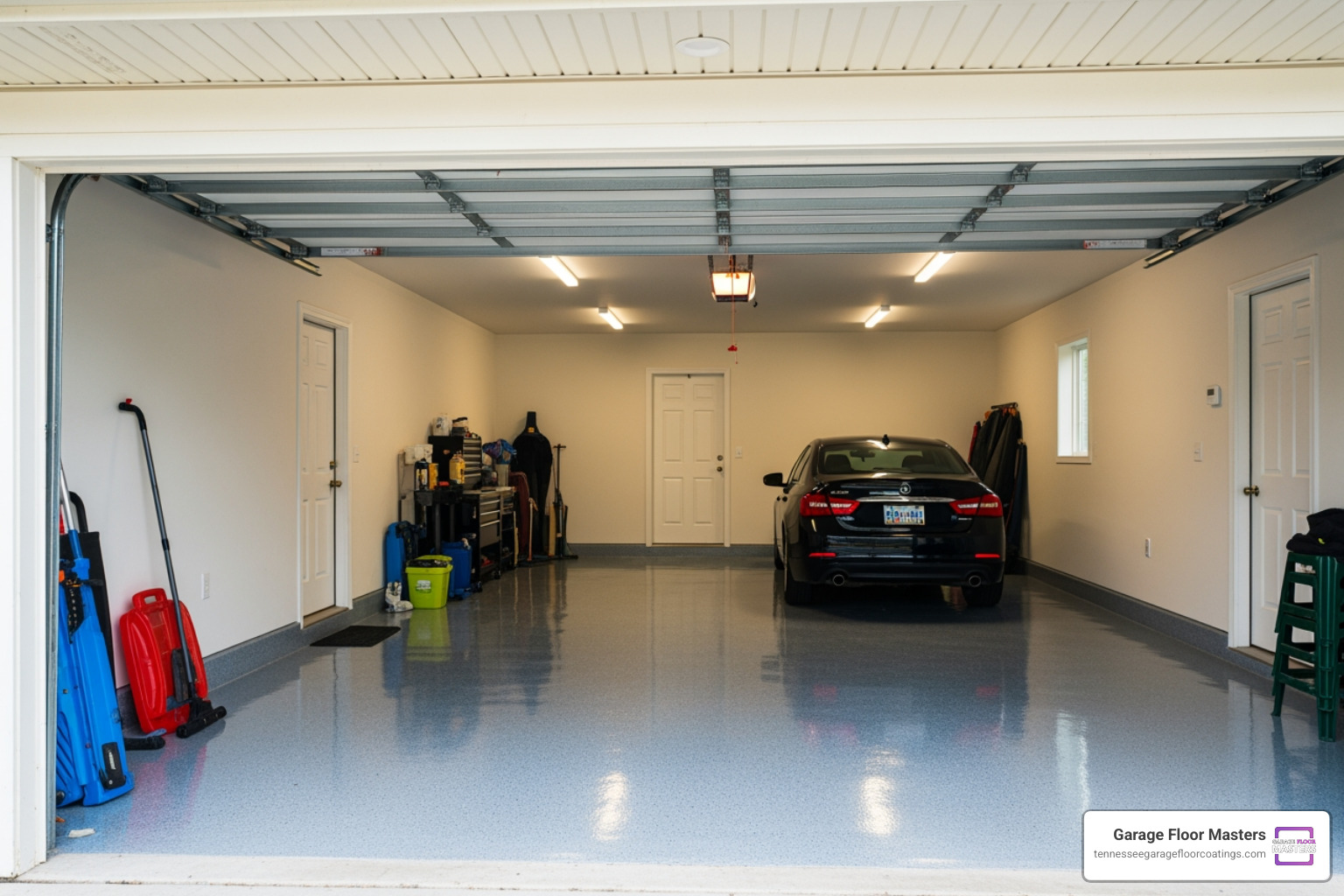
Why Easy Epoxy Flooring Is the Smartest Garage Upgrade You Can Make
Easy epoxy flooring is one of the most popular ways to transform a stained, cracking garage floor into a clean, durable surface — and for good reason.
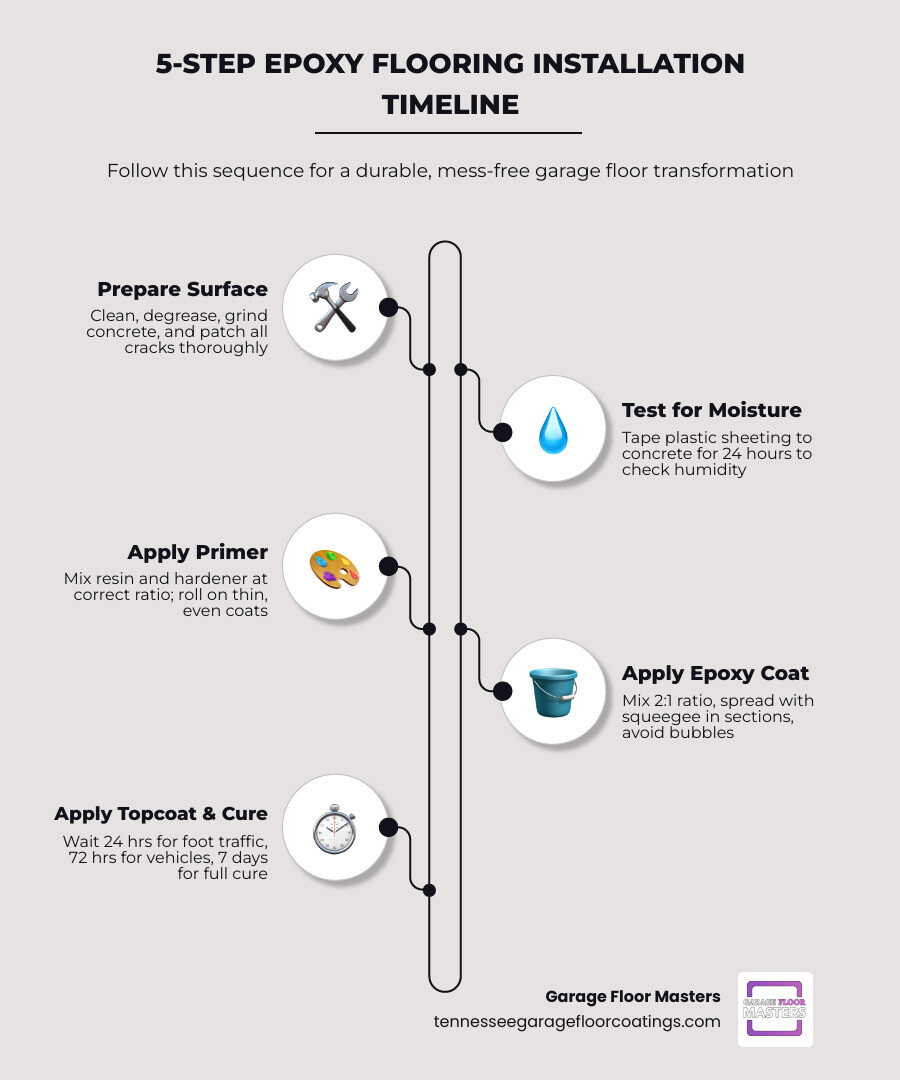
Quick answer: How do you get easy epoxy flooring without the mess?
- Prepare the surface — clean, degrease, grind, and patch all cracks
- Test for moisture — tape plastic sheeting to the concrete for 24 hours
- Apply primer — mix at the correct ratio and roll on in thin, even coats
- Apply the epoxy coat — mix resin and hardener, spread with a squeegee in sections
- Apply topcoat and cure — allow 24 hours before walking on it, 72 hours before parking
That’s the short version. But how well each step is done determines whether your floor lasts 2 years or 20.
Here’s the reality most guides skip: 95% of epoxy floor failures come down to poor surface preparation — not the product itself. A beautiful, long-lasting floor is absolutely achievable as a DIY project or with professional help, but only when the process is followed correctly from the start.
Whether you’re tackling a weekend garage project yourself or exploring what a professional installation looks like, this guide walks you through every step — from choosing the right finish to keeping your floor looking sharp for years to come.
Understanding Easy Epoxy Flooring and Its Benefits
At its core, epoxy flooring is a two-part coating system made from resin and hardener. When those two parts are mixed, they chemically react and cure into a hard, bonded surface over concrete. The result is a floor that looks cleaner, resists spills better, and is much easier to maintain than bare concrete.
For homeowners, the biggest benefits are pretty straightforward:
- Strong resistance to stains, oil, and many household chemicals
- Better impact and abrasion resistance than unfinished concrete
- A non-porous surface that is easier to sweep and mop
- A cleaner, brighter look that can make a garage feel more finished
- Decorative options ranging from simple solid colors to bold metallic designs
Epoxy is especially popular in garages because it stands up well to daily wear, dropped tools, muddy tires, and the occasional mystery spill from the trunk. It also works in basements, workshops, utility rooms, and other residential spaces when the slab is properly prepared and moisture is under control.
If you want a broader look at coating systems and finishes, our page on epoxy floor coatings is a helpful next stop.
Here is a simple comparison of common finish types:
| Finish type | Look | Best for | Pros | Watch-outs |
|---|---|---|---|---|
| Solid color | Clean, uniform | Simple garages, workshops, utility rooms | Affordable look, easy to touch up | Shows dust and imperfections more easily |
| Flake | Speckled, textured | Garages, basements, busy family spaces | Hides dirt well, adds texture, popular for slip resistance | Requires even broadcast for best appearance |
| Metallic | Swirled, decorative | Showpiece garages, interior spaces | Bold visual effect, unique finish | More technique-sensitive for DIY |
One more practical benefit: epoxy is often more cost-effective than premium alternatives. For example, polished concrete can run upwards of £115/m2 in some markets, which shows just how expensive decorative floor upgrades can get. Epoxy remains appealing because it delivers durability and style without pushing into luxury-floor pricing.
Choosing the Right Style for Easy Epoxy Flooring
If your goal is truly easy epoxy flooring, the style you choose matters.
For most homeowners, decorative flake systems are the most forgiving. They hide small surface imperfections, help mask dust, and can add traction. If you want inspiration, take a look at chip and flake flooring and explore different flake colors.
Here is the quick style guide:
Solid colors
- Best if you want a clean, minimal look
- Good for modern garages and utility rooms
- Easier design choice, but surface flaws may show more
Decorative flakes
- Best all-around choice for residential garages
- Helps with slip resistance and visual texture
- Hides dirt, hairline repairs, and daily wear better
Metallic epoxy
- Best for a high-end, custom look
- Popular in basements, hobby rooms, and show garages
- Requires tighter control during installation
In real life, “easy” usually means “forgiving.” That is why flake finishes are often the safest choice for DIY-minded homeowners. Metallic floors can look incredible, but they are less forgiving if your mixing, timing, or rolling technique is off by even a little.
Cost and Suitability for Residential Spaces
DIY epoxy kits in 2026 commonly start around $500 and go up from there depending on square footage, solids content, primer requirements, decorative options, and topcoat choice. A basic one-car space may cost less than a larger two- or three-car garage, but prep materials can add up quickly.
Typical spaces where epoxy works well include:
- Garages
- Basements
- Workshops
- Storage rooms
- Utility areas
The biggest qualifier is the slab condition. If the floor has active moisture problems, old coatings, heavy oil contamination, or major cracking, the project becomes much less “easy” and much more “surprise weekend extension.”
For a closer look at budgeting, see The Ultimate Guide to Epoxy Flooring Prices.
Preparation: The Key to a Professional Finish
If there is one section of this guide you should not skim, this is it.
Surface preparation is the difference between a floor that bonds tightly and a floor that peels when life gets interesting. Research consistently points to one truth: about 95% of epoxy failures are tied to inadequate preparation.
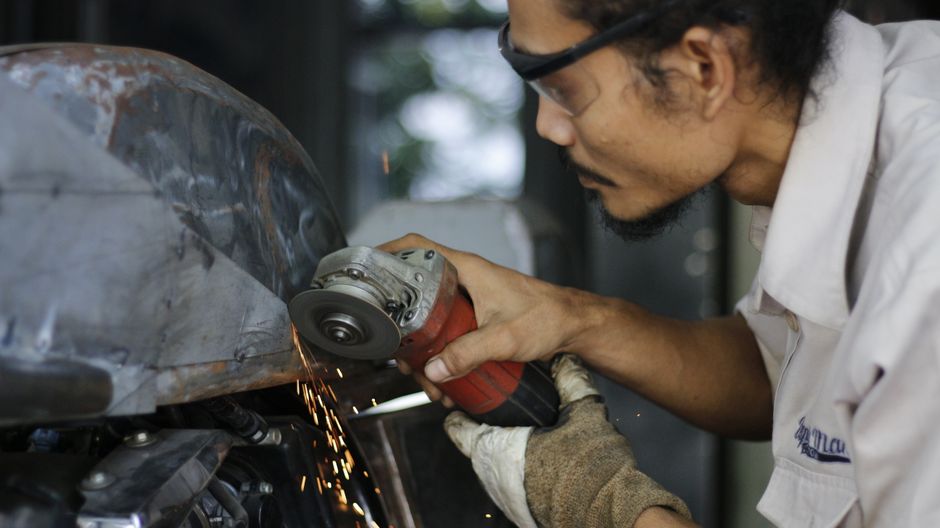
A proper prep routine usually includes:
Empty the space completely
Remove vehicles, shelves, storage bins, and anything else that can collect dust or get in the way.Sweep and vacuum thoroughly
You want loose dirt gone before any deeper cleaning begins.Degrease the slab
Oil spots and greasy areas are epoxy’s natural enemies. Scrub them thoroughly and let the floor dry.Repair cracks and pits
Widen fragile or loose cracks if needed, then fill with an epoxy patch or repair compound. Some patch products cure in as little as 4 to 8 hours, but always follow product directions.Grind the concrete
Mechanical grinding is one of the best ways to create the surface profile needed for bonding. Think of it as giving the epoxy something to bite into.Vacuum again
After grinding, remove all dust carefully. A shop vac connected during grinding helps keep the mess down.Test for moisture
Tape a plastic sheet tightly to the floor and leave it for 24 hours. If moisture appears underneath, you may need a moisture-mitigating primer or a different system.
For more help keeping prep cleaner and more manageable, read Mastering Your Next Epoxy Floor Coating Install Without the Mess.
A few prep facts that matter:
- A floor should generally be fully cured concrete before coating
- Water beading on the surface may signal an old sealer that must be removed
- Humidity and temperature affect cure and bonding
- The floor must be dry, clean, and mechanically profiled before coating begins
Essential Tools and Materials for DIY Success
A good DIY result starts with using the right tools. The basic shopping list usually includes:
- Concrete grinder or angle grinder with diamond tooling
- Shop vac
- Broom and dust mop
- Concrete cleaner or degreaser
- Plastic sheeting for moisture testing
- Epoxy crack filler or epoxy gel patch
- Mixing buckets
- Drill with mixing paddle
- Microfiber rollers
- Roller frames and extension poles
- Notched squeegee
- Brush for edges
- Spiked shoes
- Nitrile gloves
- Eye protection
- Respirator if required by product instructions
- 91% isopropyl alcohol for final wipe-down where appropriate
Many systems also require a primer, base coat, optional decorative flakes, and a clear topcoat.
One DIY mistake we see all the time is underestimating cleanup and dust control. A grinder without vacuum collection can turn your garage into a concrete snow globe. If you want to see how a professional workflow is structured, our garage floor installation process lays it out clearly.
Step-by-Step Guide to a Mess-Free Installation
Once the floor is prepped correctly, the coating stage becomes much more manageable.
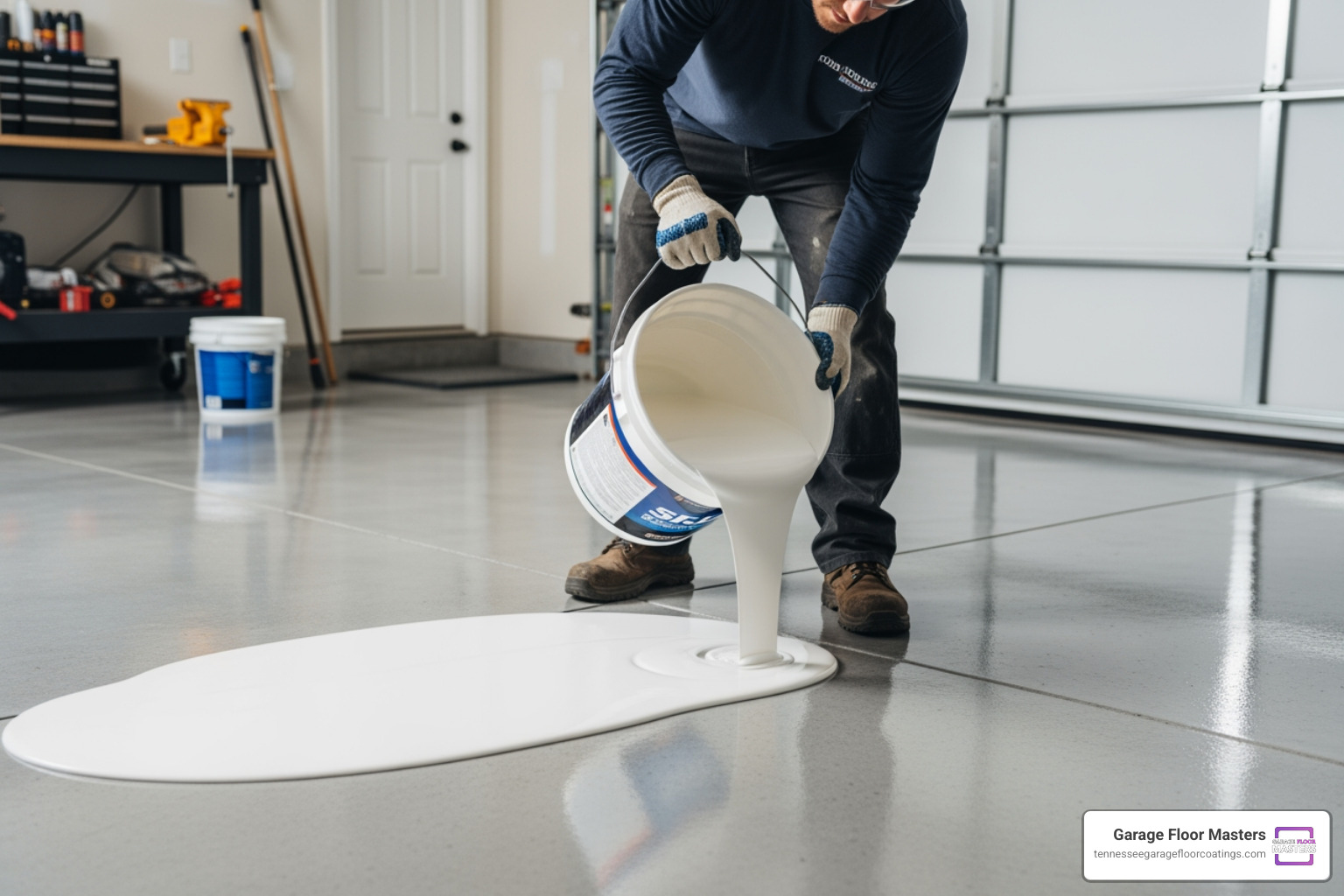
Here is the basic step-by-step process.
Read the full product instructions first
Every system has its own mix ratio, pot life, and recoat window. Do not wing it. Epoxy is not the place for creative improv.Prime the floor
A primer helps penetrate the concrete and improves bond strength. Some epoxy primers mix at a 2:1 ratio by volume, but always confirm your exact product requirements. Apply in thin, even coats with a roller.Let the primer cure as directed
Depending on the product, this may be around 8 to 12 hours or longer until tack-free.Mix the epoxy correctly
Most kits use a specified resin-to-hardener ratio, often 2:1. Mix thoroughly for the full recommended time, usually several minutes, scraping sides and bottom. Some systems also require an induction time after mixing before application.Work in sections
Pour the mixed epoxy onto the floor rather than leaving it in the bucket, where it can heat up and shorten working time. Spread it with a squeegee, then back-roll evenly with a microfiber roller.Keep a wet edge
This helps prevent visible lines between sections. Start in one area and work your way toward the exit.Broadcast flakes if desired
Throw flakes upward so they fall evenly instead of dumping them straight down. That gives a more natural, consistent finish.Apply topcoat
After the base coat has cured within the allowed recoat window, apply the clear topcoat. This adds protection and can help with UV stability and stain resistance.Add traction if needed
If slip resistance is a concern, use a compatible anti-slip additive. We cover more on that in The Secret to Applying Anti-Slip Epoxy Floor Coating Perfectly.
A few application details make a big difference:
- Pot life may be only 20 to 60 minutes depending on the product and temperature
- Hot weather shortens working time
- Thin, even coats are better than thick, uneven ones
- Cross-rolling can help even out the finish and reduce roller marks
- Good ventilation is important during application and early cure
If you want to compare finish systems in more detail, our page on epoxy garage floor coating is worth reading.
Curing Times and Traffic Readiness
This is one of the most common questions, and the answer depends on product type, temperature, humidity, and coat thickness.
A general rule of thumb for epoxy is:
- Light foot traffic: about 24 hours
- Heavier use or moving items back in: around 72 hours
- Vehicle traffic: often 72 hours or more
- Full cure: up to 7 days
Some products cure faster, and some slower. Thicker systems may need more time. Water exposure is often best avoided until the floor has fully cured.
In other words: just because the floor feels dry does not mean it is ready for tires, jack stands, or your heaviest toolbox.
For more practical answers, visit our FAQs.
Common Mistakes to Avoid for Easy Epoxy Flooring
If you want the installation to be easy, avoid these very common mistakes:
Skipping mechanical prep
- Acid cleaning alone is often not enough
- Grinding creates the profile needed for strong adhesion
Ignoring moisture
- A simple plastic-sheet test can save a lot of frustration
- Moisture under the slab can cause peeling, cloudiness, or bonding failure
Mixing incorrectly
- Wrong ratio, poor mixing, or unmixed material along bucket walls can cause soft spots
Letting product sit too long in the bucket
- Epoxy heats up in mass and shortens its own working time
Applying too thick
- Thick coats can trap bubbles and cure unevenly
Working in bad conditions
- High humidity and temperature extremes can create blush, bubbles, or cure issues
Skipping primer
- Primer often improves penetration and reduces risk on porous concrete
Underestimating slip risk
- A glossy floor looks great, but garages may need texture for safety
Rushing cure time
- Walking on it too early is tempting
- Parking on it too early is heartbreaking
Maintenance and Care for Long-Lasting Results
Once your floor is cured, maintenance is refreshingly simple.
For routine care, we recommend:
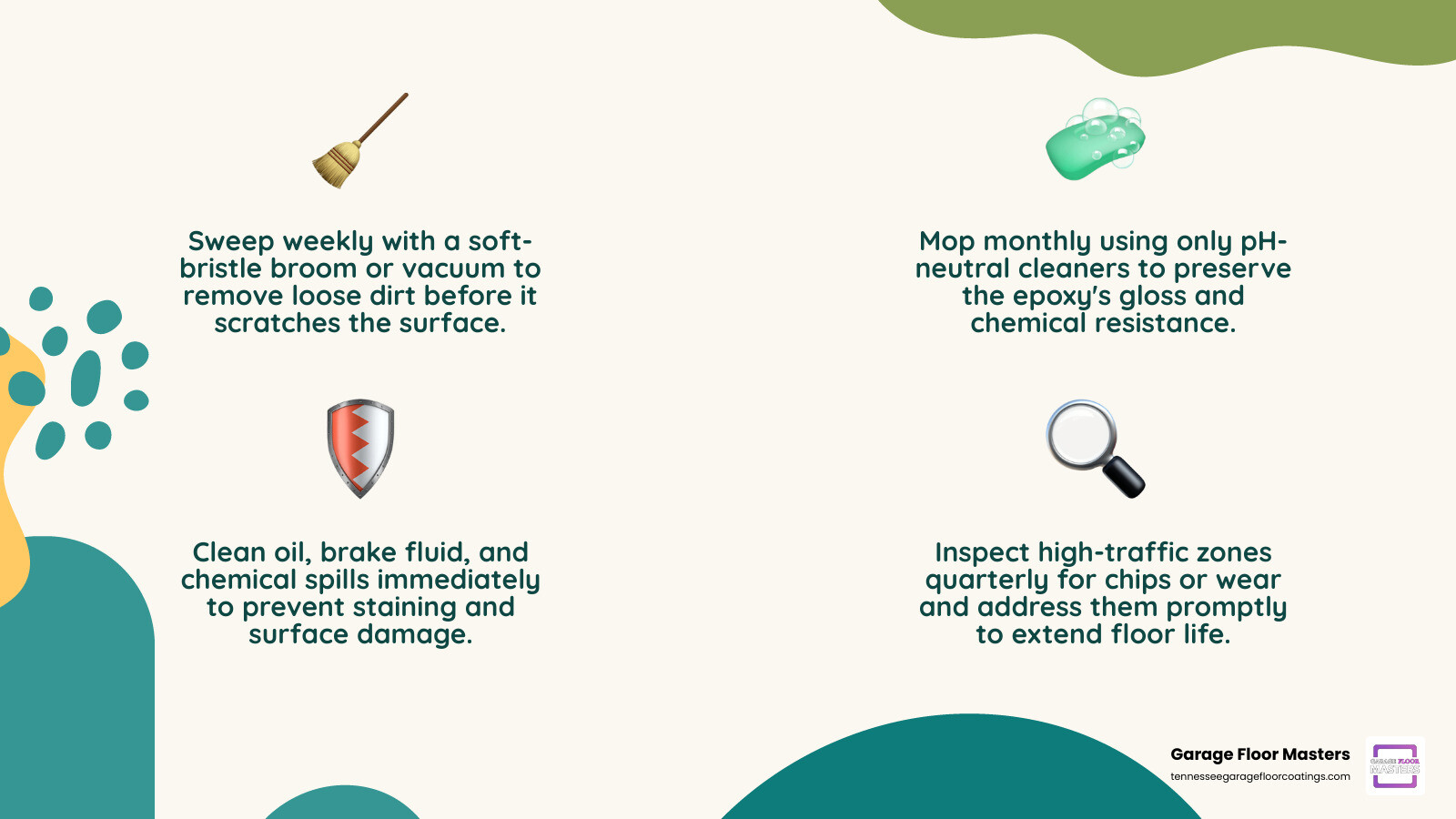
- Sweep or dust mop regularly
- Use a soft-bristle broom or vacuum for loose dirt
- Mop with a pH-neutral cleaner
- Clean spills promptly, especially oil, brake fluid, or chemicals
- Use mats at entry points if the garage also serves as a workshop or storage zone
Avoid harsh acidic cleaners unless the product manufacturer specifically allows them. In most homes, mild cleaning is all that is needed.
For more detailed upkeep advice, see Clean Epoxy Garage Floors and our floor care instructions.
A simple care schedule looks like this:
- Daily or as needed: spot clean spills
- Weekly: sweep or dust mop
- Monthly: damp mop with pH-neutral cleaner
- As needed: inspect for chips, scratches, or wear in high-traffic zones
Protecting Your Investment Over Time
A well-installed floor can last for many years, and high-quality systems over properly prepared concrete can last indefinitely if maintained correctly and refreshed when needed.
That does not mean “install it once and forget it forever.” It means:
- Keep the floor clean so grit does not act like sandpaper
- Remove car fluid spills quickly
- Watch for wear in turn zones and parking areas
- Reapply or refresh topcoats when needed
- Use UV-stable protection where sunlight reaches the floor
This last point matters because some epoxy systems can amber or yellow with UV exposure. If your garage door stays open often or the space gets a lot of sun, read Preserve Epoxy Floor Coatings and How to Keep Your Epoxy Floor from Turning Yellow.
Hot tire pickup is another concern people ask about. In many cases, it is linked less to the coating itself and more to poor prep or weak bonding. That is another reason we keep coming back to preparation like it is the main character. Because it is.
Frequently Asked Questions about Easy Epoxy Flooring
How much does a DIY epoxy kit cost in 2026?
Most DIY kits start around $500 in 2026, then increase based on floor size, solids content, primer, topcoat, decorative flakes, and repair needs. The bigger your garage and the rougher your concrete, the less “budget kit” this tends to feel.
If you are comparing DIY to professional installation, remember to include:
- Surface prep equipment rental
- Crack repair materials
- Degreasers and cleaners
- Rollers, squeegees, and mixing tools
- Safety gear
- Topcoat and anti-slip additives
For professionally installed systems, pricing can vary based on the floor condition and features you choose, which is why we recommend a free on-site estimate rather than guessing from square footage alone.
Can epoxy be applied over wood or only concrete?
Epoxy can be used over more than just concrete, but concrete is the most common residential substrate for garages and basements. Wood installations usually require specific primers, stable substrates, and a very controlled setup. In practical terms, most garage and basement projects in our service areas are concrete-based.
If you are working with wood, the key issues are:
- Movement and flex in the substrate
- Moisture content
- Proper primer compatibility
- Surface leveling before coating
For most homeowners looking for easy epoxy flooring, concrete is the more predictable and successful option.
How do I prevent bubbles in my epoxy finish?
Bubbles usually come from one of three sources:
- Air escaping from porous concrete
- Overmixing or mixing too aggressively
- Applying in hot conditions or too thickly
To reduce bubble risk:
- Grind and prime the floor properly
- Apply in the recommended temperature range
- Mix slowly with a paddle, not like you are making whipped cream
- Pour material out of the bucket quickly
- Roll evenly and avoid overworking the coating
- Use cross-rolling or de-foaming techniques if your product requires them
If the slab is warm, concrete can release air into the coating. That is why many installers prefer cooler parts of the day for application.
Conclusion
Getting easy epoxy flooring without the mess is absolutely possible, but easy does not mean careless. The smoothest projects come from careful prep, correct mixing, good timing, and realistic curing expectations.
If you want a floor that looks sharp and performs well, start with the fundamentals:
- Prep thoroughly
- Test for moisture
- Use the right tools
- Follow mix ratios exactly
- Respect cure times
- Maintain the floor consistently
And if you would rather skip the grinder dust, the bucket math, and the stress of wondering whether that tacky corner is “normal,” we can help.
At Garage Floor Masters, we serve Knoxville and surrounding East Tennessee communities with durable floor coating solutions designed for everyday life. We also offer high-performance polyaspartic and epoxy systems, with UV-stable coatings that are 4x stronger than epoxy, installed in one day, and available in 140+ colors.
To learn more about options for your home, explore our epoxy floor coatings page. If you are in Knoxville, Oak Ridge, Crossville, Vonore, Sevierville, Lenoir City, Maryville, Tazewell, LaFollette, Loudon, Friendsville, Powell, Jefferson City, Pigeon Forge, Clinton, Andersonville, or White Pine, we would be glad to help you choose the right floor for your space.