
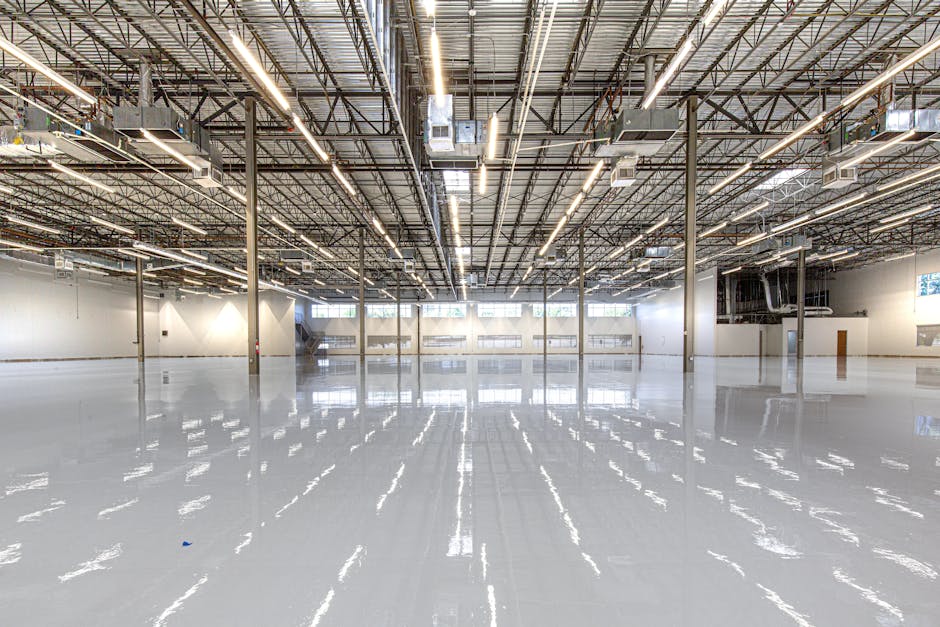
Understanding the Epoxy Floor Coating Install Process
When we talk about an epoxy floor coating install, we aren’t just talking about “painting” a floor. Epoxy is a thermosetting resin that is applied as a liquid and cures into a hard, plastic-like surface through a chemical reaction. Unlike traditional paint that dries as a thin film, epoxy bonds mechanically and chemically to the concrete substrate.
The chemistry involves two main components: Part A (the resin) and Part B (the hardener). When these are mixed, a chemical bond is created that results in a high-strength, rigid material. The most durable systems are “100% solids,” meaning there are no water or solvent carriers that evaporate during the curing process. What you spread on the floor is what stays on the floor, resulting in a much thicker and more resilient finish.
For those looking into epoxy garage floor coatings, it is important to understand that thickness matters. Industrial-grade coatings range from 10 to 250 mils in thickness. To put that in perspective, a standard DIY kit from a big-box store might only leave a film 2-3 mils thick, whereas a professional epoxy floor coating install typically results in 18-22 mils of solid protection.
| Feature | DIY Water-Based Epoxy | Professional 100% Solids Epoxy |
|---|---|---|
| Thickness | 2-4 mils (thin) | 18-30+ mils (thick) |
| Adhesion | Sits on top of the surface | Penetrates deep into concrete pores |
| Durability | Prone to “hot tire pickup” | Resists chemicals and heavy traffic |
| Lifespan | 1-3 years | 10+ years |
| UV Stability | Yellows quickly in sunlight | Can be enhanced with topcoats |
Choosing the Right Materials for Your Epoxy Floor Coating Install
Selecting the right material is the difference between a floor that lasts a decade and one that peels off on your tires next summer. High-build systems using 100% solids epoxy are the gold standard for epoxy floor coatings. These formulations provide superior impact resistance and can bridge small imperfections in the concrete.
In our experience across East Tennessee, we’ve found that advanced resin formulations are necessary to handle the humidity and temperature swings we see in places like Knoxville and Maryville. While 1-part epoxy “paints” are available, they are generally just fortified acrylics and don’t offer the true chemical resistance required for a working garage.
Essential Tools and Safety Equipment
A successful epoxy floor coating install requires more than a paintbrush and a tray. To achieve a professional finish, you need specialized equipment:
- Notched Squeegees: These allow you to spread the epoxy at a consistent thickness across the entire slab.
- Spiked Shoes: These look like something out of a track meet, but they allow you to walk over the wet epoxy to broadcast flakes or back-roll without leaving permanent footprints.
- Low-Speed Drills: Using a high-speed drill introduces air bubbles into the mix, which leads to “pinholes” in your finished floor.
- Respirators and PPE: Even low-VOC epoxies can have a strong odor. Proper ventilation and skin protection (gloves and goggles) are non-negotiable.
If you are researching the epoxy garage floor coating process, the “pot life”—the time you have to work with the material once mixed—is usually only 30-45 minutes. Having all your tools lined up and ready is critical.
Critical Surface Preparation: The Key to Longevity
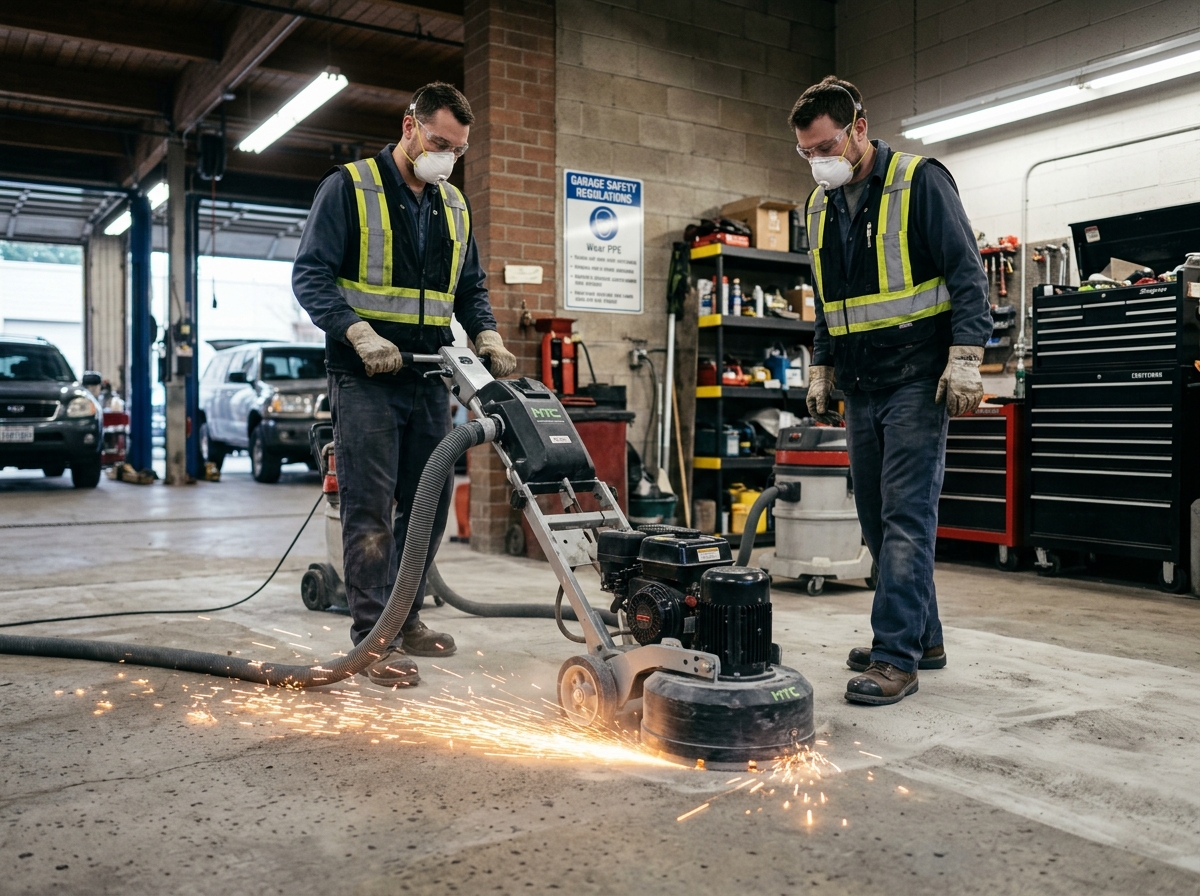
We cannot stress this enough: Preparation is 90% of the job. If you apply the world’s best epoxy to a dirty or poorly prepared floor, it will fail. The goal of preparation is to remove contaminants and “open” the pores of the concrete so the epoxy can sink in and grab hold.
First, we address oil remediation. Concrete is like a sponge; it soaks up oil and grease over years of use. We use heavy-duty degreasers and sometimes mechanical means to ensure no oils remain to break the bond.
Next, we perform moisture vapor testing. Moisture rising through the slab is a common cause of epoxy “blisters.”
- Plastic Sheet Test: Taping a 2×2 foot plastic square to the floor for 24 hours to see if condensation forms.
- Calcium Chloride Test: A more scientific method that measures the moisture vapor emission rate.
Our process ensures that every slab is within acceptable limits before a single drop of resin is poured.
Diamond Grinding for Optimal Adhesion
While some DIY kits suggest “acid etching,” we strongly recommend diamond grinding. Acid etching often provides an inconsistent profile and can leave behind salts that interfere with adhesion.
Diamond grinding uses industrial machines with diamond-segmented blades to remove the top “laitance” (the weak, dusty layer) of the concrete. This creates a Concrete Surface Profile (CSP) of 2 or 3, which feels like medium-grit sandpaper. This mechanical bond is far superior to anything achieved with chemicals. Plus, modern grinders are hooked up to high-end vacuum systems for dust containment, keeping your garage (and lungs) much cleaner. You can learn more about this in our garage floor installation process guide.
Repairing Cracks and Control Joints
Before the coating goes down, the “bones” of the floor must be fixed. We use specialized epoxy fillers and concrete patches to repair stress cracks and chips.
When it comes to control joints (those deep lines cut into your slab), there are two schools of thought. Some homeowners prefer them filled for a seamless “glass” look, while others want them left open to allow for natural slab movement. If we fill them, we use flexible polyurea sealants that can move with the concrete without cracking the topcoat. This is a common step during an epoxy garage floor coatings Knoxville Tennessee project.
Step-by-Step Application and Curing Requirements
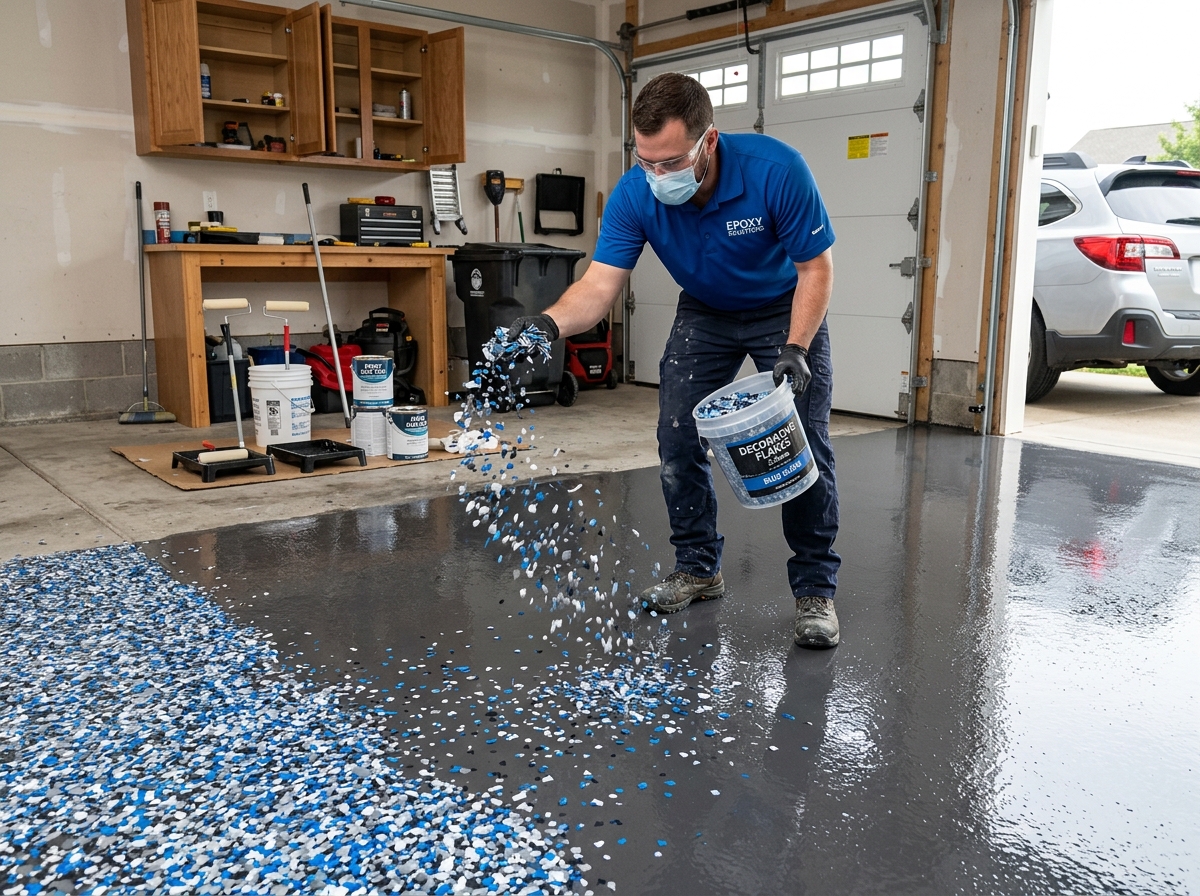
Once the floor is prepped, repaired, and vacuumed until it’s spotless, the actual epoxy floor coating install begins.
- Primer Application: A thin, high-penetration primer is applied first. This seals the concrete and prevents “outgassing,” where air bubbles rise from the concrete and get trapped in the thicker base coat.
- Base Coat: This is the “build” layer. It’s poured in ribbons and spread with a squeegee, then back-rolled to ensure an even 8-10 mil thickness.
- Decorative Flake Broadcast: If you’ve chosen a flake finish, these are tossed into the air to rain down into the wet base coat. We typically use about 3/4 of a pound of flakes per 100 square feet for a “full broadcast” look.
- Topcoat Sealing: After the base coat has cured (usually 8-12 hours), we scrape off excess flakes and apply a protective clear coat. Many of our clients opt for polyaspartic floor coatings for this final layer because of their incredible durability.
Ideal Environmental Conditions for Success
Epoxy is a bit like a “Goldilocks” product—it needs conditions to be just right.
- Temperature: Ideally between 50°F and 85°F. If it’s too cold, the chemical reaction stalls; if it’s too hot, the epoxy cures in the bucket before you can spread it.
- Humidity: Should be below 85%. High humidity can cause a “blush” or cloudy finish on the surface.
- Dew Point: The slab temperature must be at least 5 degrees above the dew point to prevent microscopic moisture from forming on the concrete as you work.
Following these installation steps ensures the chemical bond forms correctly.
Cure Timelines and Return to Service
Patience is a virtue, especially with epoxy. While it may feel dry to the touch in 8 hours, the chemical “cross-linking” continues for days.
- Foot Traffic: Usually safe after 24 hours.
- Vehicle Traffic: We recommend waiting at least 72 hours, though 7 days is safer for “hot tire” resistance.
- Full Chemical Cure: Takes 5 to 7 days. Avoid using harsh cleaning chemicals during this window.
For our neighbors in Knoxville, we offer polyaspartic floor coatings Knoxville Tennessee, which cure much faster than traditional epoxy, often allowing you to get your cars back in the garage the very next day.
Beyond Epoxy: The Polyaspartic Advantage
While we love a good epoxy floor, technology has moved forward. At Garage Floor Masters, we specialize in polyaspartic coatings. You might be wondering, what’s the difference?
Polyaspartic is a sub-category of polyurea. It was originally developed to coat bridge steel and spray-in truck bed liners. When applied to a garage floor, it offers several massive upgrades over standard epoxy:
- UV Stability: Epoxy will eventually “amber” or yellow when exposed to sunlight through open garage doors. Polyaspartic is 100% UV stable.
- One-Day Installation: We can often prep, coat, and finish your floor in a single day.
- 4x Strength: It is significantly more flexible than epoxy, meaning it won’t crack or chip if you drop a heavy wrench.
- 140+ Colors: We offer a massive variety of custom flake blends to match any aesthetic.
If you are debating polyurea vs polyaspartic coat, polyaspartic is generally the winner for residential garages due to its longer working time and superior finish.
Frequently Asked Questions about Epoxy Installation
Is epoxy flooring slippery when wet?
This is a common concern! A smooth, high-gloss epoxy floor can be slick if water or oil gets on it. However, we solve this by adding slip-resistance additives like aluminum oxide or fine silica sand into the topcoat. Additionally, a full broadcast of decorative flakes creates a subtle orange-peel texture that naturally provides better grip. If you’re in a high-moisture area like Farragut, we highly recommend these anti-skid options.
How much does an epoxy floor cost per square foot?
We see pricing across the industry ranging from $3 to $30 per square foot. Why such a big gap? It comes down to:
- Surface Condition: Does the floor need extensive crack repair or oil remediation?
- System Type: A simple 2-coat water-based system is much cheaper than a 4-layer 100% solids polyaspartic system.
- Square Footage: Larger garages often have a lower cost per square foot due to equipment mobilization.
Because every floor in Maryville or Knoxville is different, we offer free on-site estimates to give you an exact price based on your specific concrete condition.
Can epoxy be applied over old coatings or damaged concrete?
Generally, we do not recommend applying new epoxy over old, peeling “big-box” store coatings. The new coating is only as strong as what it’s bonded to. If the old layer lifts, the new one goes with it. We prefer to grind the old coating off entirely to reach fresh concrete. However, if an existing professional coating is in good shape, it can sometimes be “screened” (sanded) and recoated. For homeowners in Oak Ridge, we can perform an adhesion test to see if a recoat is possible.
Conclusion
A successful epoxy floor coating install is a transformative investment for your home. It turns a dark, dusty “utility” space into a bright, clean extension of your living area. By focusing on diamond-grinding preparation, choosing high-solids materials, and respecting the cure timelines, you ensure a floor that will look great for a decade or more.
Maintenance is simple: just use a dust mop for daily cleaning and a pH-neutral cleaner with water for deeper scrubs. Avoid using stiff wire brushes or acidic cleaners, which can dull the gloss over time.
Whether you are in Knoxville, Sevierville, or Loudon, our team at Garage Floor Masters is here to help you navigate the options. From traditional epoxies to our high-performance, one-day polyaspartic systems, we have the tools and expertise to give your garage the “master” treatment it deserves.
Ready to see the difference for yourself? Get a Free Quote for Epoxy Garage Floor Coatings today and let’s get started on your transformation!