
Why Cracked Concrete Is More Than Just an Eyesore
Finding the best way to fill cracks in concrete is one of the most common home repair challenges — and getting it wrong means the crack comes right back, often worse than before.
Here’s a quick answer if you need it fast:
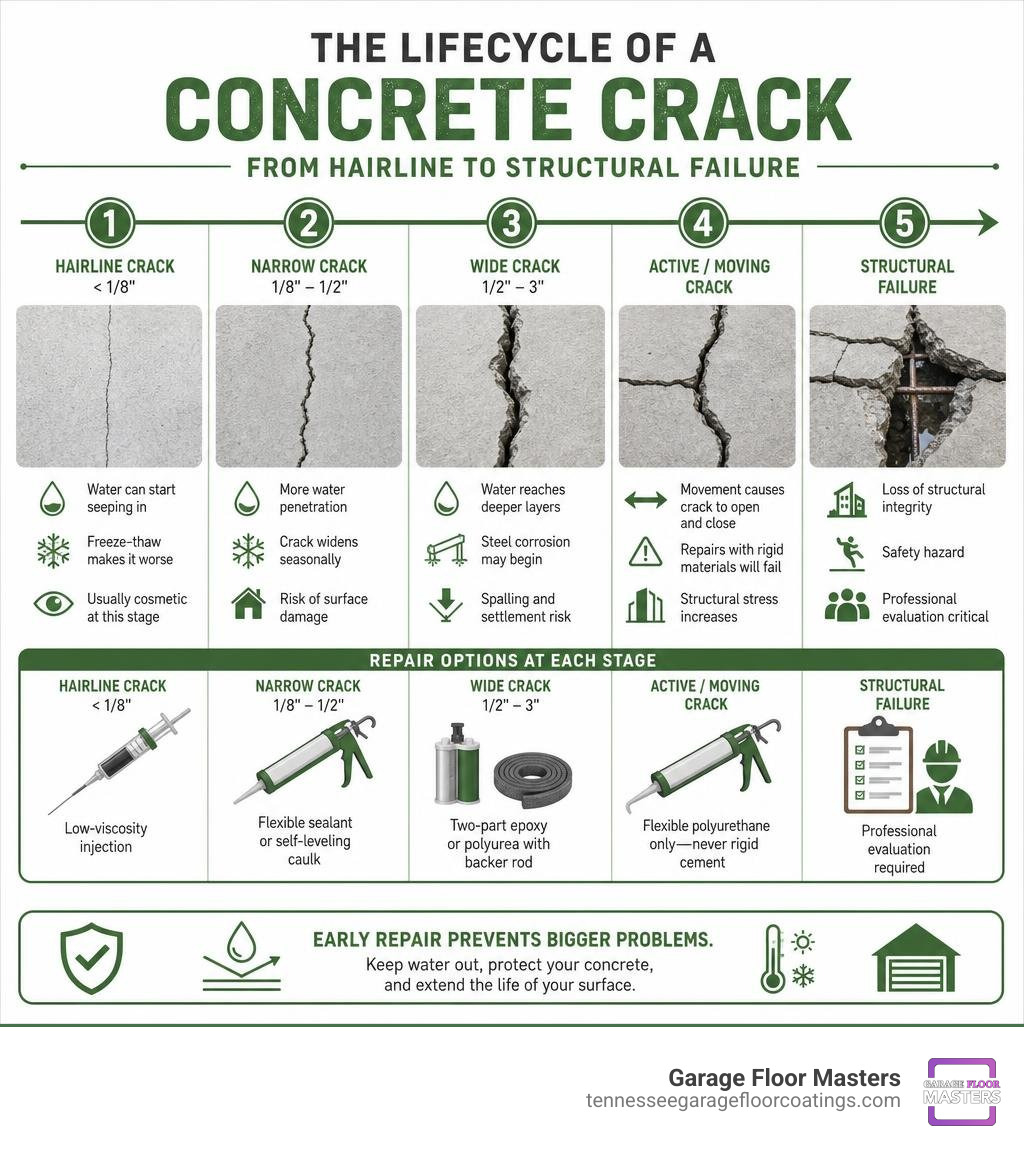
The best way to fill cracks in concrete depends on crack size and movement:
| Crack Type | Best Repair Method |
|---|---|
| Hairline (under 1/8″) | Low-viscosity polyurethane or gravity-feed resin |
| Narrow (1/8″ – 1/2″) | Flexible polyurethane sealant or self-leveling caulk |
| Wide (1/2″ – 3″) | Two-part epoxy or polyurea joint filler with backer rod |
| Moving/active cracks | Flexible polyurethane only — never rigid cement |
| Foundation/structural | Professional evaluation required |
The single most important rule: use a flexible material, not rigid hydraulic cement. Concrete constantly moves with temperature changes. Rigid patches crack again — usually within weeks.
Now, here’s the fuller picture.
That crack running across your garage floor might look like a minor cosmetic problem. But left unsealed, it lets in water, ice, and even radon gas. Freeze-thaw cycles force the crack wider every winter. What starts as a hairline fracture can become a tripping hazard, a drainage problem, or a sign of something more serious underneath.
About 70% of concrete structures experience cracking at some point — so you’re not alone. The good news is that most cracks are completely fixable with the right material and the right prep work. The bad news is that most DIY repairs fail — not because of the product, but because of how the crack was prepared and what was used to fill it.
This guide covers both.
Simple best way to fill cracks in concrete glossary:
Understanding Why Concrete Cracks Happen
To repair a crack permanently, you must first understand why it formed. Concrete seems rock-solid, but it is actually a dynamic, breathing material that reacts constantly to its environment.
In East Tennessee, our concrete slabs experience a wide range of stresses. From hot, humid summers in Knoxville and Sevierville to freezing winter nights in Crossville and Oak Ridge, our local climate puts concrete through its paces.
The most common culprits behind concrete cracks include:
- Shrinkage: When concrete is poured, it contains more water than is needed for the chemical hardening process (hydration). As this excess water evaporates, the concrete shrinks. If it dries too quickly, tensile stresses develop, resulting in shallow hairline cracks.
- Settling: Slabs rely entirely on the soil underneath them. If the soil was poorly compacted during construction, or if heavy rains wash away the subgrade, the concrete slab will sink under its own weight. This settling creates uneven, shifting cracks.
- Thermal Expansion and Contraction: Concrete expands when it gets hot and contracts when it gets cold. If there are not enough expansion or control joints to accommodate this movement, the concrete will relieve the pressure by cracking.
- Freeze-Thaw Cycles: Water expands by about 9% when it freezes. If water gets into unsealed concrete pores or existing micro-cracks and freezes, it exerts immense internal pressure. Over time, this cycle breaks down the concrete, causing cracks to widen and the surface to spall (flake or crumble).
For a deeper dive into the specific risks and structural implications of these issues, read our guide on Cracked Garage Foundation Causes and Risks You Need to Know.
The Best Way to Fill Cracks in Concrete: Rigid vs. Flexible Materials
When homeowners head to the local hardware store, they are often overwhelmed by the sheer variety of concrete repair products. These products generally fall into two categories: rigid fillers and flexible (or semi-rigid) sealants.
Choosing between them is the difference between a repair that lasts a decade and one that pops out during the very next seasonal temperature shift.
| Feature | Rigid Materials (e.g., Hydraulic Cement, Mortar) | Flexible/Semi-Rigid Materials (e.g., Polyurethane, Polyurea, Epoxy) |
|---|---|---|
| Primary Use | Plugging dry, non-moving voids or cosmetic touch-ups | Sealing active joints, cracks, and floor fractures |
| Flexibility | Extremely low (0% elongation) | High (up to 300%+ elongation depending on formula) |
| Adhesion | Poor bond to old concrete without chemical binders | Excellent; chemically bonds to concrete pores |
| Durability | Low; prone to cracking under loads or freeze-thaw | High; tolerates slab movement and heavy vehicle traffic |
| Curing Time | Fast (minutes to hours) | Varies (polyurea cures in hours; polyurethane/epoxy takes 1–5 days) |
To understand how these differences impact your floor over time, check out our resource on Garage Floor Cracking.
Why Hydraulic Cement is Not the Best Way to Fill Cracks in Concrete
Hydraulic cement is incredibly popular because it is cheap, easy to find, and sets in a matter of minutes. It works by reacting chemically with water, expanding slightly as it cures to plug active water leaks in masonry walls.
However, using hydraulic cement is rarely the best way to fill cracks in concrete horizontal slabs. Here is why it consistently fails:
- Zero Flexibility: Concrete slabs are constantly moving, even if that movement is invisible to the naked eye. Because hydraulic cement is completely rigid, it cannot handle the natural expansion and contraction of the slab. When the concrete moves, the rigid plug simply shears away from the crack wall.
- Poor Adhesion: Hydraulic cement does not form a chemical bond with the old concrete. It relies entirely on a mechanical lock. If the crack walls are smooth, the plug will eventually loose its grip and pop out under the weight of a car or even heavy foot traffic.
- Vulnerability to Freeze-Thaw: Because it lacks flexibility and a deep chemical bond, hairline gaps quickly form between the cement patch and the concrete. Water seeps into these gaps, freezes, and pops the patch right out of the floor.
For more details on why traditional patching methods fail and how to avoid these common pitfalls, see The Ultimate Guide to Permanent Garage Floor Repair.
Why Elastomeric Sealants and Epoxies Offer a Better Solution
If you want a permanent repair, you need a material that can “give” when the concrete moves. This is where elastomeric sealants (like polyurethane and polyurea) and structural epoxies shine.
- Polyurethane Sealants: These are the workhorses of concrete crack repair. Products like Sikaflex Self-Leveling Sealant or Loctite PL Self-Leveling Concrete Sealant can stretch and compress as the seasons change. They form a watertight, highly durable seal that prevents moisture from reaching the subgrade.
- Polyurea Joint Fillers: Polyurea is a next-generation polymer that combines the flexibility of polyurethane with incredible strength and rapid cure times. It penetrates deep into the concrete pores, bonding the slab edges together while remaining flexible enough to handle minor shifts.
- Epoxies: Unlike polyurethanes, epoxies are rigid structural adhesives. However, they possess incredibly high tensile strengths (often up to 10,000 psi, which is three times stronger than the concrete itself). When you inject a structural epoxy into a dormant, non-moving crack, it welds the concrete back together into a single, continuous slab.
To learn more about how these modern compounds prevent future damage, explore our guide on Stop the Split with These Epoxy Floor Crack Repair Secrets.
Step-by-Step Guide to Preparing and Repairing Concrete Cracks
Ask any professional, and they will tell you the same thing: 90% of concrete repair failures are caused by poor surface preparation. If you apply the world’s most expensive sealant over dirt, oil, or loose concrete dust, it will peel off.
Follow these steps to ensure your repair stands the test of time:
Step 1: Clean and “Chase” the Crack
Before applying any filler, the crack must be clean, dry, and free of loose debris.
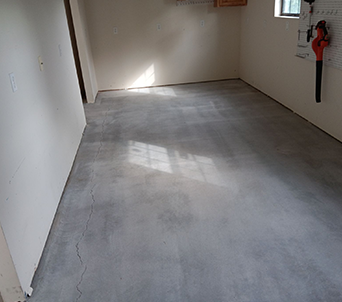
- For hairline cracks: Use an angle grinder with a crack-chasing diamond blade to widen the crack slightly (at least 1/4 inch wide and 1/4 inch deep). This creates a clean, vertical channel (or an inverted “V” shape) that gives the repair material enough surface area to bond to.
- For wider cracks: Use a cold chisel and a hammer to chip away any loose, crumbling concrete along the edges.
- Clean thoroughly: Scrub the inside of the crack with a wire brush. Use a shop vac, leaf blower, or compressed air to blow out every speck of dust. If the crack has oil or grease stains, clean it with a heavy-duty degreaser and let it dry completely for 24 hours.
Step 2: Install a Backer Rod (For Deep Cracks)
If your crack is deeper than 1/2 inch, do not fill the entire void with expensive sealant. It will sink, shrink, and fail to cure properly. Instead, tuck a foam backer rod (slightly wider than the crack) into the gap. Push it down until it sits about 1/4 inch to 1/2 inch below the concrete surface. This controls the depth of the sealant and ensures a proper “two-point bond” (adhering to the sides of the crack, not the bottom).
Step 3: Apply the Sealant or Filler
- For horizontal surfaces: Use a self-leveling polyurethane or polyurea sealant. Cut the nozzle of the caulk tube at a steep angle and squeeze the material directly into the crack, letting it flow and level out naturally. Fill it to just below the surface to prevent a raised bump.
- For vertical surfaces: Use a non-sag polyurethane sealant or an epoxy injection kit with port entries. Apply the material from the bottom of the crack upward to prevent air pockets.
Step 4: Tool and Finish the Surface
If using a non-sag sealant, use a wet putty knife or a trowel to smooth the surface immediately after application. To help the repair blend in with your existing concrete, you can sprinkle fine dry sand over the wet sealant. Once cured, sweep away the excess sand.
For a comprehensive walkthrough of this process on larger, more intimidating cracks, refer to our article: Big Cracks Are No Match for This Repair Guide.
Matching Crack Characteristics to the Best Way to Fill Cracks in Concrete
Not all cracks are created equal. Matching the right product to your specific crack size and orientation is crucial:
- Hairline Cracks (Under 1/8″ wide): These are best treated with low-viscosity, gravity-feed resins or liquid concrete fillers. These thin liquids penetrate deep into the microscopic fissures without requiring extensive routing.
- Wide or Deep Cracks (1/8″ to 1/2″ wide): These require a high-quality flexible polyurethane sealant (like Sikaflex) combined with a foam backer rod.
- Extremely Wide Cracks (1/2″ to 3″ wide): Products like Sashco Slab Concrete Crack Filler are designed specifically to span wide gaps on sidewalks, patios, and driveways while retaining high flexibility.
- Vertical Walls: Never use self-leveling sealants on vertical surfaces; they will run out of the crack and pool on the floor. Instead, use non-sag polyurethane caulks, rigid epoxy pastes, or specialized foundation injection kits.
If you are dealing with foundation issues or basement wall fractures, check out our guide on The Best Ways to Fix Your Garage Foundation for Good.
Frequently Asked Questions about Concrete Crack Repair
When should I call a professional instead of repairing concrete cracks myself?
While minor cracks in a driveway or patio are great DIY projects, some situations require professional intervention. You should call in an expert if you notice any of the following structural warning signs:
- Cracks wider than 1/4 inch
- One side of the crack is visibly higher than the other (shifting slabs)
- Horizontal cracks in basement or foundation walls
- Cracks accompanied by bowed walls, sticking doors, or sloping floors
These symptoms often point to deep subgrade settlement, hydrostatic pressure, or structural foundation failure that a simple surface sealant cannot fix.
How long do flexible polyurethane and epoxy crack repairs last?
When performed with high-quality materials and proper surface preparation, a flexible polyurethane or epoxy repair can easily last 5 to 10 years. The ultimate lifespan depends on local weather extremes, the amount of heavy vehicle traffic the slab receives, and whether the concrete is sealed to protect it from water penetration.
Can I apply a decorative coating over repaired concrete cracks?
Yes, but the quality of the finished look depends entirely on the repair materials used. If you plan to apply a seamless, high-performance polyaspartic or epoxy floor coating, the cracks must be filled with a material that can be ground flat and will bond chemically with the coating system.
Traditional elastomeric caulks cannot be sanded and may cause the topcoat to peel. Professionals use specialized rapid-cure polyurea joint fillers that cure rock-hard yet retain enough structural elongation to prevent the coating from cracking when the slab shifts.
To see how we transform cracked, worn concrete into beautiful, seamless masterpieces, read about our process for Garage Floor Restoration in Oneida TN.
Conclusion
Finding the best way to fill cracks in concrete is the first step toward preserving your home’s value and preventing expensive structural issues down the road. While DIY caulking and patching compounds can handle minor surface cracks, achieving a truly seamless, permanent, and beautiful result on a garage floor requires professional grade materials and equipment.
At Garage Floor Masters, we don’t just patch cracks — we restore floors for good. Based in Knoxville, TN, we provide premium garage floor coatings throughout East Tennessee, including Oak Ridge, Maryville, Sevierville, Crossville, and Lenoir City.
Our high-performance polyaspartic floor coatings are:
- 4x stronger than standard epoxy
- UV stable (they won’t yellow or fade in the sun)
- Installed in just one day
- Available in 140+ gorgeous colors
Best of all, our professional preparation process includes diamond-grinding your concrete and filling every crack and joint with industrial-grade polyurea, ensuring a perfectly smooth, durable, and low-maintenance finish built to handle everyday use.
Because every concrete slab has its own unique quirks, we don’t believe in one-size-fits-all pricing. Our rates are based on the specific condition of your concrete and the custom features you select.
Ready to say goodbye to unsightly cracks forever? Contact us today to schedule your free on-site estimate and take the first step toward a beautiful, lifetime-guaranteed floor.