
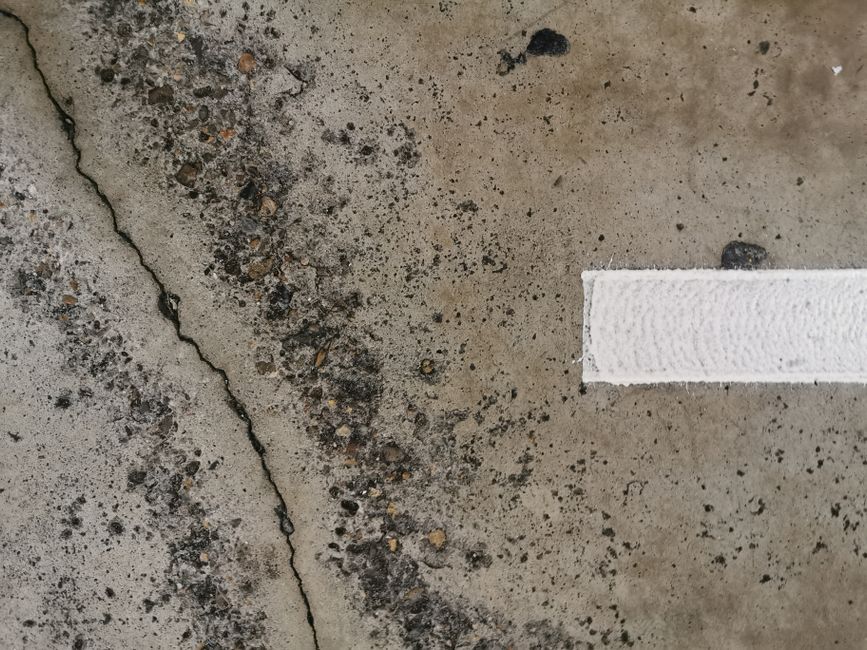
Why Big Cracks in Your Concrete Floor Demand Immediate Attention
Fixing large cracks in concrete is something most homeowners will face at some point — and the sooner you act, the better.
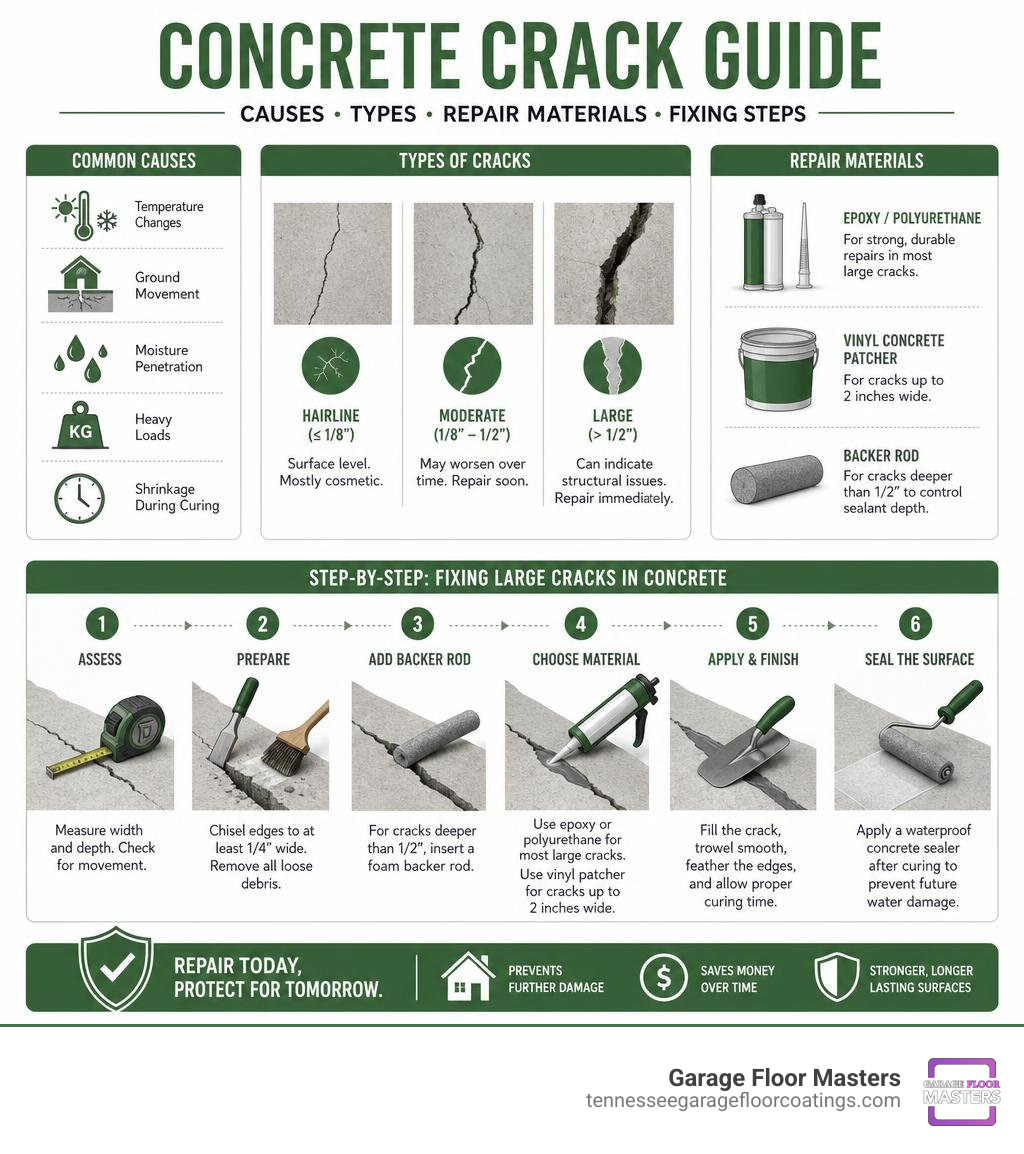
Here’s a quick overview of how to do it:
- Assess the crack — measure width and depth, and check for signs of structural movement
- Prepare the crack — chisel edges to at least 1/4 inch wide, remove all loose debris with a wire brush and shop vacuum
- Add a backer rod — for cracks deeper than 1/2 inch, insert a foam backer rod before filling
- Choose your repair material — use epoxy or polyurethane for most large cracks; use vinyl concrete patcher for cracks up to 2 inches wide
- Apply and finish — fill the crack, trowel smooth, feather the edges, and allow proper curing time
- Seal the surface — apply a waterproof concrete sealer after curing to prevent future water damage
Concrete is tough, but it isn’t invincible. Your garage floor faces a constant fight against temperature swings, ground movement, and moisture — and eventually, cracks show up.
Some are minor. Others are a sign of something bigger going on underneath.
The good news? Most large concrete cracks are repairable without calling in a full demolition crew. But here’s the catch: ignoring them costs more over time. Research suggests that delaying repairs can increase your total repair costs by up to 40%.
About 30% of all concrete cracking is linked to shrinkage during the curing process alone. Add soil movement, freeze-thaw cycles, and heavy loads on top of that, and it’s easy to see why cracks are so common — especially in garage floors here in Knoxville, where seasonal temperature swings put concrete through a real workout.
This guide walks you through everything: what causes large cracks, how to tell a cosmetic crack from a structural one, which materials actually work, and exactly how to repair and seal a crack the right way.
Fixing large cracks in concrete vocabulary:
Understanding the Causes of Large Concrete Cracks
To successfully execute a concrete repair, you first have to understand why the concrete cracked in the first place. If you do not address the root cause, even the most expensive polymer repair will fail as the slab continues to move. Concrete is incredibly strong under compression (pushing forces), but it has very low tensile strength (pulling forces). When external forces pull concrete apart, it cracks.
Several factors cause these forces:
- Drying Shrinkage: As freshly poured concrete cures, excess water evaporates, causing the slab to shrink. If the concrete is restrained by the subgrade, adjacent walls, or plumbing pipes, internal tension builds up. This leads to shrinkage cracks, which account for roughly 30% of all concrete cracking.
- Soil Movement and Settling: Concrete is only as stable as the soil beneath it. In East Tennessee, our clay-heavy soils expand when wet and contract when dry. If the soil beneath your garage or driveway shifts, erodes, or settles unevenly, the concrete slab loses its uniform support. This uneven distribution of weight causes the slab to bend and crack under its own weight or the weight of vehicles.
- Water Infiltration: Water is concrete’s greatest enemy. When water seeps into minor cracks, it can wash away the underlying soil, creating empty voids beneath the slab. Furthermore, during cold winter nights, trapped water freezes and expands, widening the crack through a process known as freeze-thaw damage.
- Thermal Expansion and Contraction: Concrete expands when heated by the summer sun and contracts when cooled by winter air. If control joints were not cut deep enough or spaced properly during installation, the slab will crack along lines of least resistance to relieve this thermal stress.
Understanding these forces is key to preventing future damage. You can read more about these underlying mechanics in our detailed breakdown of Cracked Garage Foundation Causes and Risks You Need to Know.
Structural vs. Cosmetic: When to Call a Professional
Before grabbing a chisel and a bag of concrete patch, you must determine if you are dealing with a simple cosmetic blemish or a serious structural failure.
Cosmetic cracks are typically stable, hairline-to-medium-sized cracks (under 1/4 inch wide) that do not present a height difference between the two sides. While they look bad and let in moisture, they do not threaten the structural integrity of your home.
Structural cracks, on the other hand, are a different story. You should seek professional help immediately if you notice any of the following warning signs:
- Active Movement: If you mark the ends of a crack and notice it is continuing to grow in length or width over several weeks, the crack is active.
- Heaving or Settling (Differential Settlement): If one side of the crack is physically higher than the other (an uneven lip), the slab has shifted. This is a trip hazard and a clear sign of subgrade failure.
- Cracks Wider than 1/4 Inch: Very wide cracks indicate significant movement.
- Horizontal Cracks in Foundation Walls: Horizontal cracks, particularly those accompanied by bowed walls, indicate hydrostatic pressure pushing against the foundation. This is a severe structural risk.
- Water Seepage: If water is actively bubbling or seeping through the crack, surface patches will fail. The water pressure must be relieved, or a specialized injection system must be used.
Ignoring these major warning signs can lead to foundation failure, lowering your property value and costing thousands more down the road. If you suspect your garage foundation is compromised, check out The Best Ways to Fix Your Garage Foundation for Good for professional guidance on structural stabilization.
Choosing the Right Materials for Fixing Large Cracks in Concrete
Using the wrong material is the number one reason DIY crack repairs fail within a few months. To get a permanent fix, you must match the repair material to the crack’s characteristics (width, depth, and whether it is subject to movement).
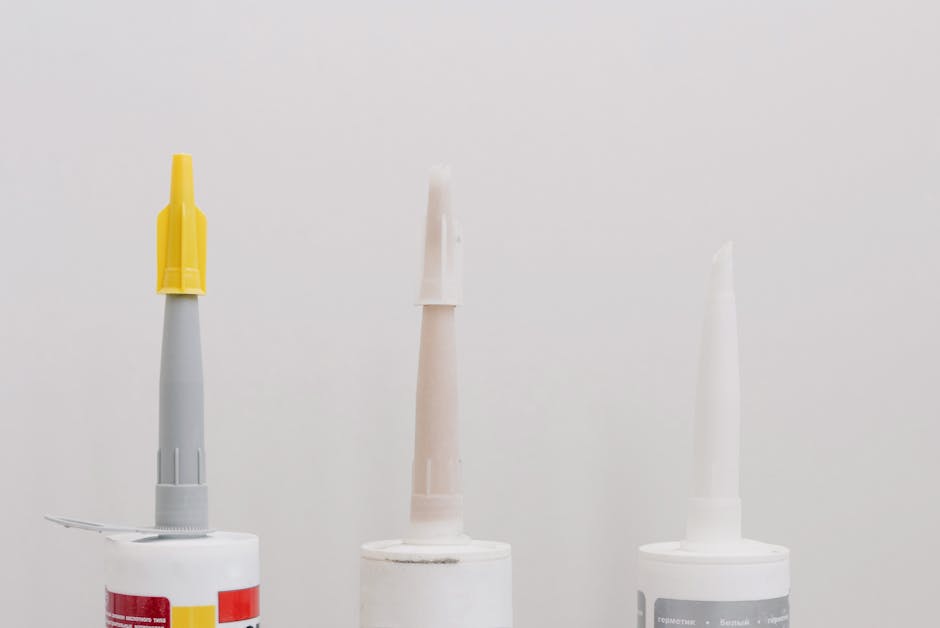
When fixing large cracks in concrete, you have several options:
- Epoxy Injection Systems: Epoxy is a rigid adhesive. When injected into a crack, it bonds to the concrete with a tensile strength that often exceeds 4,000 PSI — making the repaired joint up to five times stronger than the concrete itself. Epoxy is the gold standard for structural repairs in dry, static cracks. According to the American Concrete Institute, epoxy injection boasts a success rate of over 90% when applied correctly.
- Polyurethane and Polyurea Fillers: These are flexible or semi-rigid materials. If your concrete crack is subject to minor thermal movement (like outdoor driveways or patio slabs), a rigid epoxy will simply crack again next to the repair. Polyurethane and polyurea remain flexible, stretching and compressing as the slab moves. Polyurea also cures incredibly fast — often ready for foot traffic in 15 minutes and vehicle traffic in less than an hour.
- Vinyl Concrete Patching Compounds: For very large cracks (between 1/2 inch and 2 inches wide) that are stable and non-structural, a vinyl concrete patcher is an excellent, cost-effective choice. It contains special vinyl resins that improve adhesion and allow it to be feathered to a thin edge without cracking or peeling.
For a deeper dive into choosing the right polymer and avoiding common application mistakes, read our guide on how to Stop the Split with These Epoxy Floor Crack Repair Secrets.
Hydraulic Cement vs. Modern Polymers
For decades, hydraulic cement was the go-to product for patching concrete. It is a dry powder that, when mixed with water, sets extremely fast (often in 3 to 5 minutes) and expands slightly as it cures to plug active water leaks.
However, while hydraulic cement is great for plugging a hole in a static basement wall to stop a leak, it is a poor choice for repairing typical floor cracks.
Here is why modern polymers outperform hydraulic cement:
| Feature | Hydraulic Cement | Modern Polymers (Epoxy / Polyurethane) |
|---|---|---|
| Flexibility | Completely rigid. Will crack with any slab movement. | Flexible to semi-rigid. Accommodates thermal expansion. |
| Adhesion | Poor chemical bond; relies mostly on mechanical wedge. | Excellent chemical bond. Glues the concrete back together. |
| Durability | High risk of shrinking, cracking, and popping out over time. | Long-lasting, highly resistant to chemicals, salts, and wear. |
| Moisture Tolerance | Excellent for stopping active leaks, but degrades if wet-dry cycles continue. | Moisture-tolerant formulas seal out water permanently. |
| Aesthetics | Dries to an uneven, chalky gray that stands out. | Can be ground flat, colored, or coated over seamlessly. |
Step-by-Step Guide to Preparing, Repairing, and Maintaining Concrete
Ready to tackle that crack? Having the right tools on hand will make the difference between a messy, temporary patch and a professional-grade, permanent repair.
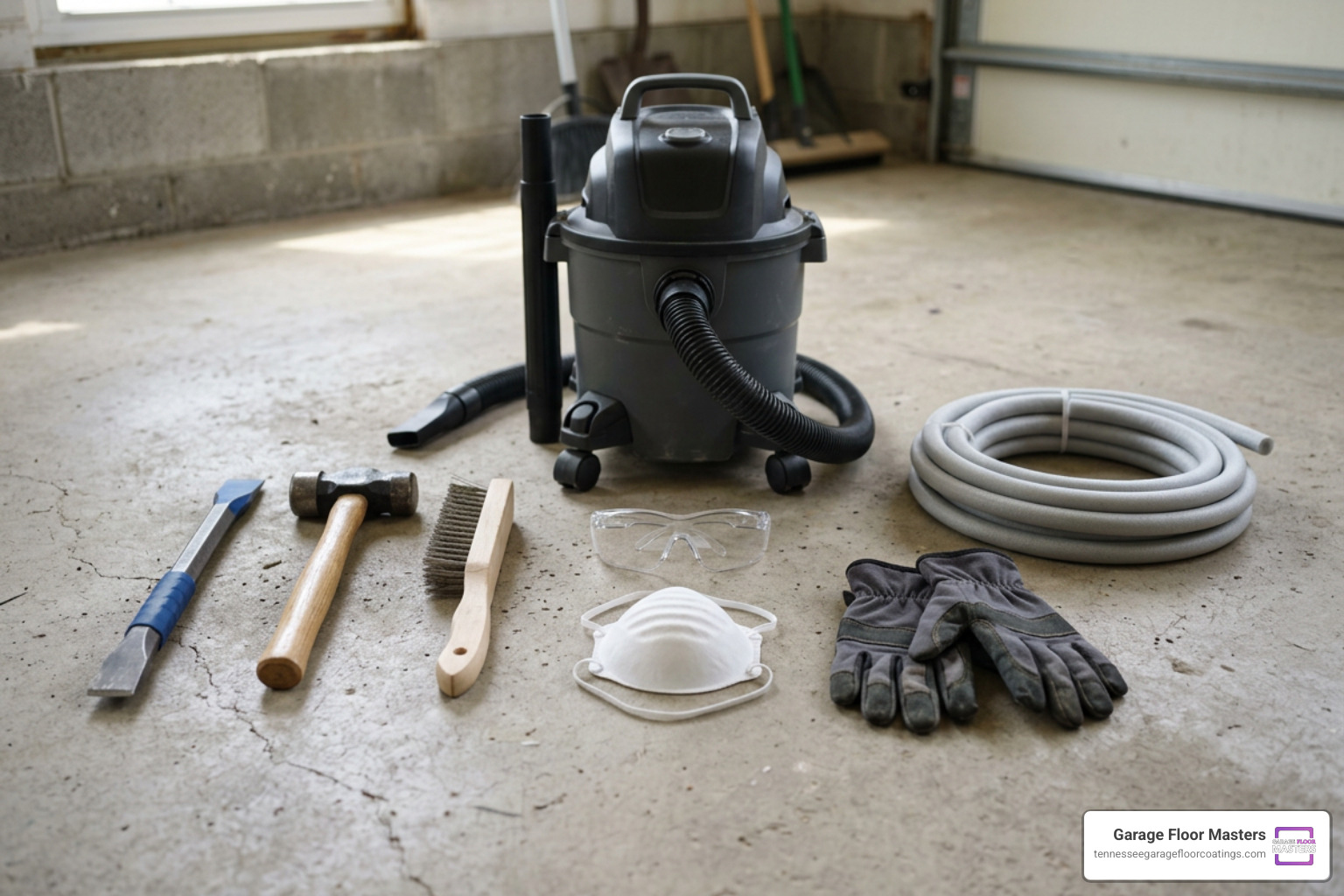
Recommended Tool & Safety Checklist
- Safety Gear (PPE): Safety glasses, dust mask (N95 or better), heavy-duty waterproof gloves, long sleeves, and pants.
- Preparation Tools: Cold chisel, club hammer (or an angle grinder with a diamond tuck-pointing blade), wire brush, shop vacuum.
- Application Tools: Standard caulk gun (or dual-cartridge dispensing gun), margin trowel, putty knife.
- Materials: Foam backer rod (for cracks deeper than 1/2 inch), repair compound (epoxy, polyurethane, or vinyl patcher), clean silica sand (optional, for bulk filling).
Before you begin, make sure you understand the overall scope of the project by reading The Ultimate Guide to Permanent Garage Floor Repair.
Preparing the Surface for Fixing Large Cracks in Concrete
You cannot simply pour repair material into a dirty, dusty crack and expect it to hold. Proper surface preparation is 90% of the job.
Step 1: Widen the Crack (Chasing)
To give your repair material enough surface area to bond to, you must widen the crack to a minimum of 1/4 inch. Use a cold chisel and a club hammer to break away loose, crumbling concrete along the edges.
Pro Tip: Do not chisel straight down. Hold the chisel at an angle to create an “undercut” or an inverted “V” shape (where the bottom of the crack is wider than the top). This creates a mechanical key that locks the repair material in place so it cannot pop out later. Alternatively, you can use an angle grinder with a diamond blade to quickly chase the crack.
Step 2: Clean Thoroughly
Once the crack is widened and undercut, use a stiff wire brush to vigorously scrub the inside edges, loosening any remaining dirt, dust, or old sealant.
Next, use a high-powered shop vacuum to suck out all the loose debris. The concrete must be completely free of dust, oil, paint, and standing water. If you must wash the crack with water, allow it to dry completely (usually 24 hours) before applying polymer repair materials, as moisture can prevent proper adhesion.
Curing, Blending, and Finishing for Fixing Large Cracks in Concrete
With the crack prepped, it is time to fill and finish.
Step 3: Insert a Backer Rod (For Deep Cracks)
If your crack is deeper than 1/2 inch, do not fill the entire depth with expensive repair polymer. Instead, press a foam backer rod into the crack using a putty knife. The backer rod should be slightly wider than the crack so it fits snugly. Place it about 1/2 inch below the concrete surface. This saves material and prevents the sealant from sinking or sagging.
Step 4: Apply the Repair Compound
If using a self-mixing epoxy or polyurethane cartridge, insert it into your caulk gun, attach the static mixing nozzle, and purge a small amount to ensure an even mix. Place the nozzle tip deep into the crack and pull the trigger, moving slowly to fill the crack from the bottom up.
If using a vinyl concrete patcher for very wide cracks (up to 2 inches), mix the compound to a thick, putty-like consistency. Apply it in layers no thicker than 1/4 inch at a time, tamping each layer down to eliminate air pockets.
Step 5: Trowel and Feather
Immediately after filling, use a margin trowel or putty knife to scrape away excess material. Hold the trowel flat against the concrete and drag it along the crack to create a smooth, level finish. Feather the edges of the patch so it blends seamlessly with the surrounding concrete.
Step 6: Curing and Temperature Control
Most polymer repairs require temperatures between 40°F and 100°F to cure properly. Keep the area completely dry and free of traffic during the curing process. While some hybrid urethanes cure in 15 minutes, standard epoxies and vinyl patchers may require 24 to 48 hours before they can handle heavy vehicle traffic. Proper curing can increase the patch’s final strength by over 50%.
Step 7: Blending and Sealing
Once cured, you may notice the repaired area is slightly higher than the surrounding floor or has a different texture. You can use a 5-inch angle grinder with a diamond cup wheel to grind the high spots flat.
To protect your repair and make it blend in, apply a high-quality waterproof concrete sealer over the entire slab. This helps prevent future water infiltration by up to 50% and unifies the floor’s appearance.
Frequently Asked Questions about Concrete Crack Repair
Can I use hydraulic cement for active foundation cracks?
No. Hydraulic cement is completely rigid. If a foundation crack is active (meaning the house is still settling or shifting due to seasonal soil changes), the concrete will continue to move. Because hydraulic cement cannot stretch, it will quickly crack, lose adhesion, and fail. For active cracks, you must use a flexible polyurethane injection or seek professional foundation stabilization.
How long should I wait before driving on a repaired concrete crack?
This depends entirely on the material used:
- Hybrid Urethanes: Often ready for foot traffic in 15 minutes and vehicle traffic in under 1 hour.
- Epoxies: Typically require 12 to 24 hours to cure before light foot traffic, and 48 to 72 hours for vehicles.
- Vinyl Concrete Patcher: Supports foot traffic in 24 hours and wheeled traffic after 3 days.
Always consult the manufacturer’s technical data sheet for exact curing times based on your local temperature.
What is the best way to fix a crack wider than 2 inches?
For extremely wide cracks, a standard liquid sealant will simply run out or sag. Instead, use a vinyl concrete patcher applied in 1/4-inch layers. For added structural reinforcement, you can drill holes into the sides of the crack, install Tapcon anchors, and wrap them with steel reinforcement wire before pouring the patch. This mechanically anchors the new patch to the old concrete.
Conclusion: Get a Permanent, Beautiful Solution with Garage Floor Masters
Fixing large cracks in concrete is a satisfying DIY project that can save you money and protect your home from water damage. By taking the time to properly chisel, clean, fill, and seal your concrete, you can achieve a durable repair that lasts for years.
However, even the best DIY patch is still a patch. It will always be visible, and over time, new cracks can develop elsewhere in the slab.
If you want a truly permanent, maintenance-free, and beautiful solution for your garage floor, Garage Floor Masters is here to help. We provide professional garage floor coating services throughout East Tennessee, including Knoxville, Oak Ridge, Maryville, Sevierville, and the surrounding areas.
Our high-performance polyaspartic and epoxy floor coatings are:
- 4x Stronger than Standard Epoxy: Engineered to handle heavy vehicle traffic, impact, and chemical spills without cracking or peeling.
- Installed in Just One Day: Our professional crews prep, repair, and coat your floor in a single day, minimizing your downtime.
- UV Stable: Our coatings won’t yellow or fade in the sun, making them perfect for garages, patios, and pool decks.
- Available in 140+ Colors: Choose from a massive variety of beautiful flake and solid color finishes to match your style.
We customize every project based on the condition of your concrete and the specific features you select. Contact us today to schedule your free on-site estimate and turn your cracked, worn-out concrete into a stunning, durable masterpiece!
Explore Our Garage Floor Coatings and Get a Free Estimate Today!