
Is Your Garage Foundation Failing? Here’s What to Do
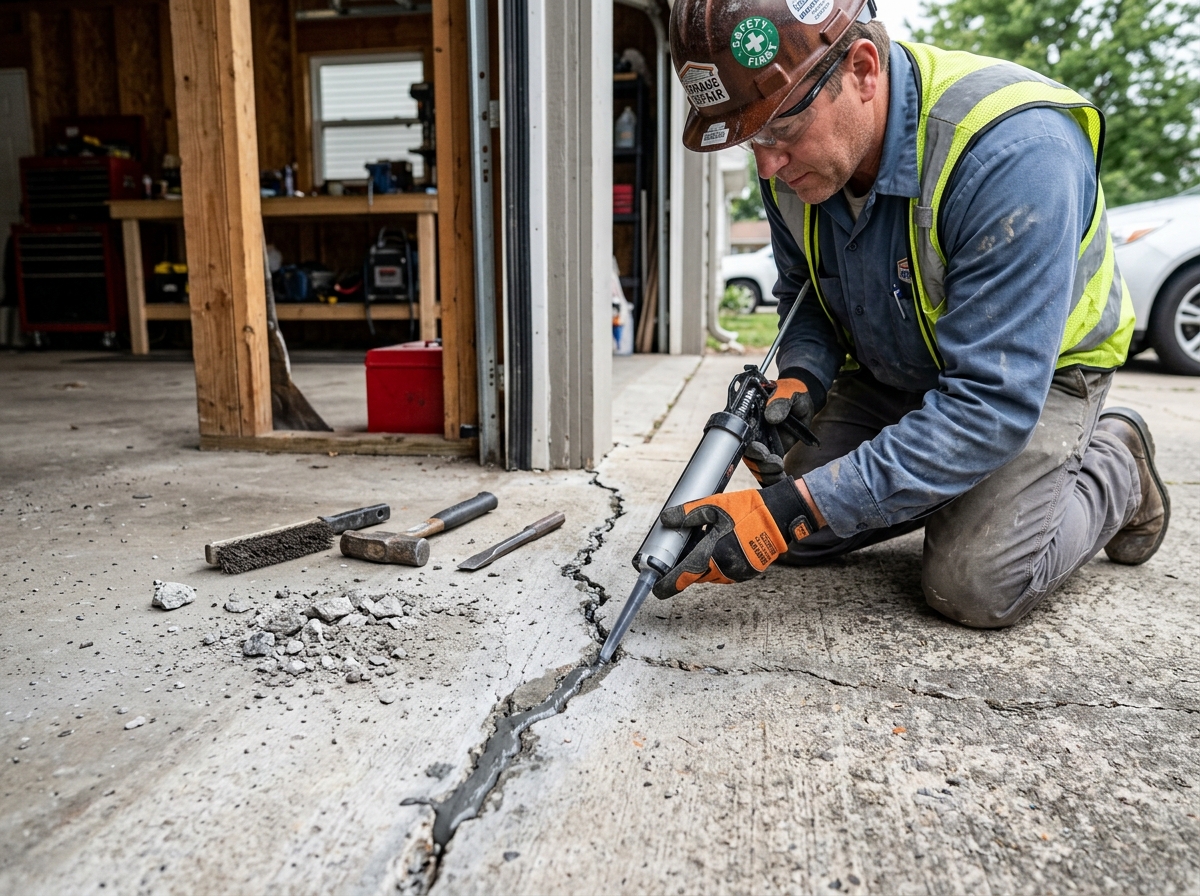
Garage foundation repair is the process of stabilizing, lifting, or reinforcing a damaged garage slab or foundation wall before small problems become expensive structural failures.
Quick answer — the most common repair options are:
- Polyjacking — polyurethane foam injected under the slab to fill voids and lift settled concrete ($900–$7,500 depending on area size and project condition)
- Mudjacking — a cement-and-soil slurry pumped under the slab for a lower-cost lift (though it needs repeating sooner)
- Steel push piers or helical piers — driven deep into stable soil to permanently support a sinking foundation ($1,500–$2,500 per pier installed)
- Concrete replacement — full removal and repour for slabs too damaged to save
- Crack sealing and patching — for minor surface cracks that haven’t yet reached structural territory ($10–$20 DIY patch kits)
Pricing varies widely based on project condition, soil type, and the method required. That’s exactly why a free on-site estimate is the smartest first step.
Here’s the thing most homeowners miss: a crack in your garage floor probably looks like a cosmetic nuisance. Maybe some settling from winter frost. Easy to ignore.
But cracks in a garage floor are often a symptom of something happening underneath — soil moving, eroding, or compressing in ways that slowly undermine the concrete above it. Left alone, foundation issues don’t stabilize on their own. They get worse.
Your garage also isn’t isolated from your home. If your garage shares a wall with the main structure, a sinking garage foundation puts stress on that connection too. Early action protects the whole building, not just the slab you park on.
The good news: most garage foundation problems are very fixable — if you catch them early and choose the right method.

Identifying the Need for Garage Foundation Repair
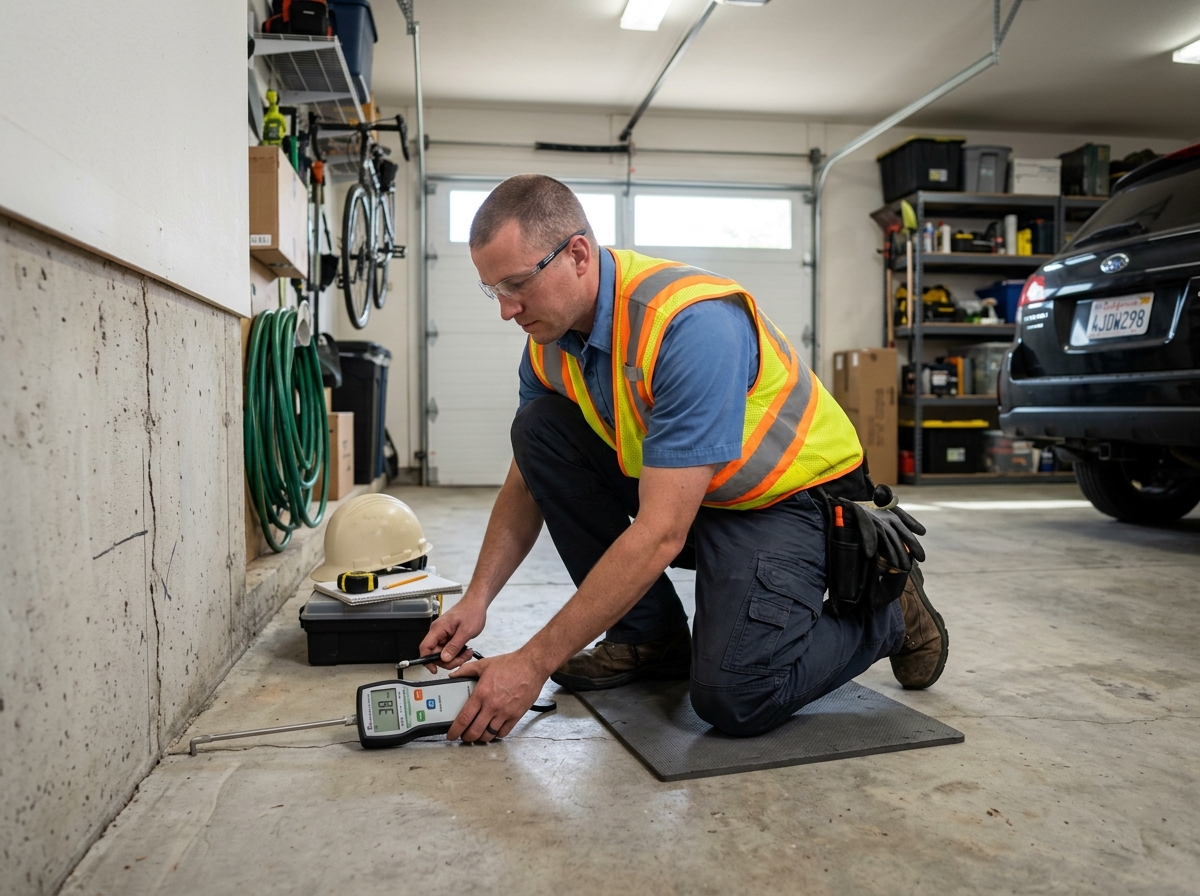
When we talk about garage foundation repair, we aren’t just talking about a messy floor. We are talking about the very bones of your garage. In East Tennessee, from the hills of Knoxville to the valleys of Maryville and Sevierville, our soil can be a bit of a troublemaker.
The primary culprit is often soil movement. Many areas in our region deal with expansive clay. This type of soil acts like a sponge; it swells up when we get those heavy Tennessee rains and shrinks down during a dry spell. This constant “breathing” of the earth puts immense pressure on your foundation, a phenomenon known as hydrostatic pressure.
Temperature fluctuations also play a major role. Concrete naturally expands and contracts as the seasons change. Over years of freezing winters and humid summers, this stress can lead to Garage Floor Cracking. Furthermore, poor drainage—such as gutters that dump water right at the corner of the garage—can wash away the supporting soil (erosion), creating “voids” or empty pockets where the slab eventually sinks.
Warning Signs of Serious Garage Foundation Repair Issues
How do you know if you’re looking at a minor crack or a major structural failure? Your garage will usually try to tell you something is wrong. Keep an eye out for these “red flags”:
- Sticking Doors and Windows: If your side entry door suddenly won’t latch or the windows are jammed, the frame has likely shifted because the foundation moved.
- Wall Rotation or Bowing: If the top of your garage wall seems to be leaning out or the middle is curving inward, the foundation is no longer providing level support.
- Floor Slopes: If a basketball rolls to one corner of the garage on its own, your slab is settling unevenly.
- Exterior Gaps: Look for spaces opening up between the garage door frame and the brickwork, or gaps where the garage meets the main house.
- Moisture Seepage: Water bubbling up through floor cracks or damp spots at the base of the walls often indicates that the foundation has shifted enough to let groundwater in.
Cosmetic Cracks vs. Structural Failure
Not every crack is a catastrophe. We often see hairline cracks in newer garages caused by “curing shrinkage.” As concrete dries, it loses volume and may develop tiny, superficial lines. These are generally cosmetic.
However, we follow the “quarter-inch rule.” If a crack is wider than 1/4 inch, or if one side of the crack is higher than the other (a vertical offset), it is a sign of foundation settling. Horizontal cracks in a foundation wall are particularly scary because they often indicate that the soil outside is pushing the wall inward. Stair-step cracks in brick or masonry are another classic sign that one corner of the structure is “dropping” faster than the rest. If you’re unsure, checking our guide on Garage Floor Cracking can help you identify the severity.
Professional Methods for Fixing a Sinking Garage
If your garage is sinking, “patching” the top won’t help because the ground underneath is still unstable. We use several professional methods to restore structural integrity.
Slabjacking and Polyjacking Solutions
For slabs that have sunken but are still in one piece, “jacking” is the preferred route.
- Polyjacking (Polyurethane Injection): This is the modern gold standard. We drill small, penny-sized holes in the slab and inject a high-density, structural resin. This foam expands to fill every void and then exerts enough pressure to lift the concrete back to its original height. It is waterproof, never washes away, and cures in about 15 to 45 minutes.
- Mudjacking: This is the older “budget” version. A slurry of cement, topsoil, and water is pumped under the slab. While effective in the short term, it is very heavy and can actually cause the soil to sink further over time. Mudjacking often needs to be repeated every 2–5 years, whereas polyjacking is considered a much more permanent fix.
Piering Techniques for Garage Foundation Repair
When the actual perimeter footings of the garage are failing, we have to look deeper—literally. Piering involves driving structural supports deep into the earth until they hit load-bearing strata or bedrock.
- Steel Push Piers: These use the weight of the building to “push” the pipe down into the ground. Once they hit solid rock, hydraulic jacks are used to lift the garage back to level.
- Helical Piers: These look like giant screws. They are “screwed” into the soil, which makes them excellent for the varied soil types we find around Oak Ridge and Clinton. They don’t require the building’s weight to install, so they are perfect for lighter structures like detached garages.
- Concrete Piers: These are deep holes filled with reinforced concrete. They are incredibly strong but take much longer to install because the concrete must cure for several days before the house can be rested upon them.
The Cost of Restoring Your Garage Foundation
Let’s talk numbers. We know that cost is the biggest concern for homeowners in the Knoxville area. Because every garage is different—some are on steep hills in Gatlinburg, others on flat lots in Powell—pricing is always custom.
Generally, garage foundation repair follows these ranges:
- Minor Polyjacking: $900 – $2,500 for small sections or walkways.
- Extensive Slab Leveling: $3,000 – $7,500 for a full 3-car garage floor.
- Piering Jobs: These are priced “per pier.” Most steel or helical piers cost between $1,500 and $2,500 each. A typical garage corner might need 3 to 5 piers, while a whole-garage stabilization could require 10 or more, leading to costs between $15,000 and $30,000.
Factors that influence the price include the depth of the bedrock (some contracts include a “depth clause” for extra feet of steel), permit fees, and the weight of the structure. While these prices might seem high, a stable foundation protects your home’s resale value. A house with a failing foundation is almost impossible to sell without a massive price drop.
Temporary Fixes and DIY Maintenance
If you aren’t ready for a full structural overhaul, there are ways to “buy time.”
- Vinyl Concrete Patches: For $10–$20, you can buy a bucket of patch mix to fill small cracks. This keeps water from getting under the slab and freezing, which prevents the crack from widening.
- Masonry Sealants: Products like NexusPro (a silicone-based sealant) are great for sealing joints. They stay flexible, so they won’t crack when the temperature changes.
- Crack Monitoring: You can buy “crack tell-tales” or simply mark the ends of a crack with a pencil and date it. If the crack grows an inch in a month, you have a structural emergency. If it hasn’t moved in a year, it might just be cosmetic.
How to Prevent Future Foundation Damage
The best garage foundation repair is the one you never have to do. Prevention is all about water management.
- Gutter Maintenance: Ensure your gutters aren’t overflowing. If water falls straight off the roof onto the ground next to your garage, it will erode the soil.
- Downspout Extensions: Water should be discharged at least 5 to 10 feet away from the foundation.
- Soil Grading: The ground around your garage should slope away from the walls. If the ground slopes toward the garage, you’re essentially inviting a flood under your floor.
- Root Barriers: Large trees like oaks or maples can suck hundreds of gallons of water out of the soil, causing the clay to shrink and the foundation to drop. Keep large trees a safe distance from the structure.
- Annual Inspections: Once a year, walk around your garage. Look for new cracks or gaps. Catching a problem when it’s a $1,000 polyjacking job is much better than waiting until it’s a $20,000 piering project.
Frequently Asked Questions about Garage Foundations
How long does a typical repair project take?
It depends on the method! Polyjacking is incredibly fast; we can often level a garage floor in a single day, and you can park your car on it shortly after. Piering is a bigger production. Between the initial inspection, engineering plans, permitting, and the actual installation, a major piering project can take anywhere from a few weeks to several months to fully complete.
What factors influence the total repair price?
The biggest factor is the “Scope of Work.” This includes the number of piers needed, the square footage of the slab being lifted, and the local cost of labor. Soil type also matters—if we have to drive piers 50 feet deep to hit solid ground in a marshy area near Loudon, it will cost more than hitting rock at 15 feet in Knoxville.
How do I choose a reputable repair company?
Don’t just go with the lowest bid. Look for:
- BBB Accreditation: Ensure they have a solid track record.
- Warranty Terms: A reputable company should offer a long-term, transferrable warranty (often 25 years to a lifetime for piers).
- Insurance: Make sure they carry both liability and workers’ comp.
- Specialized Experience: Fixing a garage slab is different from fixing a basement wall. Ensure they have specific experience with garage foundations.
Conclusion
Your garage is more than just a place to park your car; it’s a vital part of your home’s structural health. Whether you are in Lenoir City, Maryville, or right here in Knoxville, staying on top of your foundation’s condition is the best way to avoid a financial headache down the road.
At Garage Floor Masters, we believe in doing things right the first time. While we specialize in high-performance coatings, we know that a beautiful floor requires a stable foundation. If your foundation is sound but your floor is looking tired, our UV-stable, polyaspartic coatings are 4x stronger than epoxy and can be installed in just one day.
Don’t let a small crack turn into a sinking ship. Take care of your foundation today, and when you’re ready for a floor that’s as tough as it is beautiful, give us a call for a free on-site estimate.
Protect your investment with professional garage floor coatings