
What Does Metallic Epoxy Flooring Actually Cost in 2026?
The average cost of metallic epoxy flooring runs between $8 and $15 per square foot for professional installation, making it the most premium epoxy finish available.
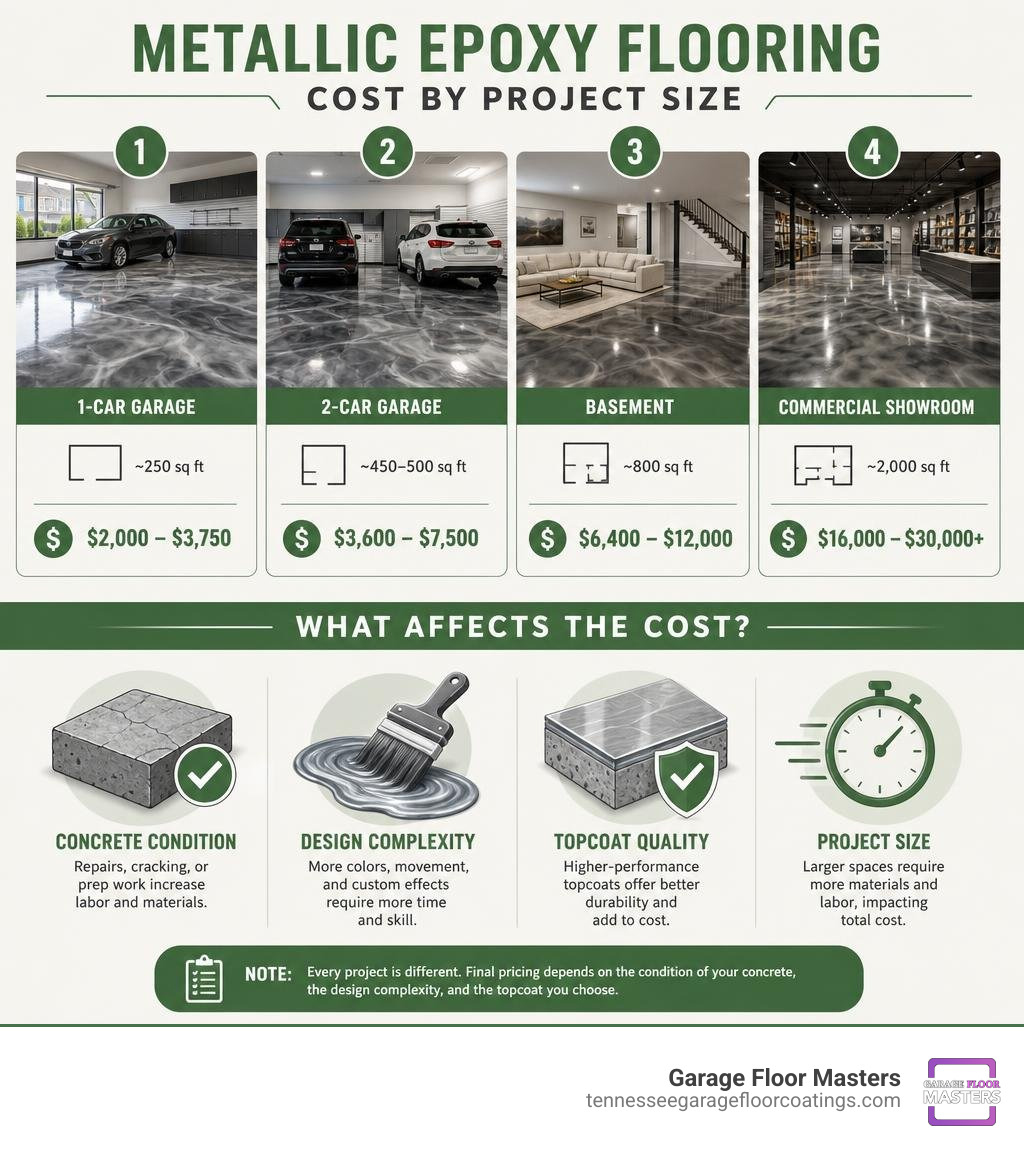
Here’s a quick snapshot of what to expect:
| Project Type | Square Footage | Estimated Cost Range |
|---|---|---|
| 1-car garage | ~250 sq ft | $2,000 – $3,750 |
| 2-car garage | ~450–500 sq ft | $3,600 – $7,500 |
| Basement | ~800 sq ft | $6,400 – $12,000 |
| Commercial showroom | ~2,000 sq ft | $16,000 – $30,000+ |
Note: Every project is different. Final pricing depends on the condition of your concrete, the design complexity, and the topcoat you choose. That’s exactly why Garage Floor Masters offers a free on-site estimate.
That marble-like shimmer. The liquid-metal 3D depth. The way it makes a plain concrete garage look like a luxury showroom floor.
Metallic epoxy delivers all of that — but it costs more than standard coatings, and the price range is wide enough to be confusing.
You might see quotes ranging from under $10 to over $15 per square foot for what sounds like the same job. That gap is real, and it’s not random. The condition of your slab, the complexity of the finish, and the quality of the topcoat all move the number significantly.
This guide breaks down exactly what drives that cost — so you know what you’re paying for before anyone sets foot in your garage.
Relevant articles related to average cost of metallic epoxy flooring:
- average cost of epoxy flooring
- concrete epoxy flooring cost calculator
- cost for garage epoxy flooring
What Is the Average Cost of Metallic Epoxy Flooring?
When you start researching the average cost of metallic epoxy flooring, you will quickly realize it sits at the high end of the concrete coating spectrum. While a standard solid-color epoxy might cost $5 to $8 per square foot, and a decorative flake system runs about $6 to $10 per square foot, metallic epoxy generally ranges from $8 to $15 per square foot (and can sometimes reach up to $18 per square foot for highly intricate, multi-color artistic designs).
Why the premium price tag? Unlike standard coatings, metallic epoxy is as much an art form as it is a construction project. It requires a highly skilled technician to manipulate metallic pigments within a 100% solids clear epoxy binder, creating those distinctive, swirling, three-dimensional patterns that mimic natural stone, marble, or even molten lava.
To help you put these numbers into perspective, let’s look at how metallic epoxy stacks up against other popular residential and commercial flooring options in the Knoxville, TN region:
| Flooring Type | Average Cost Per Square Foot (Installed) | Expected Lifespan | Maintenance Level |
|---|---|---|---|
| Metallic Epoxy | $8.00 – $15.00 | 10 – 20 Years | Low (Sweep & damp mop) |
| Standard Solid Epoxy | $5.00 – $8.00 | 5 – 10 Years | Low to Medium |
| Decorative Flake Epoxy | $6.00 – $10.00 | 10 – 15 Years | Low |
| Polished Concrete | $4.00 – $10.00 | 20+ Years | Low (Requires resealing) |
| Luxury Vinyl Plank (LVP) | $6.00 – $12.00 | 10 – 25 Years | Medium |
| Natural Stone / Marble Tile | $15.00 – $30.00 | 25+ Years | High (Grout cleaning, sealing) |
As you can see, while the initial investment for metallic epoxy is higher than standard paint-chip or solid coatings, it is significantly more affordable than the high-end natural stone or marble tile it replicates. It offers a seamless, non-porous surface that is incredibly easy to clean, making it a highly attractive option for homeowners who want a luxury look without the luxury maintenance. For a deeper dive into how these general costs are structured, you can read The Ultimate Guide to Epoxy Flooring Prices.
Key Factors That Drive Metallic Epoxy Pricing
No two concrete slabs are identical, and because metallic epoxy is a fluid-applied system, your final cost is highly customized. When we provide a quote for a home in Oak Ridge, Maryville, or Lenoir City, we evaluate several key variables that drive the price up or down.
To help you plan, you can use our guide to Calculate Your Epoxy Floor Costs Like a Pro to understand the math behind professional estimates. In the meantime, here are the primary cost drivers you need to know:
Concrete Surface Preparation and Moisture Mitigation
The secret to a flawless, long-lasting metallic epoxy floor lies entirely in the prep work. In fact, surface preparation can account for 25% to 40% of the total labor cost of a project.
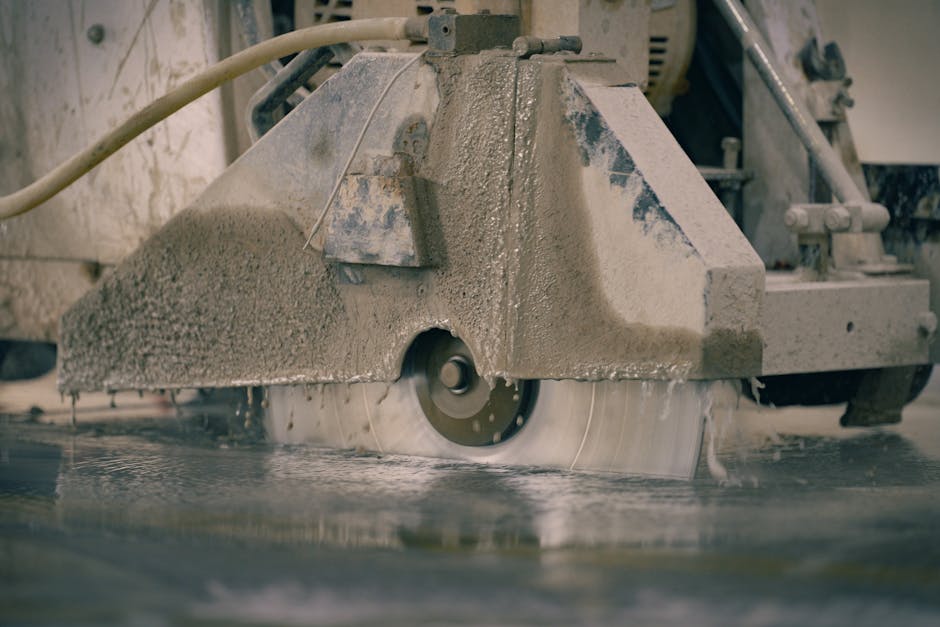
Before we can apply a single drop of epoxy, the concrete must be mechanically “profiled.” We use heavy industrial diamond grinders to open up the pores of the concrete, removing old sealers, paints, glues, and the weak top layer of concrete (known as laitance).
If a contractor offers to simply acid-etch your floor instead of diamond grinding, be very careful. Acid etching rarely provides the deep profile required for a high-build, 100% solids metallic system to bond permanently, which often leads to peeling and failure down the road. To avoid these costly mistakes, take a look at our article on how to protect your wallet: Don’t Get Floored by High Epoxy Rates.
Additionally, we must address:
- Crack and Joint Repair: Any cracks, divots, or pitted areas in your concrete must be filled with a rigid epoxy joint filler and ground flat. If we coat over an unaddressed crack, the metallic epoxy will sink into it, or the crack will telegraph right through your beautiful new finish.
- Moisture Vapor Mitigation: Concrete is like a hard sponge; it absorbs moisture from the soil beneath it. If moisture vapor pressure is too high, it can push the epoxy coating off the floor, causing blisters and bubbles. If our moisture tests reveal high levels of vapor transmission, we must apply a specialized moisture-mitigating primer. This extra step typically adds $1.50 to $3.50 per square foot to the project, but it is absolute insurance against floor failure.
Design Complexity and Pigment Customization
Metallic epoxy gets its signature depth from metallic powder pigments suspended in clear resin. The complexity of your chosen design plays a massive role in the final price:
- Single-Color vs. Multi-Color Blends: A simple, single-color metallic floor (such as a solid copper or deep charcoal) is the most cost-effective. Adding a second or third accent color (like swirling silver highlights into a charcoal base) increases material costs and requires more labor-intensive manipulation.
- Manipulation Techniques: To achieve effects like marble veins, cloud-like waves, or “molten metal” ripples, our installers must use specialized techniques. This involves using squeegees, rollers, air blowers, or spraying denatured alcohol and solvents onto the wet epoxy to make the pigments disperse and settle in unique patterns. The more hands-on manipulation required to achieve your dream design, the higher the labor cost.
Project Cost Breakdown by Common Spaces
Because the setup, equipment transport, and cleaning processes are relatively similar regardless of project size, larger open spaces typically enjoy a lower per-square-foot price than small, tight rooms. Let’s look at how these costs break down across the most common residential and commercial spaces we service in places like Sevierville, Loudon, and Powell. For a comprehensive look at garage projects, check out The Complete Guide to Garage Epoxy Installation Costs.
Average Cost of Metallic Epoxy Flooring for Garages
Garages are the most common spaces upgraded with metallic coatings. However, because garages are subject to vehicle traffic, road grime, and hot tires, they require highly durable topcoats.
- 1-Car Garage (~250 sq ft): Because of the small footprint, contractors often charge a minimum project fee to cover mobilization, equipment setup, and travel. You can expect a professional installation to range from $2,000 to $3,750, depending on concrete repairs.
- 2-Car Garage (~450–500 sq ft): This is the sweet spot where economies of scale begin to kick in. A standard two-car garage typically costs between $3,600 and $7,500 installed.
- 3-Car Garage (~600–750 sq ft): Larger garages allow our crews to work more efficiently, often bringing the average per-square-foot cost down toward the lower end of the pricing spectrum.
To compare these estimates to other garage coating styles, read our detailed guide on Garage Floor Coating Cost.
Average Cost of Metallic Epoxy Flooring for Basements and Showrooms
Indoor living areas and retail spaces are excellent candidates for metallic epoxy because they are protected from harsh outdoor elements and direct sunlight.
- Basements (~800 sq ft): Basements often require more extensive prep work due to older concrete, carpet glue removal, and moisture issues. A professional metallic basement installation generally runs between $6,400 and $12,000. However, the payoff is a completely waterproof, seamless floor that won’t harbor mold or mildew if your basement ever experiences a plumbing leak.
- Commercial Showrooms (~2,000+ sq ft): Large commercial layouts in retail stores, offices, or salons offer the best per-square-foot rates due to the massive open areas that allow for fast prep and application. These projects typically cost $16,000 to $30,000+. For commercial spaces, we always recommend upgrading to a high-traffic urethane or polyaspartic topcoat to handle heavy foot traffic and maintain that high-gloss shine. Learn more about your options on our Epoxy Floor Coatings page.
DIY Metallic Epoxy Kits vs. Professional Installation
It is incredibly tempting to browse a home improvement store or an online retailer, see a DIY metallic epoxy kit for $300 to $1,000, and think, “I can save thousands of dollars doing this myself over a weekend!”
While a highly experienced, meticulous DIYer can occasionally pull off a decent result, metallic epoxy has one of the highest failure rates of any DIY home improvement project. Here is why the real cost of a DIY job often ends up being much higher than hiring a professional from the start.

- The Prep Equipment Gap: Most DIY kits tell you to prep the floor with a packet of citric acid or muriatic acid. As we mentioned earlier, acid etching does not profile the concrete deeply enough for a thick metallic build. To do it right, you need to rent an industrial diamond grinder, vacuum system, and hand grinders for the edges. Renting this equipment for a weekend can easily add $300 to $500 to your DIY budget.
- Moisture and Environmental Risks: Professional installers use moisture meters to test the slab before mixing materials. If you apply epoxy over a damp slab, the coating will eventually delaminate and peel off in large sheets.
- The “Hot-Tire Pickup” Nightmare: Cheap, water-based DIY epoxy kits do not cure to the same hardness as professional-grade 100% solids epoxy. When you park a car with hot tires on a cheap DIY floor, the heat from the tires softens the plasticizers in the coating, causing the epoxy to peel off right under your tires.
- The Artistic Skill Curve: Metallic epoxy is a fast-curing, fluid-applied art medium. Once you mix the chemical A and B components, you have a very limited “pot life” (often only 15 to 30 minutes) to pour the product, spread it, and manipulate the pigments before it begins to harden. If you work too slowly, or if you apply it unevenly, you will end up with permanent roller marks, bald spots, or a muddy, dull finish.
If a DIY metallic floor fails, you cannot simply paint over it. You must pay a professional contractor to grind off the ruined sticky or peeling material, prep the concrete all over again, and apply a new floor. This means you end up paying for the project twice. To understand the risks and rewards of different garage coatings, read our guide on Epoxy Garage Floor Coating.
Frequently Asked Questions About Metallic Epoxy Costs
How long does a metallic epoxy floor last?
A professionally installed metallic epoxy floor with a high-quality topcoat can easily last 10 to 20 years in a residential setting, and 5 to 10 years in heavy commercial environments. To maximize this lifespan, the floor should be swept regularly to remove abrasive dirt and damp-mopped monthly with a pH-neutral cleaner. Avoid using harsh chemicals like bleach, ammonia, or citrus-based cleaners, which can dull the high-gloss finish over time. For maximum longevity, many homeowners choose to upgrade to our advanced Polyaspartic Floor Coatings.
Does Florida’s climate affect metallic epoxy installation costs?
While we focus our professional services in East Tennessee, many homeowners ask about regional climate factors. In highly humid climates (like Florida or even our humid summer months in Knoxville, Sevierville, and Pigeon Forge), moisture and temperature play a huge role in installation.
High humidity can introduce moisture vapor issues in concrete slabs, requiring mandatory moisture mitigation primers. Furthermore, extreme humidity and heat accelerate the curing time of epoxy, giving installers a much shorter window to manipulate the metallic pigments. In sunny areas, standard epoxy will also amber (turn yellow) under UV exposure. This is why we always recommend a UV-stable polyaspartic topcoat to protect your investment from fading or yellowing.
How does metallic epoxy compare to polyaspartic coatings?
While metallic epoxy offers unmatched artistic depth, polyaspartic coatings are the gold standard for durability, speed, and UV resistance.
- Curing Time: Epoxy typically takes 3 to 7 days to fully cure before you can drive on it. Polyaspartic coatings cure incredibly fast, allowing for a one-day installation where you can walk on the floor in 5 hours and park your car on it the very next day.
- Strength: Polyaspartic coatings are up to 4x stronger than standard epoxy, highly flexible (so they won’t crack as concrete shifts), and 100% UV stable, meaning they will never yellow or fade in the sun.
- Aesthetics: Metallic finishes are almost always executed using an epoxy base because epoxy’s slower cure time allows the metallic pigments to flow and create those beautiful 3D marble patterns. However, we can apply a clear polyaspartic topcoat over the metallic epoxy to give you the best of both worlds: the jaw-dropping beauty of metallic art with the bulletproof durability of polyaspartic protection.
To compare the long-term value of these systems, read The Real Cost of Polyaspartic Garage Floors.
Conclusion
A metallic epoxy floor is a stunning, high-end investment that completely transforms ordinary concrete into a seamless work of art. While the average cost of metallic epoxy flooring falls between $8 and $15 per square foot, the final price is always tailored to your concrete’s unique condition, your design goals, and your chosen topcoat.
At Garage Floor Masters, we bring professional, commercial-grade surface preparation and artistic expertise to homes and businesses throughout East Tennessee. Whether you are located in Knoxville, Oak Ridge, Crossville, Vonore, Sevierville, Lenoir City, Maryville, Tazewell, LaFollette, Loudon, Friendsville, Powell, Jefferson City, Pigeon Forge, Clinton, Andersonville, or White Pine, we are here to help you get a floor built to last.
We specialize in high-performance coatings, including our signature UV-stable polyaspartic systems that are 4x stronger than standard epoxy, installed in as little as one day, and available in over 140 customizable colors.
Ready to see what a premium, low-maintenance floor will cost for your specific project? Learn more about our high-performance Epoxy Polyaspartic Garage Floor Coatings in Knoxville and schedule your free, no-obligation estimate today.