
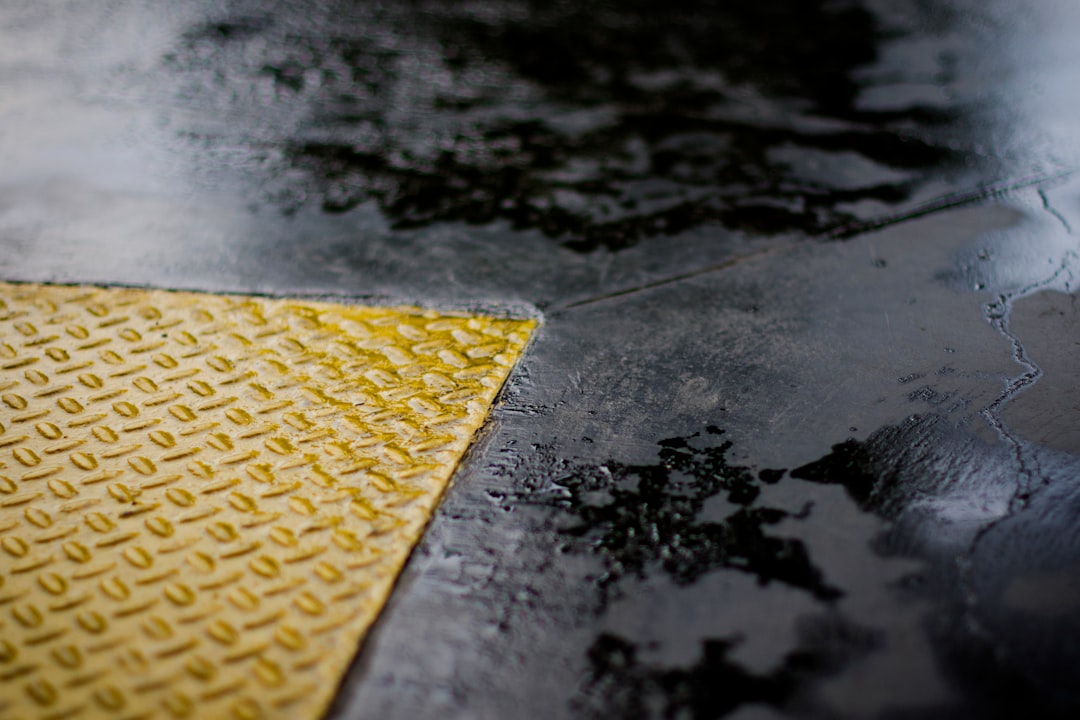
Why Your Garage Floor’s Slip Resistance Matters More Than You Think
Choosing the right non slip garage floor coating could be one of the most practical upgrades you make to your home — and one of the most stylish.
Quick Answer: Best Non-Slip Garage Floor Coatings at a Glance
| Coating Type | Slip Resistance | Durability | Cure Time | Best For |
|---|---|---|---|---|
| Polyaspartic flake system | Excellent | Highest | ~24 hours | Daily drivers, harsh climates |
| 100% solids epoxy flake | Very good | High | 2-7 days | Heavy use, budget-conscious |
| Water-based epoxy | Good | Moderate | 2-7 days | Barefoot/light traffic areas |
| 1-part anti-slip paint | Fair | Lower | 24 hours | DIY, low-traffic use |
Every year, slip-and-fall accidents rank among the most common causes of injury — and your garage floor is one of the biggest culprits. Rain tracked in from the driveway, snow melt in winter, oil drips under the car — a bare concrete floor handles none of it well.
The good news? Modern coatings don’t just make your floor safer. They make it look incredible too.
Whether you’re tired of stained, cracking concrete or you want a clean, finished space you’re actually proud of, the right coating does both jobs. But with so many products on the market — epoxy, polyaspartic, paint additives, flake systems — it’s easy to feel overwhelmed.
This guide cuts through the noise. We compare the top non-slip coating types, explain what actually creates traction underfoot, and help you figure out which system fits your garage, your climate, and your budget.
Pricing varies based on your floor’s condition and the features you choose — that’s why Garage Floor Masters offers a free on-site estimate.
Easy non slip garage floor coating word list:
What Is a Non Slip Garage Floor Coating and How Does It Work?
A non slip garage floor coating is a floor coating system designed to improve traction while still protecting the concrete underneath. In simple terms, it gives your floor grip.
That grip usually comes from one or more of these features:
- Texture built into the topcoat
- Aggregate such as silica, quartz, or polymer grit
- Decorative flakes that create a lightly textured surface
- An orange-peel style finish instead of a glass-smooth finish
The coating itself may be epoxy, polyaspartic, or another resin system. The slip resistance comes from the finished surface profile, not just the name on the label. That is an important distinction. A glossy coating can still be safe if it has the right texture, while a cheap “anti-slip” paint can still disappoint if the prep and topcoat are poor.
In garage environments, traction matters because concrete gets slick fast. Add a little rainwater, motor oil, or even condensation, and the floor turns into a skating rink nobody asked for.
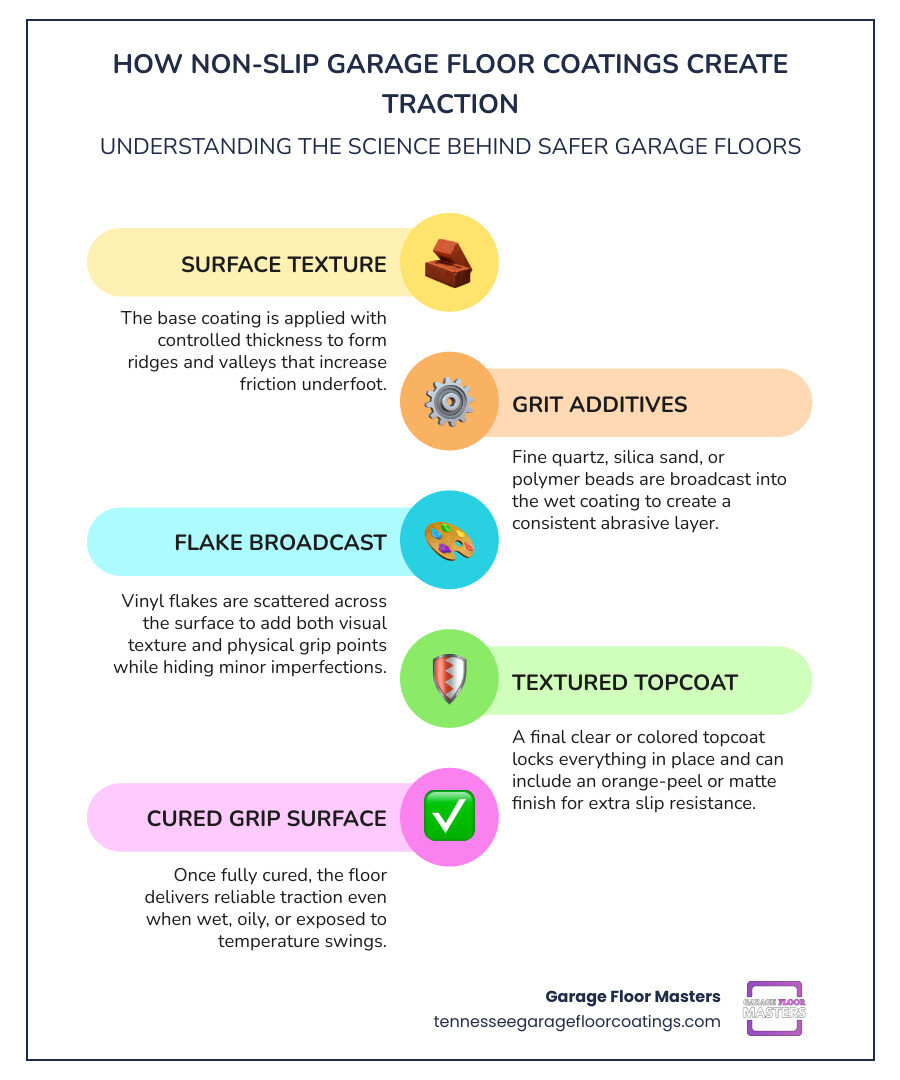
How a non slip garage floor coating creates traction
A good non-slip system works by creating microscopic and visible texture that helps shoes, bare feet, or paws grip the floor better.
Common traction methods include:
- Fine grit additives mixed into the final coat
- Quartz or silica aggregate broadcast into the coating
- Polymer beads for a less aggressive, more foot-friendly texture
- Decorative flake systems topped with a textured clear coat
The right texture depends on how the garage is used. Too little texture and the floor can feel slick when wet. Too much texture and it becomes harder to clean. The sweet spot is usually a medium texture that improves traction without turning sweeping into a cardio event.
Where slip resistance matters most in a garage
Some garages need more traction than others. We pay closest attention to slip resistance when the floor sees:
- Rainwater tracked in from vehicles
- Winter moisture and freeze-thaw conditions common in East Tennessee
- Oil, coolant, or chemical drips
- Frequent foot traffic
- Home gym or workshop use
- Hot tires and regular vehicle movement
- Kids, pets, or barefoot traffic
If your garage doubles as an entry point, workout area, hobby space, or utility room, slip resistance is not just a nice bonus. It is part of making the space genuinely usable.
Types of Non Slip Garage Floor Coatings to Consider
There is no one-size-fits-all answer. The best system depends on how much traffic your floor gets, how fast you need it back in service, and how long you want it to last.
| Coating Type | Typical Strengths | Tradeoffs | Typical Use Case |
|---|---|---|---|
| 100% solids epoxy | Thick build, strong adhesion, chemical resistance | Longer cure, can amber in UV | Heavy-use interior garages |
| Polyaspartic | Fast cure, UV stable, excellent topcoat performance | Higher upfront cost | High-performance residential garages |
| Water-based epoxy | Lower odor, easier application, decent grip options | Lighter-duty for wheeled traffic | Light-use or foot-traffic spaces |
| 1-part anti-slip paint | Low cost, simple DIY application | Lower lifespan and weaker hot-tire performance | Budget-focused refreshes |
Epoxy non slip garage floor coating systems
Epoxy remains a popular option because it builds thickness well, adheres strongly when the floor is prepared properly, and offers solid chemical resistance. True two-part epoxy cures through a chemical reaction, which makes it very different from basic floor paint.
A quality epoxy non-slip system often includes:
- Concrete grinding or profiling
- Epoxy basecoat
- Decorative flake broadcast
- Clear protective topcoat with slip-resistant texture
Epoxy is a strong choice when you want value and durability, especially for interior garages with regular vehicle traffic. It can take light foot traffic in as little as 12 to 24 hours depending on the product, but many systems still need 2 to 7 days for full cure.
For more background, see our page on epoxy garage floor coatings.
Polyaspartic and hybrid systems for faster return to service
Polyaspartic systems are often the best fit for homeowners who want speed, UV stability, and long-term performance. We use high-performance systems because they handle everyday abuse well and can often be installed in one day.
Why homeowners like polyaspartic:
- Faster return to service
- Better UV stability, so less yellowing
- Strong resistance to wear, stains, and hot tire stress
- More flexibility than many traditional epoxy-only systems
This matters in our Tennessee service areas because garages here often see humidity, seasonal moisture, warm summers, and day-to-day vehicle use. A UV-stable topcoat is especially helpful if the garage door stays open often or the floor gets sunlight near the entry.
Learn more on our polyaspartic floor coatings page.
Paints and lighter-duty coatings with anti-slip additives
One-part paints and lighter-duty roll-on coatings can improve appearance and add some traction, especially if they include anti-slip additives. They are usually the most budget-friendly option up front and may dry quickly, sometimes allowing vehicle traffic in about 24 hours depending on the product.
But there is a catch. Actually, a few catches:
- Lower film build
- Shorter lifespan
- Less resistance to hot tire pickup
- More likely to wear in drive lanes
- Usually not ideal for serious workshop or vehicle use
These products can work for low-traffic garages or temporary refreshes, but they are not usually the best long-term answer if you want a true finished garage floor.
How to Choose the Right non slip garage floor coating for Your Garage
Choosing the right system comes down to your real-life use, not just product labels.
Ask these questions first:
- Do you park vehicles inside every day?
- Does the garage get wet often?
- Is the floor exposed to sunlight?
- Do you want a barefoot-friendly texture?
- Do pets use the space?
- Are you storing tools, lawn equipment, or chemicals?
- Do you want a quick installation or are you okay with longer cure times?
- Is your budget focused on upfront cost or long-term value?
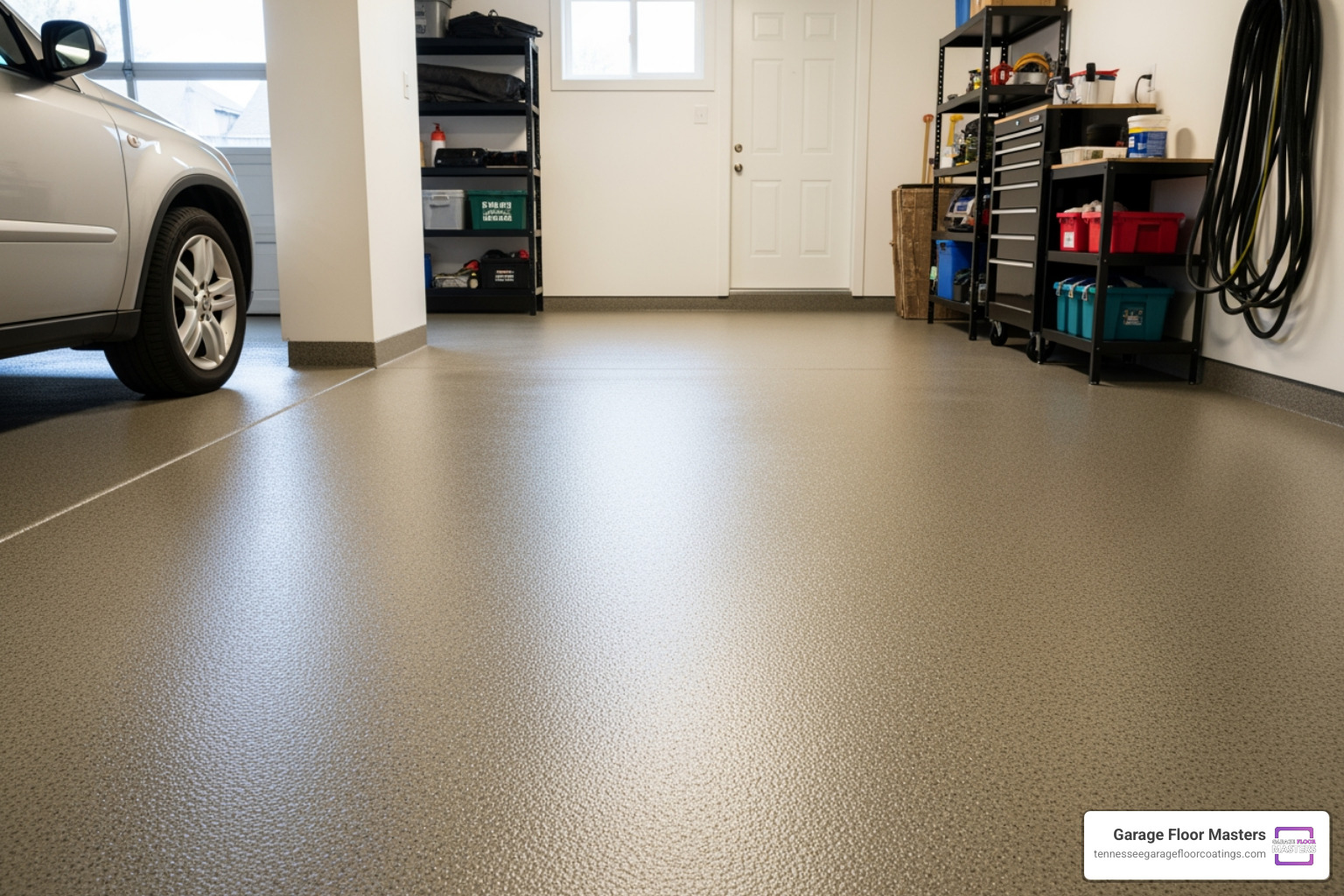
Match coating texture to traffic, climate, and spill risk
For Knoxville and surrounding East Tennessee areas like Maryville, Oak Ridge, Powell, Clinton, and Sevierville, climate matters more than many homeowners expect. We see humidity, occasional freezing weather, rain, and plenty of road grime.
That means the best coating should be matched to:
- Vehicle traffic levels
- Moisture exposure
- Chemical spill risk
- Cleaning expectations
- Seasonal temperature swings
A workshop garage with tools, fluid drips, and rolling equipment may need a tougher system than a storage-only garage. A family garage used as the main entry door may need a more foot-friendly texture than an enthusiast garage focused on durability first.
In general:
- Light texture works for easier cleaning and lower spill risk
- Medium texture is best for most residential garages
- Heavy texture is better for consistently wet or commercial-style conditions, but may be too aggressive for a home
Safety, comfort, and compliance for families and workspaces
Homeowners often ask whether a non-slip coating will feel rough. It depends on the texture selected.
A well-designed residential system can be:
- Safe for bare feet
- Comfortable for pet paws
- Grippy enough for wet shoes
- Easier to clean than raw concrete
Some anti-slip products are specifically designed for barefoot areas, but not all are suited for regular wheeled traffic. That is why product selection matters. A coating that works in a locker room is not automatically the right choice for a garage with daily vehicle use.
If you are thinking about safety standards, here is the practical homeowner version:
- OSHA requirements mainly apply to workplaces, but they reinforce the importance of slip-resistant walking surfaces
- ADA-related discussions typically focus on accessible walking surfaces and traction expectations
- Coefficient of friction testing can help compare wet and dry traction, but the best system is still one matched to the real environment
For most homes, a moderate non-slip texture is the safest and most comfortable balance.
Prep and Installation: What Determines Long-Term Performance?
If you remember one thing from this guide, let it be this: surface preparation drives everything.
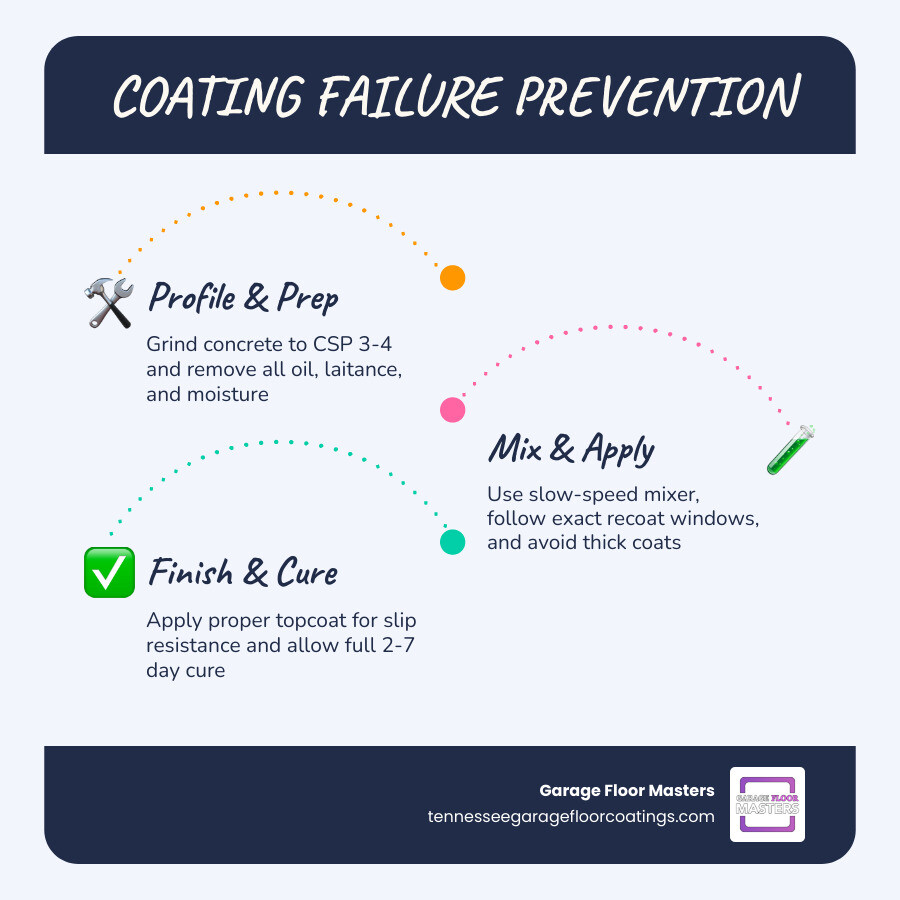
A garage floor coating is only as good as the concrete below it and the prep above it. Industry guidance often calls for a concrete surface profile around CSP 3-4 for epoxy adhesion. In plain English, the floor needs enough profile for the coating to bond correctly.
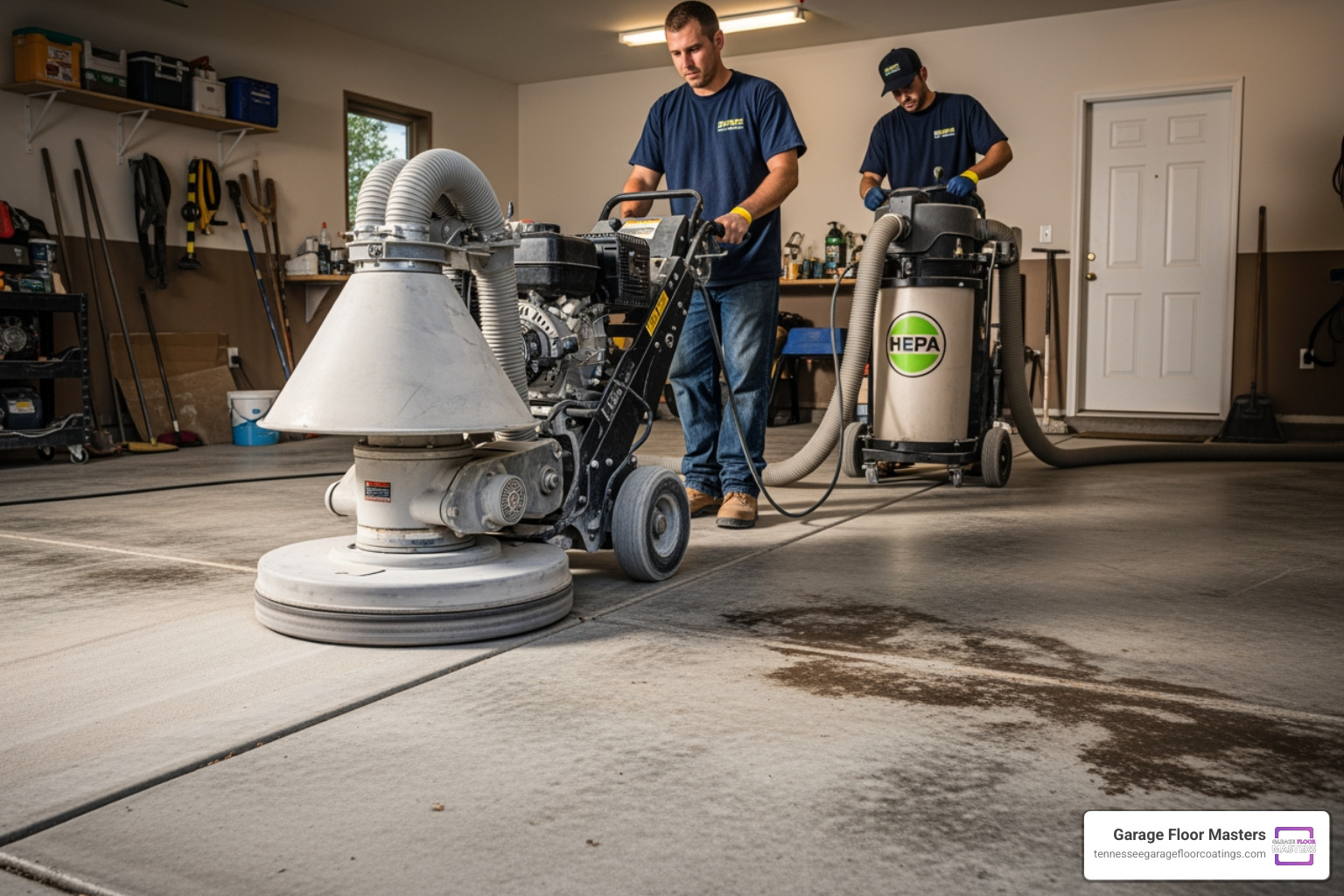
For a closer look at how we handle this, visit our installation process.
Surface preparation requirements before any coating goes down
Before coating, the concrete should be:
- Clean and free of oil, grease, and dust
- Structurally sound
- Properly profiled by grinding or another suitable method
- Repaired where cracks or surface damage exist
- Tested for moisture when needed
- Fully cured if the slab is new
Best-practice prep may include:
- Diamond grinding
- Removing laitance or weak surface material
- Spot degreasing and stain treatment
- Crack and pit repair
- Moisture testing, including plastic-sheet testing in some cases
- Waiting at least 28 days before coating new concrete
Some DIY systems call for acid etching, but professional mechanical prep is generally more reliable and more consistent. It creates the right profile and removes contamination at the same time.
Application steps, tools, and site conditions
Once prep is complete, application must happen within the right temperature and humidity range. Many coating systems perform best around 50 to 90 degrees Fahrenheit, with some water-based systems calling for roughly 55 to 90 degrees and controlled humidity.
Common tools and methods include:
- Slow-speed mixer for resin blending
- Ribbon pours instead of leaving mixed product in a bucket
- Squeegee for spreading
- 3/8-inch or 1/4-inch nap rollers depending on system
- Spike shoes for walking wet coatings during flake broadcast
- Timed recoat windows
For flake systems, the usual sequence is:
- Prepare the concrete
- Apply the basecoat
- Broadcast flakes
- Allow cure time
- Scrape and vacuum excess flakes if needed
- Apply clear topcoat with desired texture
That final topcoat matters a lot. It influences gloss, cleanability, UV resistance, and slip profile.
Common mistakes that cause peeling, slick spots, or uneven texture
Most coating failures trace back to avoidable issues, including:
- Skipping proper grinding or profiling
- Coating over hidden moisture problems
- Applying coats too thick
- Poor mixing
- Missing the recoat window
- Uneven flake broadcast
- Forgetting or underbuilding the topcoat
- Choosing a barefoot texture for a garage that needs wheeled durability
If you want to avoid the classic “looked great for six months” problem, read the secret to applying anti-slip epoxy floor coating perfectly.
Durability, Cost, Coverage, and Maintenance Compared
Not all non-slip coatings perform the same once real life shows up with hot tires, road salt, gasoline, muddy shoes, and that mystery garage spill we all pretend not to see.
Durability and resistance: chemicals, hot tires, UV, and wear
Here is how the main categories generally compare:
- Epoxy: strong adhesion, good chemical resistance, thick build, but can yellow with UV exposure depending on formulation
- Polyaspartic: excellent UV stability, fast cure, strong wear resistance, and very good performance under vehicle traffic
- Water-based epoxy: decent chemical and abrasion resistance for lighter-duty settings, but not always intended for constant wheeled traffic
- 1-part paint: basic protection, but lower long-term resistance to hot tires, wear, and harsh chemicals
Hot tire pickup is one of the biggest concerns in garages. This is where low-end paints often struggle. Better systems, especially professional epoxy and polyaspartic systems, are built for it.
Coverage rates, curing times, and realistic cost expectations
Coverage and cure time vary a lot by product type and thickness. Based on the product research:
- Some anti-slip paints cover about 75 square feet per quart or 300 square feet per gallon
- Some water-based epoxy systems cover roughly 114 to 160 square feet per gallon
- Some garage epoxy kits cover about 200 to 300 square feet per kit
- Some flake kits cover around 300 square feet for one-car garages or 500 square feet for two-car garages
Typical cure benchmarks can look like this:
- Light foot traffic: 12 to 24 hours for some systems
- Recoat window: often around 10 to 12 hours for certain epoxy kits
- Drive-on time: sometimes 24 hours for fast-curing systems
- Full cure: often 2 to 7 days depending on chemistry and temperature
As for cost, the honest answer is that price depends on:
- Square footage
- Concrete condition
- Moisture issues
- Crack repair needs
- Coating system selected
- Flake or color options
- Texture level and topcoat build
That is why we recommend starting with a free on-site estimate. For more on budgeting, see our guide to garage floor coating cost.
Cleaning and upkeep without reducing slip resistance
A good non-slip floor should still be easy to maintain. The best approach is simple:
- Sweep or dust mop regularly
- Clean spills quickly
- Use a pH-neutral cleaner when needed
- Use a soft scrubber or mop for textured areas
- Avoid harsh cleaners that can leave residue
- Rinse away soaps fully so the floor does not become more slippery
Decorative flake systems help hide dust and minor dirt better than plain solid colors, which is one reason they are so popular in garages.
For maintenance tips, visit our floor care instructions.
Best Non-Slip Finishes for Safety and Style
The good news is you do not have to choose between a safer garage and a better-looking garage. The right finish gives you both.
When comparing finishes, look at:
- Texture level
- UV stability
- Color blend
- Dirt-hiding ability
- Ease of cleaning
- Gloss or satin sheen
- Long-term wear in drive lanes
- Warranty support
For design inspiration, explore our garage floor coating colors.
Flake and textured finishes that balance grip and appearance
Decorative flake systems are one of the best all-around options because they:
- Add visual depth
- Help disguise dust and small debris
- Create natural texture
- Pair well with clear protective topcoats
- Work with both epoxy and polyaspartic systems
Common finish approaches include:
- Full broadcast flake for the most uniform texture and coverage
- Partial flake for a lighter decorative look
- Satin or lower-gloss topcoats for a softer visual finish
- Medium texture for the best balance of grip and cleanability
In most residential garages, full flake with a textured clear topcoat is the sweet spot. It looks finished, performs well, and does not scream “industrial warehouse.”
When a professional system makes more sense than DIY
DIY kits can work in the right situation, but garages are not forgiving spaces. The floor has to handle vehicles, tires, moisture, impact, chemicals, and daily traffic. That means prep and timing matter a lot.
Professional installation often makes more sense when:
- The concrete has cracks, stains, or moisture concerns
- You want a one-day installation
- You want stronger topcoats and longer service life
- You want consistent non-slip texture
- You care about warranty coverage
- You would rather not spend your weekend grinding concrete and questioning your life choices
We install high-performance systems designed for real residential use across Knoxville and nearby communities. If you want to compare texture-focused options, take a look at these garage floor texture epoxy options.
Frequently Asked Questions About non slip garage floor coating
Are non-slip garage floor coatings safe for bare feet and pets?
Yes, they can be, as long as the texture is chosen correctly. A moderate texture is usually best for homes because it improves traction without feeling overly sharp. Some coatings are specifically formulated for barefoot areas, but a garage system should also be designed to handle vehicle traffic if cars will use the space.
If pets and kids use the garage regularly, tell your installer. Texture can be adjusted to balance comfort and grip.
What slip resistance standards or ratings should homeowners ask about?
Ask about:
- Wet and dry traction performance
- The type of texture used
- Whether the finish is designed for residential garage traffic
- Any available coefficient of friction testing
- How the floor performs when wet, not just dry
Some industrial coatings publish COF values, and workplace standards often reference slip-resistant walking surfaces. For homeowners, the practical goal is simpler: choose a system with proven wet traction that is still easy to clean and comfortable to walk on.
How long will a non-slip garage coating last and what protects the warranty?
Lifespan depends on:
- Coating chemistry
- Concrete prep quality
- Moisture conditions
- Traffic level
- Cleaning habits
- Topcoat thickness
- How quickly spills are cleaned up
A professionally installed system generally lasts much longer than a low-cost paint job because the prep, materials, and build are all better. Warranty protection also depends on following care guidelines and using the floor as intended.
You can learn more on our Garage Floor Masters warranty page.
Conclusion
The best non slip garage floor coating is the one that matches your garage’s real conditions, not just the product with the loudest label.
If you want the short version:
- Choose epoxy for solid value and durability
- Choose polyaspartic for faster installation, UV stability, and top-tier performance
- Choose textured flake finishes for the best balance of safety and style
- Avoid underestimating prep, because prep is what makes the whole system last
At Garage Floor Masters, we help homeowners across Knoxville and nearby Tennessee communities choose garage floors that are safer, cleaner, more attractive, and built for everyday life. Our professional systems are designed to deliver the traction you want without sacrificing the finished look you want your garage to have.
If you are ready to upgrade your garage, start with our garage floor coating in Knoxville TN page or learn more about our epoxy garage floor coatings.
Safer floor. Better style. Fewer accidental garage ice-skating moments. That is a win.