
Garage Floor UV Protection Keeps Color and Gloss Intact
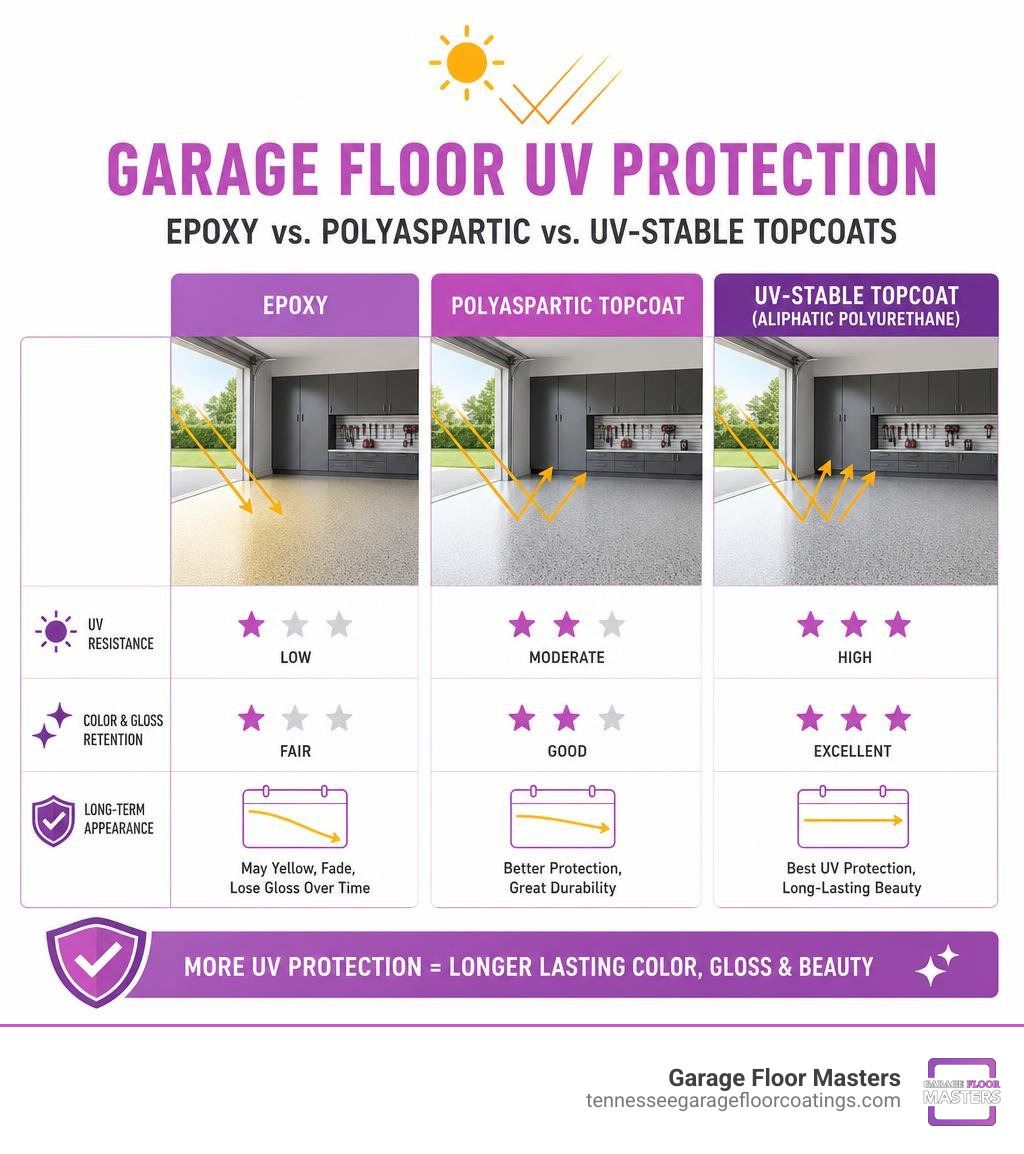
For reliable garage floor UV protection, choose a coating system with a UV-stable finish layer. Standard epoxy can be tough and attractive, but direct sunlight can make it amber, fade, lose gloss, or look hazy over time. A polyaspartic or aliphatic polyurethane topcoat helps protect the color, flakes, and clear finish from sunlight exposure.
For garages that receive strong sun through an open door or windows, look for:
- A UV-stable polyaspartic or aliphatic polyurethane topcoat
- A 2-part coating system rather than basic 1-part epoxy paint
- Documented weathering data, such as ASTM D4587 accelerated UV testing
- Professional surface preparation so the coating stays bonded as temperatures change
UV damage is not only an outdoor problem. Even some indoor lighting can contribute to gradual epoxy yellowing. The right coating chemistry and clear topcoat can keep a garage floor looking cleaner and more consistent for far longer.
I’m Lev Golosov, and next we’ll look at why epoxy and other concrete coatings change when sunlight hits them.
Why Epoxy and Concrete Coatings Degrade in Sunlight
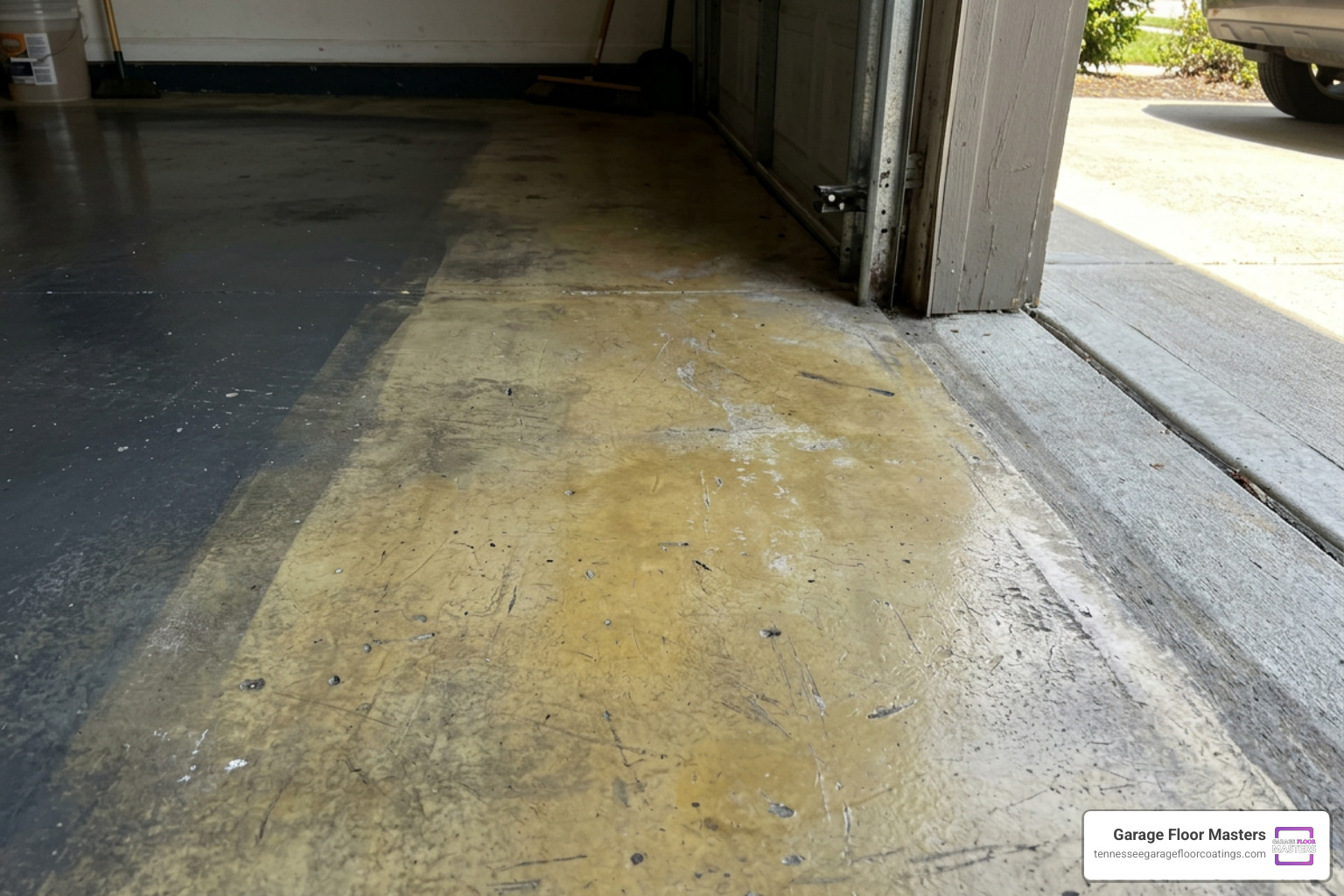
Most homeowners know that leaving tools or patio furniture out in the sun causes fading, but many are surprised when their shiny garage floor begins turning yellow near the door. Understanding why epoxy floors turn yellow comes down to basic chemistry.
Standard epoxy floor coatings rely on aromatic chemical backbones. While aromatic resins provide great adhesion and compressive strength across concrete, they contain carbon ring structures that absorb ultraviolet radiation. When sunlight streams into your garage threshold, these aromatic chains undergo photochemical breakdown.
This breakdown causes three major visible problems:
- Ambering: Clear epoxy shifts toward a yellow or golden-brown hue.
- Chalking: The polymer surface degrades into a fine, powdery residue.
- Embrittlement and Loss of Gloss: As chemical bonds fracture, the smooth finish turns dull, brittle, and susceptible to micro-cracks.
Surprisingly, natural sunlight is not the sole culprit. High-output indoor fluorescent lighting also emits minor traces of ultraviolet wavelengths. Over years of exposure, standard epoxies cured under heavy shop lighting can shift in color even without an open garage door.

The Mechanism of Ambering and Color Shift
When ultraviolet wavelengths strike cured epoxy, they generate free radicals within the polymer matrix. These radicals attack the amine hardeners and bisphenol compounds in the resin. As the chemical bonds break and re-form into quinoid chromophores—light-absorbing chemical groups—the material naturally shifts toward an amber tone.
This discoloration ruins decorative installations. If your floor features colored quartz aggregate, bright gray flakes, or clean white base coats, ambering clouds the optical clarity of the finish. In field tests, decorative coatings left exposed to southern sunlight for as little as six months showed heavy color degradation. Clear coats turned hazy, and crisp background pigments shifted noticeably compared to unexposed sections. Without proper UV mitigation, the structural matrix continues to lose flexibility, eventually leading to micro-fissuring and surface wear under regular foot and vehicular traffic.
Garage Floor UV Protection: Material Types and Chemistries
Selecting the right system requires comparing how different resin technologies handle sunlight, daily traffic, and chemical spills.
| Feature / Metric | 1-Part Epoxy Paint | Standard 2-Part Epoxy | Aliphatic Polyurethane Topcoat | 100% Polyaspartic System |
|---|---|---|---|---|
| UV Stability | Poor (Fades & chalks quickly) | Low (Ambers under UV/fluorescent light) | High (Blocks UV degradation) | Excellent (100% aliphatic, non-yellowing) |
| Cure Mechanism | Air dry / Solvent evaporation | Chemical crosslinking | Moisture cure / Chemical crosslink | Rapid chemical crosslinking |
| Hot-Tire Resistance | Very Low (Prone to lifting) | High | Very High | Maximum |
| Application Speed | 1–2 days (Long dry times) | 2–3 days | 1–2 days (Requires base coat) | 1-Day Complete Installation |
| Expected Lifespan | 1–2 years | 3–5 years (Indoor only) | 10+ years (As protective cap) | 15+ years |
While standard epoxy excels at building initial film thickness, polyaspartic floor coatings utilize aliphatic chemistry throughout the entire coating structure, ensuring the floor never ambers regardless of solar exposure.
Evaluating 1-Part vs. 2-Part Systems for Garage Floor UV Protection
Retail shelves are filled with 1-part water-based and acrylic floor paints marketed for easy DIY application. However, 1-part products do not undergo true chemical crosslinking; they simply dry through water or solvent evaporation. When exposed to sunlight and the weight of warm vehicle tires, 1-part paints quickly soften, lift, and chalk away.
In contrast, 2-part systems create an interconnected polymer matrix via a chemical reaction between resin and hardener. This delivers the film thickness, adhesion strength, and wear resistance needed to survive hot tires and tool drops. For lasting protection against the sun, a 2-part chemical build paired with an aliphatic topcoat is essential.
Role of Aliphatic Polyurethane and Polyaspartic Clear Topcoats
Aliphatic polymers possess straight-chain molecular structures that do not absorb UV light the way aromatic epoxies do. Applying an aliphatic polyurethane or polyaspartic clear coat creates an impenetrable optical barrier over the base layers.
Using UV-Resistant Polyaspartic Coatings for a Sunproof Garage protects decorative flake blends and base pigments from solar discoloration. If you already have an epoxy base, applying an aliphatic topcoat is the most reliable way to preserve epoxy floor coatings against rapid degradation.
Verifying True UV Resistance and Testing Standards

Many retail packaging labels claim “UV resistance” simply because a small additive was blended into an aromatic epoxy. Unfortunately, simple additives break down over time. To understand how to keep your epoxy floor from turning yellow, property owners should look past marketing buzzwords and examine technical data sheets.
Reliable manufacturers validate their coatings through third-party laboratory testing, measuring:
- Yellowness Index (YI): Standardized measurement of ambering over time.
- Haze and Transmission: Clarity retention across clear topcoats.
- Gloss Retention: Percentage of surface shine maintained after simulated weathering cycles.
ASTM D4587 QUV Accelerated Weathering Standards
The gold standard for coating durability is ASTM D4587, which governs QUV accelerated weathering tests. Test panels are placed inside specialized chambers that cycle between intense fluorescent ultraviolet light and moisture condensation cycles at elevated temperatures.
This test simulates years of exterior sun and humidity exposure in a matter of weeks. In long-term comparisons, high-performance aliphatic systems retain their physical impact strength and optical clarity across hundreds of testing hours, while unshielded epoxies experience significant yellowing and resin loss. In addition to UV exposure tests, ASTM D4060 Taber abrasion evaluations confirm that top-tier clear coats maintain structural toughness without wearing thin over repeated mechanical contact.
Key Factors in Selecting Garage Floor UV Protection for Sunlit Garages
When planning a floor upgrade, consider the specific exposure dynamics of your garage:
- Garage Orientation: South- and west-facing garage openings receive intense, direct solar radiation for several hours each day, requiring maximum UV stability.
- Threshold Line: The concrete apron right beneath the garage door seal experiences extreme temperature fluctuations and sunlight whenever the door is open. Proper thermal stability ensures the coating will not delaminate under hot midday sun.
- Decorative Media Selection: Flake blends containing grays, blues, and pure whites highlight ambering much faster than earthy tans. Full-broadcast flake systems protected by polyaspartic topcoats hide concrete imperfections while providing lasting color clarity.
- Moisture Mitigation: High humidity paired with intense UV light can accelerate chemical degradation, making comprehensive vapor barriers and surface profiling critical during floor preparation.
At Garage Floor Masters, we install UV-stable polyaspartic and epoxy coating systems across Knoxville, TN, as well as Oak Ridge, Crossville, Sevierville, Maryville, Powell, and surrounding East Tennessee communities. Our UV-stable coatings are 4x stronger than standard epoxy, installed in just one day, and available in over 140 decorative colors. Coating costs depend on concrete condition, floor prep needs, and chosen design features, which is why we provide free on-site estimates to evaluate your space.
Frequently Asked Questions
Can standard clear epoxy withstand direct sunlight?
No. Standard clear epoxy relies on aromatic resins that break down when exposed to ultraviolet radiation. Without a UV-stable aliphatic polyurethane or polyaspartic clear topcoat, clear epoxy will inevitably turn yellow, become brittle, and lose its gloss.
How long does a UV-stable polyaspartic coating last?
A professionally installed polyaspartic floor coating system can easily last 15 years or more. Because polyaspartic chemistry is 100% aliphatic, it will not amber, chalk, or haze from sunlight exposure throughout its service life.
Will UV-resistant topcoats protect the base color from fading?
Yes. High-grade aliphatic clear coats act as protective shields, blocking harmful UV rays from penetrating into the underlying base coat, decorative vinyl flakes, or colored quartz aggregates.
Conclusion
Standard aromatic epoxies offer good initial adhesion, but prolonged sun exposure inevitably causes yellowing, hazing, and surface chalking. Ensuring lasting durability requires an aliphatic polyaspartic or polyurethane topcoat engineered to withstand continuous solar radiation.
Investing in verified, commercial-grade chemistries protects your concrete and keeps your decorative colors vibrant for decades. For homeowners looking to upgrade their space with premium garage floor coatings, our team at Garage Floor Masters provides expert surface prep and one-day installations built to handle daily use and bright Tennessee sunshine. Contact us today to schedule your free on-site estimate!