
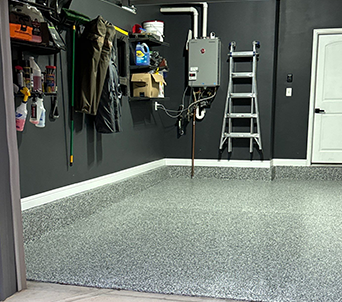
Your Garage Floor Doesn’t Have to Cost a Fortune to Look Great
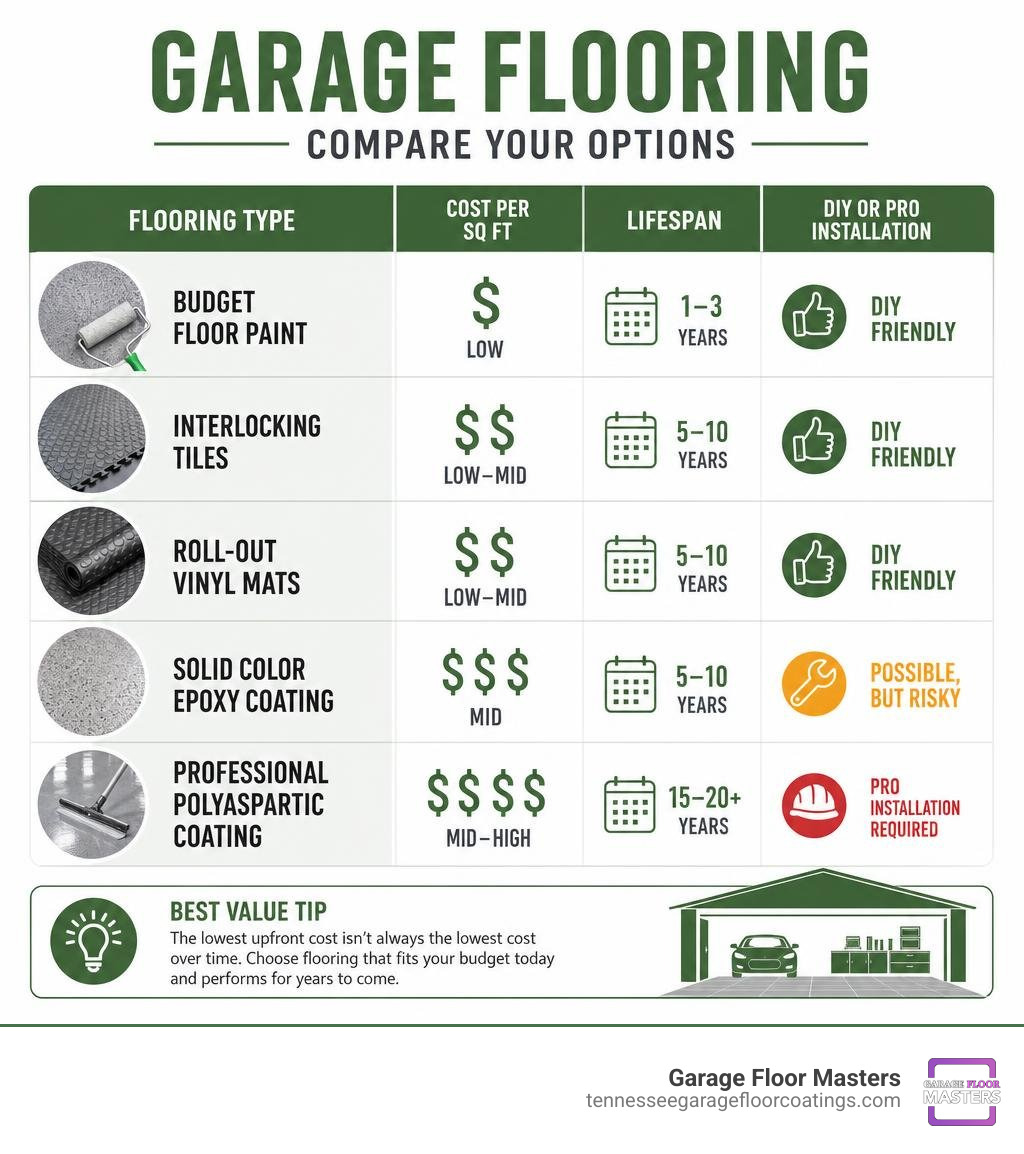
If you’re searching for cost effective garage flooring, here’s a quick breakdown of your best options in 2026:
| Flooring Option | Estimated Cost Range | DIY Friendly? | Lifespan |
|---|---|---|---|
| Budget floor paint | Low | Yes | 1-3 years |
| Interlocking PVC/polypropylene tiles | Low-mid | Yes | 5-10 years |
| Roll-out vinyl mats | Low-mid | Yes | 5-10 years |
| Solid color epoxy coating | Mid | Possible, but risky | 5-10 years |
| Professional polyaspartic coating | Mid-high | No | 15-20+ years |
Note: Actual costs depend on your garage’s size, condition, and the features you choose. That’s why Garage Floor Masters offers a free on-site estimate.
Here’s the truth most homeowners in Knoxville don’t realize until it’s too late: the cheapest option upfront is rarely the cheapest option over time.
That cracked, stained, dusty concrete floor in your garage isn’t just an eyesore. It’s exposed every day to hot tire marks, road salt, oil spills, and Tennessee’s freeze-thaw cycles. And the wrong flooring choice — one that peels, yellows, or fails within a few years — means paying again sooner than you planned.
The good news? There’s a range of flooring solutions that fit different budgets without sacrificing the clean, durable finish your garage deserves. Some are great for low-traffic workshops. Others are built to handle daily vehicle traffic and harsh weather.
This guide walks you through the most practical options — ranked honestly — so you can make the right call for your space and your wallet.
Must-know cost effective garage flooring terms:
- average cost of epoxy flooring
- concrete epoxy flooring cost calculator
- cost for garage epoxy flooring
The Best Cost Effective Garage Flooring Options Ranked
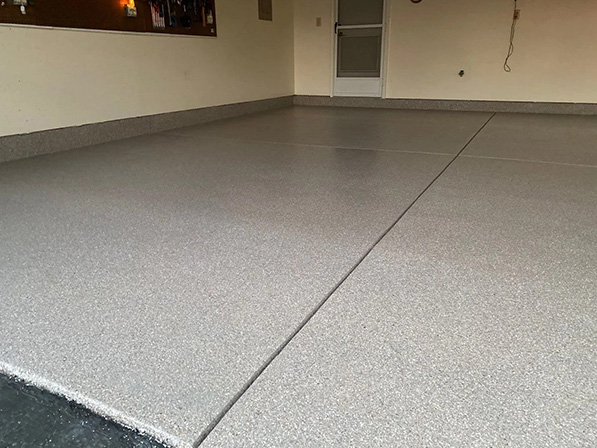
When evaluating cost effective garage flooring, we look at three critical elements: upfront material prices, installation labor, and the actual lifespan of the floor. A floor that costs $1.50 per square foot but peels off under hot tires in six months is not a deal. On the other hand, a professional system that lasts for decades can actually be the smartest financial choice you make for your home.
Let’s rank the most popular budget-friendly materials based on their overall value, durability, and ease of installation.
| Flooring Material | Upfront Material Cost | Durability Rating | Installation Complexity | Long-Term Value |
|---|---|---|---|---|
| Professional Concrete Sealer | Very Low | Moderate | Easy | High (prevents dusting) |
| Solid Color Epoxy | Low-Mid | Good | Moderate (requires prep) | High |
| Partial Flake Epoxy | Mid | Very Good | Moderate-Hard | Excellent |
| Interlocking Rigid Tiles | Mid | Good | Very Easy (DIY) | Moderate |
| Roll-Out Vinyl Mats | Low-Mid | Moderate | Easy | Moderate |
| Professional Polyaspartic | Mid-High | Exceptional | Professional Only | Outstanding (lasts 15+ years) |
1. Solid Color Epoxy Coatings
If you want a seamless, high-gloss finish that transforms your garage from a dark cavern into a bright, clean workshop, solid color epoxy is a fantastic choice. Epoxy acts as a thick, durable barrier that bonds to your concrete, protecting it from gasoline, oil, and chemical spills.
Unlike basic latex floor paints, a true solid color epoxy doesn’t just sit on top of the concrete; it creates a tough, protective shield. It is highly resistant to impact, making it ideal if you enjoy wrenching on cars or building weekend DIY projects. To explore how these coatings perform in hard-working spaces, take a look at our guide on Top Budget Friendly Polyaspartic and Epoxy Coatings for Your Workshop.
The key to keeping solid color epoxy cost-effective is proper application. While it offers incredible cost-per-square-foot value, skipping the surface preparation will guarantee early peeling. When applied correctly, it is one of the most reliable mid-tier flooring options on the market.
2. Professional Concrete Sealers
For the homeowner who wants to spend the absolute minimum while still protecting their garage floor, professional-grade concrete sealers are the unsung heroes of the industry.
There are two main types of sealers:
- Topical Sealers (Acrylics): These sit on top of the concrete to provide a light sheen and basic water resistance.
- Penetrating Sealers (Silanes/Siloxanes): These sink deep into the pores of the concrete, chemically reacting to create an invisible barrier against moisture, road salt, and automotive fluids.
The biggest benefit of a penetrating sealer is that it cannot peel, chip, or flake because it doesn’t form a surface film. It is highly effective at dust-proofing your concrete, making sweeps and cleanups infinitely easier. If you are on an ultra-tight budget and want to preserve your concrete slab without the cost of a full colored coating, a high-quality sealer is your best bet.
3. Partial Flake Epoxy Systems
Full-broadcast flake floors look spectacular, but they require a massive amount of decorative vinyl color chips, which drives up the material cost. A brilliant way to capture that high-end aesthetic while saving money is opting for a partial flake system.
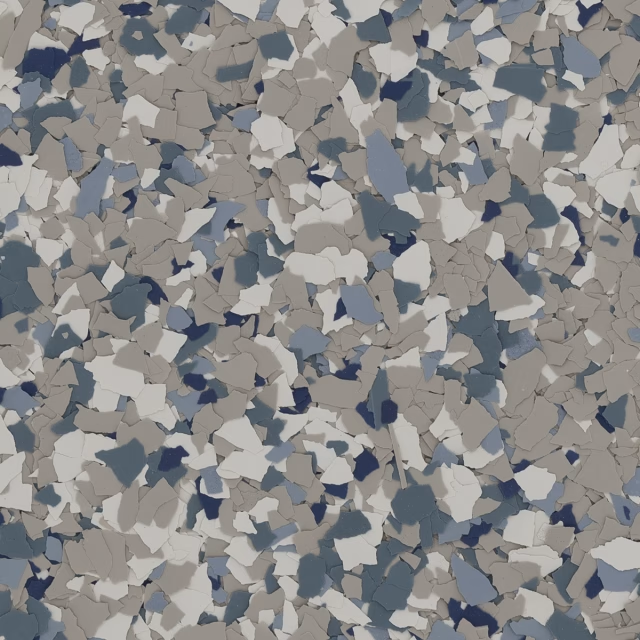
With a partial flake system, we apply a solid color base coat and then scatter the vinyl flakes lightly across the surface. This technique offers several distinct advantages:
- Aesthetic Appeal: It breaks up the monotony of a solid color floor, giving it a modern, textured look.
- Camouflage: The scattered flakes are incredibly effective at hiding minor concrete imperfections, dust, and salt tracking.
- Slip Resistance: The texture of the flakes provides traction underfoot when the floor gets wet from rain or snow.
By reducing the volume of flakes used, you save significantly on raw materials. For those planning a hands-on approach, you can learn more about managing these expenses in our article on how to Roll On the Savings with a DIY Epoxy Floor.
4. High-Durability Polyaspartic Topcoats
While polyaspartic coatings have a higher upfront cost than standard epoxy, they represent the ultimate in long-term cost-per-year savings.
Polyaspartic is a hybrid material closely related to polyurethane. It is prized for its rapid cure time — often allowing us to complete a full installation in just one day — and its incredible flexibility. Unlike epoxy, which can become brittle over time, polyaspartic flexes slightly under heavy loads and temperature swings.
Additionally, polyaspartic is 100% UV stable. If your garage gets a lot of direct sunlight, a standard epoxy will eventually turn a sickly yellow. Polyaspartic remains crystal clear and vibrant for its entire lifespan. When you divide the initial investment by its 15-to-20-year lifespan, polyaspartic is often the most cost-effective choice for homeowners who plan to stay in their homes long-term.
Key Factors When Choosing Budget-Friendly Garage Flooring
Before you pull the trigger on any flooring material, it is vital to analyze how your garage is actually used. Ask yourself these questions:
- What is the traffic level? Do you just park a sedan inside, or do you store heavy trucks, lawnmowers, and workshop equipment?
- How much maintenance are you willing to do? Some floors can be hosed off in seconds, while others require careful scrubbing to prevent permanent staining.
- Are there existing concrete issues? Cracks, shifting slabs, or moisture rising up through the concrete will destroy cheap coatings quickly.
Solid Color vs. Flake Epoxy Systems for Cost-Conscious Buyers
Choosing between a solid color and a flake system often comes down to balancing your aesthetic goals with your budget.
Solid color coatings are sleeker and cheaper upfront because they require fewer materials and less labor. However, because the surface is completely uniform, every speck of dust, drop of oil, or minor scratch will stand out.
Flake systems cost slightly more, but they are incredibly forgiving. The multi-colored chips mask dirt and wear, meaning you won’t have to sweep or clean the floor nearly as often to keep it looking pristine. For a deeper dive into how these design choices impact your wallet, check out The Ultimate Guide to Epoxy Flooring Prices.
Climate, Snow, and Road Salt Performance
Here in East Tennessee — from Knoxville to Sevierville and up to Oak Ridge — our weather can be tough on concrete. We experience hot, humid summers and freezing winters.
When winter weather hits the Great Smoky Mountains, road salt and brine find their way onto your garage floor via your car’s wheel wells. Cheap DIY floor paints will quickly bubble and peel when exposed to this corrosive salty slush.
Furthermore, concrete is naturally porous and acts like a sponge. Water vapor from the ground can rise through the slab — a phenomenon known as hydrostatic pressure. If your flooring material does not have a strong moisture-vapor barrier, this rising pressure will pop the coating right off the concrete. Ensuring your floor can handle these local climate realities is key to avoiding a costly redo.
The Real Cost of DIY vs. Professional Garage Floor Installation
It is tempting to look at a $150 DIY epoxy kit at a big-box store and assume you are saving thousands of dollars. But to understand the true cost, we have to look at what goes into a successful, long-lasting installation.
The secret to any successful garage floor coating is surface preparation. At least 80% of all coating failures are caused by poor prep.
- The DIY Route: Most retail kits instruct you to clean the floor with an acid-etching solution. Acid etching only works on pristine, unsealed concrete. It cannot remove old sealers, paint, or deep oil stains.
- The Professional Route: We use heavy, diamond-segment rotary floor grinders to physically open the pores of the concrete. This creates a rough profile (similar to medium-grit sandpaper) that allows the coating to fuse mechanically with the concrete.
Renting a professional floor grinder yourself can cost $150 to $200 a day, not including the cost of diamond tooling, heavy-duty dust containment vacuums, and the physical labor required to operate them safely. If you want to see a realistic breakdown of these expenses, read through The Complete Guide to Garage Epoxy Installation Costs.
Hidden Long-Term Costs of Cheap Garage Flooring
When a cheap DIY coating fails, the financial impact is double. You don’t just have to pay for a new floor; you also have to pay (or spend your weekend) grinding off the failed, sticky, peeling mess before a new coating can be applied.
Cheap floor paints and low-grade epoxies suffer from “hot tire pickup.” When you drive your car after a highway commute, your tires are hot. As they cool down in your garage, the rubber contracts and literally grabs onto the weak DIY paint, peeling it off the concrete when you back out of the driveway. To understand why investing a bit more upfront saves you massive headaches down the road, explore The Real Cost of Polyaspartic Garage Floors.
When to Invest in Professional Polyaspartic Coatings
If you want a floor that you can install and forget about for the next two decades, it is time to call in the professionals.
At Garage Floor Masters, we specialize in high-performance polyaspartic and epoxy garage floors across East Tennessee — including Knoxville, Maryville, Oak Ridge, Lenoir City, Clinton, and surrounding areas. Our systems are:
- 4x Stronger than Standard Epoxy: They won’t chip, scratch, or peel under heavy use.
- Installed in Just One Day: You can walk on the floor in hours, minimizing disruption to your life.
- 100% UV Stable: Your floor will never yellow or fade in the sun.
- Available in 140+ Colors: Perfect for matching your home’s style.
Before you make any decisions, it helps to run the numbers. Use our guide to Calculate Your Epoxy Floor Costs Like a Pro to see how different systems fit your budget.
Tips to Maximize Savings on Your Garage Floor Project
If you are working with a tight budget but still want a beautiful, professional-grade garage floor, there are several smart ways to save money:
- Empty the Garage Yourself: Most professional crews charge an extra fee to move your heavy tools, workbenches, refrigerators, and storage boxes. By completely clearing the space before the installers arrive, you keep labor costs to a minimum.
- Handle Minor Spot Patching: If you have small divots or hairline cracks, you can patch them yourself using a concrete repair compound before your flooring team arrives.
- Choose Standard Colors: Specialty metallic finishes or custom color blends look incredible, but they carry a premium price tag. Opting for a standard gray or tan base color can save you hundreds of dollars.
- Stick to Standard Flake Blends: If you want a flake system, choose one of our popular pre-mixed flake combinations rather than ordering a custom color run.
For more insider tips on getting the best possible rate on your installation, don’t miss our guide: Don’t Get Floored by High Epoxy Rates.
Frequently Asked Questions About Cost Effective Garage Flooring
What is the most cost effective garage flooring option for long-term value?
For absolute long-term value, a professional polyaspartic or high-solids epoxy coating is the winner. While the upfront cost is higher than a DIY kit, these systems last 15 to 20 years without needing to be recoated. When you break down the cost per year, professional coatings are significantly cheaper than DIY paint options that must be scraped and reapplied every two to three years.
How does professional epoxy compare to cheap DIY floor paint as a cost effective garage flooring option?
There is really no comparison. Cheap floor paint is thin and relies on a simple chemical bond to stick to the top of your concrete. It is highly susceptible to hot tire pickup, chemical stains, and scratching. Professional epoxy is a two-part chemical compound that cures into a thick, impact-resistant plastic barrier. The intensive concrete preparation performed by professionals ensures the epoxy physically anchors into the concrete pores, preventing peeling. To see how specialized finishes compare financially, read How Much Does Metallic Epoxy Flooring Really Cost?.
Can I install budget garage coatings over cracked concrete?
Yes, but you must repair the cracks first. If you apply an epoxy or polyaspartic coating directly over an active crack, the crack will telegraph right through the new floor as the concrete shifts with temperature changes. We use specialized concrete crack fillers and grinders to smooth out these imperfections, ensuring a perfectly flat, seamless finish.
Conclusion
Getting a beautiful, durable garage floor doesn’t have to drain your savings account. Whether you choose a highly practical concrete sealer, an attractive partial flake system, or invest in a lifetime polyaspartic coating, the key is choosing a solution that matches your budget with your long-term goals.
If you live in Knoxville, Maryville, Oak Ridge, Sevierville, or any of our surrounding service locations in East Tennessee, we would love to help you find the perfect balance of price and performance.
Ready to transform your space? Get a Professional Garage Floor Coating Estimate today, and let’s build a floor that lasts!