
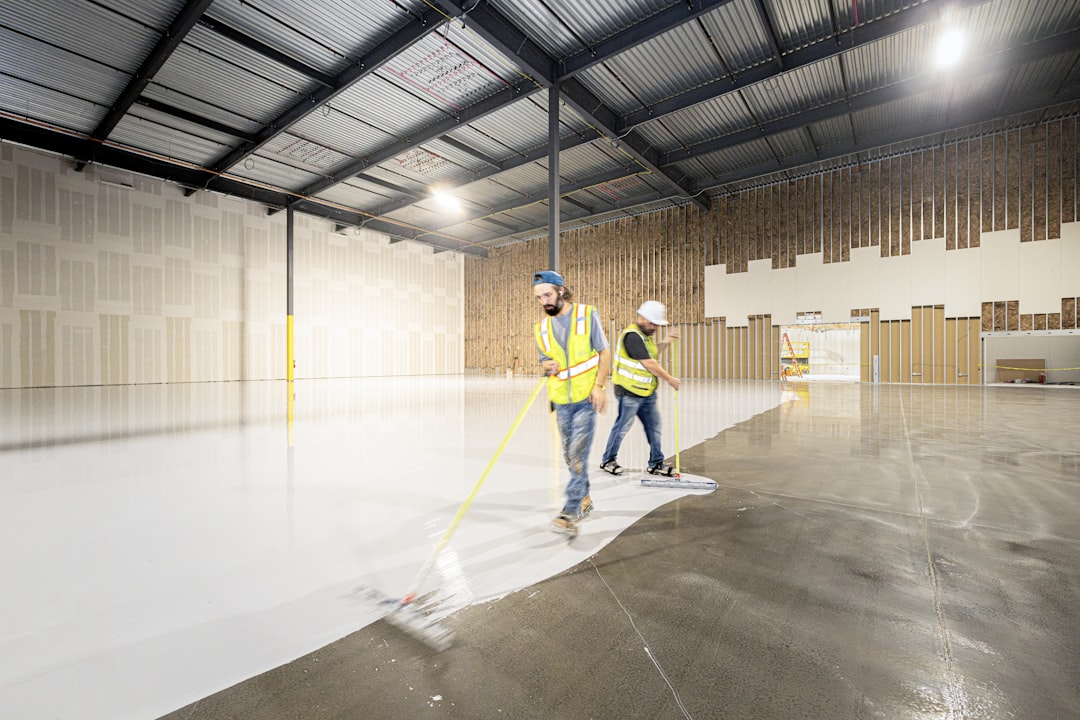
Why Your Garage Floor Deserves More Than Bare Concrete
Epoxy floor painting services transform dull, cracked concrete into a durable, attractive surface that’s easy to clean and built to last.
Here’s a quick overview of what professional epoxy flooring covers:
- What it is: A two-part resin coating that bonds chemically to concrete, creating a hard, seamless surface
- Who it’s for: Homeowners and businesses wanting a floor that resists stains, chemicals, and heavy traffic
- How long it lasts: 15–20 years with proper installation and care
- How long it takes: Most residential projects complete in 1–3 days
- Cost: Varies based on floor condition and finish options — a free on-site estimate gives you an accurate number
- Key benefit: Cuts long-term cleaning costs significantly compared to bare concrete
If you’ve ever parked your car on a cracking, stained concrete floor — or watched garage dust settle on everything in the room — you already know the problem.
Unsealed concrete doesn’t just look bad. It actively deteriorates from day one. As concrete cures, water evaporates and leaves tiny pores. Those pores wear under traffic and generate a fine dust that coats tools, vehicles, and everything else in the space.
For Knoxville homeowners, Tennessee’s humidity adds another layer of trouble. Moisture seeps into unprotected concrete, accelerating cracks and creating the perfect conditions for mold and mildew.
A professional epoxy floor coating seals all of that out — and replaces a tired-looking slab with something you’d actually want to show off.
Understanding Professional Epoxy Floor Painting Services
When people search for epoxy floor painting services, there is often a bit of confusion between “paint” and “coating.” While the terms are used interchangeably in casual conversation, the science behind them is worlds apart.
Traditional Garage Floor Paint is typically a water-based or oil-based product that dries as the solvent evaporates. It sits on top of the concrete like a thin skin. In contrast, professional Epoxy Floor Coatings are thermosetting resins. This means they consist of two parts—a resin and a hardener—that, when mixed, trigger a chemical cross-linking reaction.
This reaction transforms the liquid into a rigid, plastic-like structural material that is physically bonded to the concrete substrate. It doesn’t just “dry”; it cures. This chemical bond is what allows professional systems to withstand the weight of heavy SUVs and the heat of high-performance tires without peeling up (a common nightmare known as “hot tire pickup”).
The 100% Solids Difference
In the professional world, we talk a lot about “solids content.” Most DIY kits found in big-box stores are only 30% to 50% solids. This means that as the floor dries, half of the product evaporates into the air, leaving you with a paper-thin layer.
Our professional industrial systems utilize 100% solids epoxy. These coatings are typically applied at a thickness of 18 to 20 mils (thousandths of an inch). To put that in perspective, a professional coating is often ten times thicker than a standard coat of hardware store paint. This thickness is critical because it fills in the “blast lines” and microscopic pits created during the preparation phase, resulting in a perfectly level, glass-smooth surface.
| Feature | Standard Garage Floor Paint | Professional 100% Solids Epoxy |
|---|---|---|
| Bonding | Mechanical (Surface Level) | Chemical (Cross-Linked) |
| Thickness | 1-2 Mils | 18-20+ Mils |
| Lifespan | 1-2 Years | 15-20 Years |
| Resistance | Low (Stains easily) | High (Chemical & Impact resistant) |
| Cure Style | Evaporative Drying | Exothermic Chemical Reaction |
Surface Preparation and Installation Science
If there is one secret we can share after years of working in Oak Ridge and Maryville, it’s this: the most expensive epoxy in the world will fail if the floor isn’t prepared correctly. You cannot simply sweep the floor and start rolling.

Mechanical Profiling: The Key to Adhesion
Concrete is naturally porous, but over time, it becomes clogged with oils, sealers, and “laitance” (a weak, milky layer on the surface). To get a permanent bond, we must remove this top layer to reveal the “open” pores of the concrete. We use two primary methods for this:
- Diamond Grinding: This is our preferred method for most residential garages. Using heavy-duty walk-behind grinders equipped with diamond-segmented blades, we “open up” the concrete. This creates a texture similar to 80-grit sandpaper, giving the epoxy a massive surface area to grab onto.
- Shot-Blasting: Often used in industrial settings like warehouses in Loudon or Clinton, this involves firing thousands of tiny steel balls at the floor to “profile” the surface.
Moisture Testing and Repair
Before we apply a single drop of resin, we test for moisture. Tennessee’s high water table means that moisture vapor can push up through the concrete. If there is too much moisture, the epoxy will bubble and delaminate.
We also take this time to address the “scars” on your floor. Every concrete floor has them—cracks, pits, and spalled areas. We use a high-strength trowelable epoxy filler to bridge these gaps. Once the filler cures, we grind it flush so that the final coating looks like a single, seamless sheet of stone.
The Risks of a DIY Garage Floor
Many homeowners try to tackle this themselves using acid etching kits. Acid etching is a chemical process that attempts to roughen the concrete. However, it often fails to remove deep oil stains and can leave behind a residue that actually prevents the epoxy from sticking. This is why DIY floors often start peeling within the first 12 months, whereas professional Floor Coatings are built to last decades.
Exploring High-Performance Flooring Systems
Not all Epoxy Garage Floor Coating systems are created equal. Depending on whether you use your garage as a showroom, a workshop, or a high-traffic mudroom, different systems offer unique advantages.
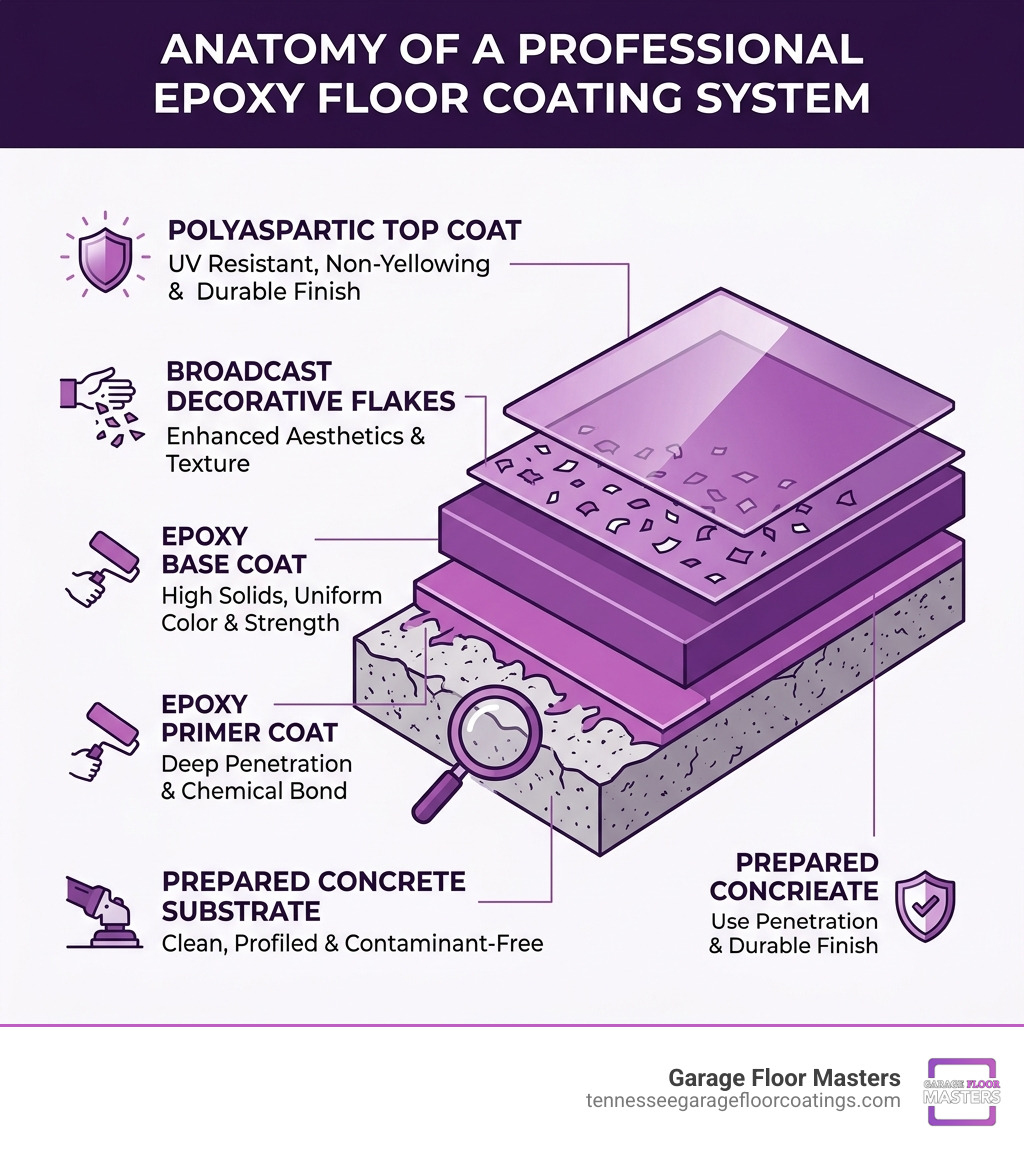
- Decorative Flake Systems: This is the gold standard for residential garages. We broadcast multi-colored vinyl chips into a wet base coat. This provides a beautiful “granite” look, hides surface imperfections, and adds a natural slip-resistant texture.
- Metallic 3D Effects: For those in Sevierville or Pigeon Forge looking for a “wow” factor, metallic epoxy uses pearlescent pigments to create a floor that looks like flowing lava, marbled stone, or deep water.
- Quartz Durability: Similar to flake systems but using colored sand (quartz). This is incredibly rugged and is often used in commercial kitchens or high-impact industrial zones.
- Solid Color Industrial: A clean, professional look often seen in warehouses or “clean room” environments.
The Evolution: Polyaspartic Floor Coatings
While epoxy is a fantastic base, we often recommend a polyaspartic topcoat. Polyaspartic technology was originally developed for bridges and piers. It is UV stable (meaning it won’t yellow in the Tennessee sun), 4x stronger than standard epoxy, and allows for a much faster return to service.
Aesthetic Options for Epoxy Floor Painting Services
Choosing a floor isn’t just about utility; it’s about style. We offer over 140 colors to ensure your garage complements your home’s exterior.
- Custom Vinyl Chips: Mix and match colors to create a unique blend. Popular choices include “Basalt,” “Domino,” and “Cabin Fever.”
- High-Gloss Finishes: These reflect light, making a dark garage feel twice as bright and potentially reducing your energy costs for lighting.
- Reflective Pigments: Used in metallic floors to create depth and movement that changes as you walk across the room.
Maintenance, Longevity, and Contractor Selection
One of the biggest draws of professional epoxy floor painting services is the drastic reduction in maintenance. Because the surface is non-porous, dirt and fluids stay on top where they can be easily wiped away.
The Installation Timeline
At Garage Floor Masters, we know your time is valuable. While traditional epoxy might take 3 to 5 days to fully cure, our advanced polyaspartic systems can often be installed in a single day.
- Preparation: Diamond grinding and crack repair.
- Base Coat: Application of the high-solids primer/base.
- Broadcasting: Evenly spreading the decorative flakes.
- Scraping: Removing excess flakes for a smooth texture.
- Top Coat: Application of the UV-stable clear coat.
You can typically walk on the floor in 24 hours and park your vehicle in 48 to 72 hours.
Longevity and ROI
A professional industrial-grade system can last 15 to 20 years. In contrast, unsealed concrete starts dusting immediately. Over a 5-year period, a coated floor can actually cut your cleaning costs in half. You no longer need specialized concrete cleaners or heavy-duty power scrubbing to remove oil spots; a simple dust mop and an occasional damp mop with a mild detergent (like Simple Green) are all that’s required.
Quality Standards for Epoxy Floor Painting Services
Because the floor coating industry isn’t strictly regulated, choosing the right contractor is the most important decision you’ll make. Here is what to look for:
- Insurance Verification: Ensure they carry both liability and workers’ compensation.
- Workmanship Warranty: A reputable pro should offer a written warranty. For example, we offer a 2-year workmanship warranty on our projects.
- Product Thickness: Ask specifically how many “mils” thick the finished floor will be. If they can’t answer, they aren’t using industrial-grade materials.
- Reference Checking: Don’t just look at photos; ask to see a floor they installed five years ago.
Whether you are in Jefferson City, Powell, or Friendsville, we pride ourselves on delivering Garage Floor Coatings that stand up to the “real world”—from hot tires and oil spills to dropped wrenches and heavy foot traffic. Our Garage Floor Coating Knoxville Tennessee services are tailored to the local climate and the specific needs of East Tennessee homeowners.
Frequently Asked Questions about Epoxy Flooring
How long does professional epoxy flooring last?
In a residential setting like a garage in Oak Ridge or Lenoir City, you can expect Epoxy Garage Floor Coatings to last 15 to 20 years. In high-traffic industrial settings, they typically last 5 to 10 years before needing a fresh topcoat. The lifespan is directly tied to the quality of the preparation and the thickness of the material applied.
Are epoxy floors slippery when wet?
Like any smooth surface, epoxy can be slippery if there is standing water. However, we address this by adding anti-slip aggregates or using decorative flakes which provide a built-in texture. This creates a safe, high-traction surface even in the humid Maryville summers. If you’re looking for Epoxy Polyaspartic Garage Floor Coatings in Maryville, we can customize the level of “grip” to your specific needs.
What is the difference between epoxy and polyaspartic?
Think of epoxy as the “muscle” and polyaspartic as the “shield.” Epoxy provides incredible adhesion and thickness. Polyaspartic, however, cures much faster, is more flexible (so it won’t crack during Tennessee’s freeze-thaw cycles), and is completely UV stable. While epoxy will eventually “chalk” or turn yellow if exposed to sunlight, polyaspartic stays crystal clear for the life of the floor.
Conclusion
Your garage is often the first thing you see when you come home. Why settle for a space that feels like a dusty, dark basement? Investing in professional epoxy floor painting services is about more than just aesthetics—it’s about protecting your home’s foundation, eliminating health-hazardous concrete dust, and increasing your property value.
From Knoxville to Crossville and everywhere in between, Garage Floor Masters is dedicated to transforming these underutilized spaces. Our systems are 4x stronger than standard epoxy, resistant to the harshest chemicals, and available in a massive array of styles.
Don’t let your garage stay “depressed.” Transform your space with professional Epoxy Garage Floor Coatings and enjoy a floor that works as hard as you do. Contact us today for a free on-site estimate and let’s turn that dull concrete into a masterpiece.