
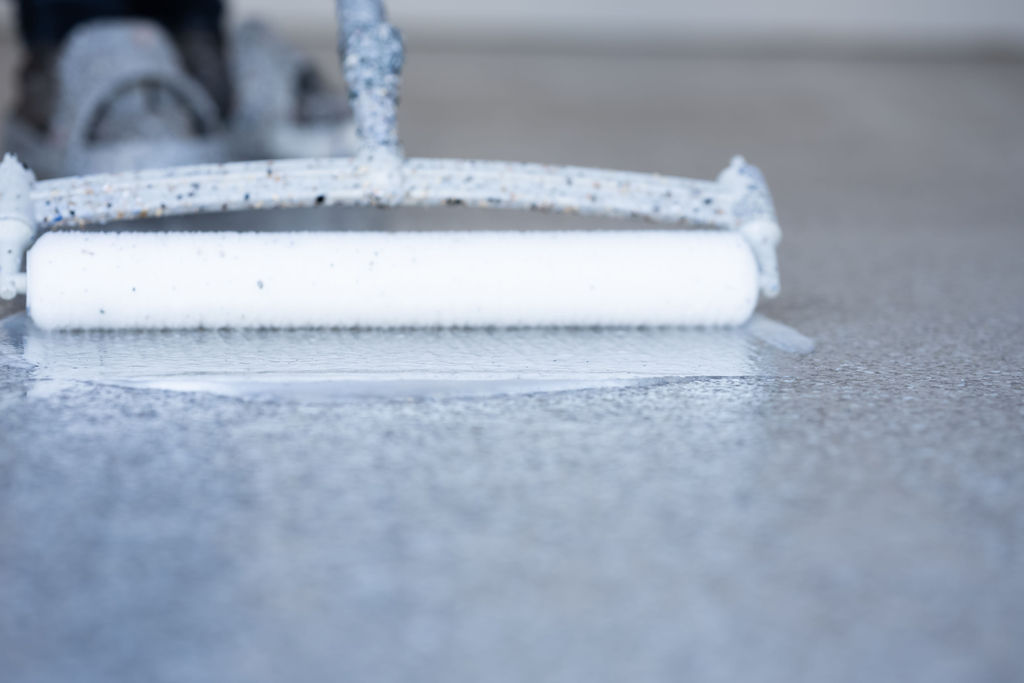
Key Types of Commercial Floor Paint and Coating Systems
When selecting commercial floor paint, understanding the chemical composition of each resin type is essential. Commercial floors demand far more than standard latex paint. The primary coating systems used across commercial and industrial environments include epoxy, polyurethane, polyurea, and polyaspartic resins.
- Epoxy Coatings: Epoxy remains an industry standard for commercial surfaces. A typical 100% solids epoxy formulation creates a high-build, dense protective layer with exceptional adhesion to concrete. For instance, cycloaliphatic hybrid epoxy systems feature a high solids content, offering an extended pot life of around 60 minutes while providing strong resistance against abrasion and chemical spills without requiring a primer on properly prepared concrete.
- Polyurethane Alkyds: Single-pack polyurethane formulas offer solid flexibility and fair chemical resistance against oil and light truck traffic. Coatings with high solids contents (around 45–49%) provide a tough gloss finish, making them suitable for medium-duty commercial environments.
- Polyurea Coatings: Polyurea is renowned for its rapid chemical reaction and extreme durability. Fast-curing, UV-stable polyurea floor coatings can accept light foot traffic in as little as 4 to 6 hours and full vehicle traffic within 24 hours.
- Polyaspartic Coatings: A specialized aliphatic polyurea, polyaspartic technology delivers rapid cure times alongside UV stability, ensuring the floor never yellows under natural sunlight or harsh indoor lighting. At Garage Floor Masters, our UV-stable polyaspartic floor coatings are four times stronger than traditional epoxy and can be installed in a single day.
To explore traditional resin systems further, see our full guide on epoxy floor coatings.
Single-Component vs. Two-Component Commercial Floor Paint
Choosing between a single-component (1K) and a two-component (2K) coating system comes down to performance requirements versus application convenience.

Single-component paints, such as standard single-pack polyurethanes or scuff-resistant water-borne acrylic formulas, are pre-mixed and ready to apply right out of the bucket. They eliminate pot-life restrictions and reduce labor hassle. However, 1K formulas rely on air drying or solvent evaporation to cure. If applied too thickly, a skin can form on top while the paint remains soft underneath.
Two-component systems involve mixing a resin base with a catalyst or hardener, initiating a cross-linking chemical reaction. This chemical cure creates a dense, non-porous film with high impact, chemical, and scuff resistance. While 2K systems require careful mixing and strict adherence to working pot-life windows, they deliver the heavy-duty protection necessary for demanding environments.
| Feature | Single-Component (1K) Paint | Two-Component (2K) Coating System |
|---|---|---|
| Mixing Requirement | None (ready to use) | Strict mixing of resin + hardener |
| Pot-Life Limitation | None (resealable container) | 15 minutes to 60 minutes typical |
| Cure Mechanism | Air dry / solvent evaporation | Chemical cross-linking cure |
| Thickness per Coat | Thin film (e.g., 50μ dry film thickness) | High-build (100% solids options available) |
| Abrasion & Chemical Resistance | Moderate | Superior |
| Common Uses | Light foot traffic, retail walls, low-impact floors | Heavy forklifts, vehicle service bays, factories |
Substrates and High-Traffic Environmental Matching
Matching the exact resin system to your facility’s environmental demands prevents early coating failure.
- Warehouses & Light Industrial: High-volume vehicle loading and forklift maneuvers require high-build epoxy or fast-curing polyurea. Facilities requiring heavy-duty durability benefit from specialized floor coatings for warehouses.
- Healthcare & Hospital Corridors: Environments requiring strict hygiene need continuous, non-porous coatings integrated with anti-microbial additives to inhibit mold, mildew, and bacterial growth.
- Schools & Retail Settings: High foot traffic causes unsightly shoe scuffing. Single-component latex paints engineered with scuff-resistant technology (such as VOC-compliant commercial interior coatings with VOC levels under 90 g/L) help maintain clean aesthetics with simple soap-and-water cleanup.
- Salons & Commercial Workshops: Chemical exposure from hair dyes, solvents, or automotive fluids demands non-staining surface protection. Check out our recommendations for floor coatings for salons.
Critical Surface Preparation and Concrete Repair Standards
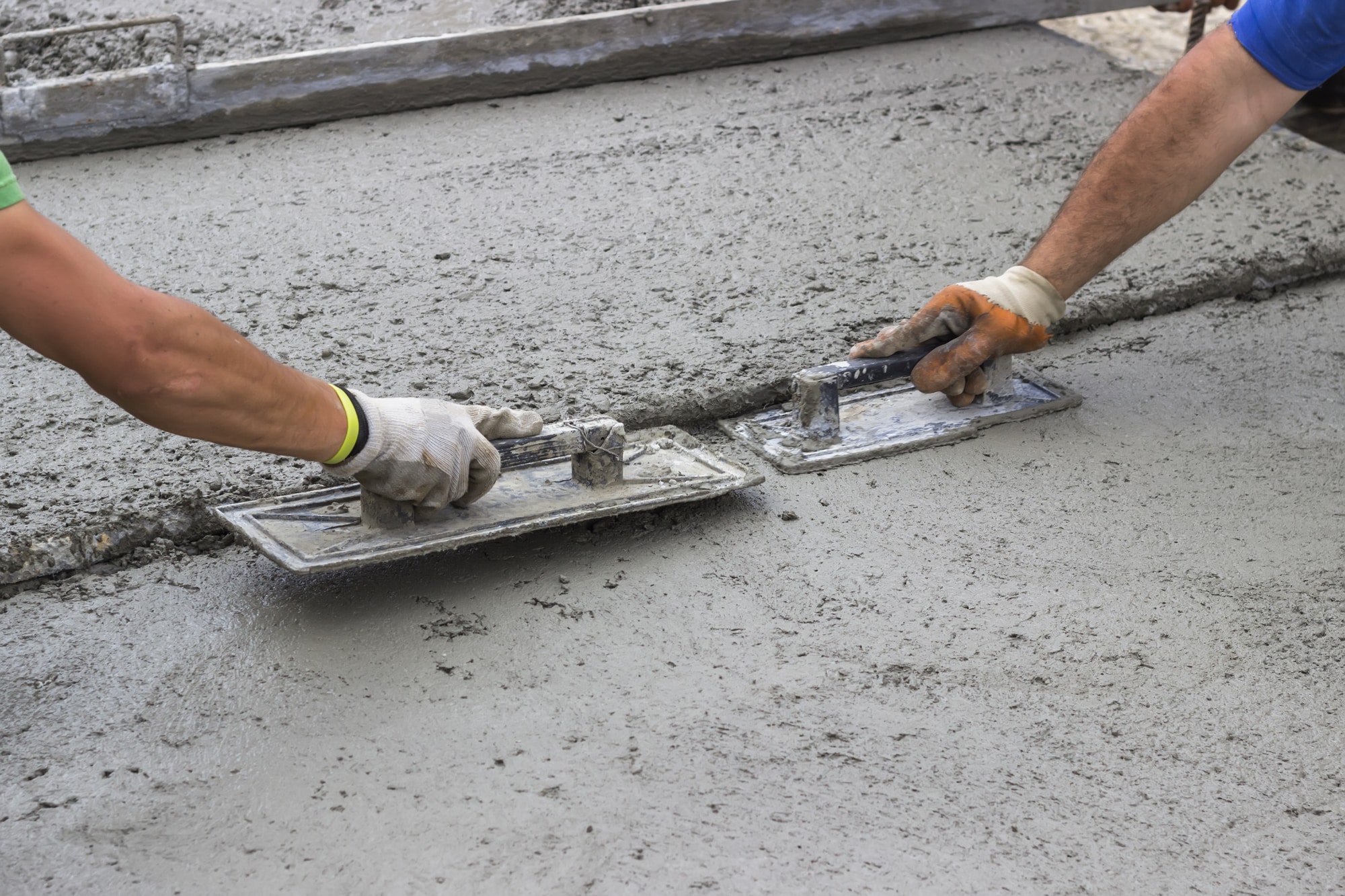
A high-performance commercial floor paint is only as good as the concrete underneath it. Poor surface preparation causes the majority of coating failures, such as peeling, blistering, and flaking.
Before applying any coating, new concrete must cure for a minimum of 12 weeks. Surface relative humidity must be thoroughly evaluated according to industry standards like BS 8203. Concrete surfaces should register no more than 85% relative humidity, with moisture content remaining below 6% when measured 25mm deep inside the slab, or under 14% on a surface meter.
For detailed floor preparation standards, consult A Comprehensive Guide to Commercial Resin Flooring and Modern Coatings.
Mechanical Etching and Moisture Thresholds
To establish a mechanical bond, the concrete surface profile (CSP) must be opened up via mechanical grinding or vacuum-assisted shotblasting to remove laitance, old paint, and contaminants.
If concrete is unsealed and porous, a thinned primer coat (such as polyurethane thinned 30% with white spirit) helps penetrate deep into the pores before topcoating. However, high-solids epoxies and polyureas can bond directly to bare concrete without a separate primer if the floor is shotblasted or ground to an acceptable profile. Any grease or oil must be chemically cleaned using commercial degreasers prior to mechanical grinding to avoid driving oil deeper into the porous slab.
Crack Infill and Rapid Curing Patching Compounds
All spalls, deep cracks, and joints must be filled level before coating application. Modern patch materials offer incredibly rapid return-to-service times:
- Pourable Concrete Patching Compounds: These fiber-reinforced compounds can be applied up to 4 inches deep in a single pass at temperatures down to 40°F. They allow foot traffic in 30 minutes and vehicle traffic in as little as 2 hours.
- Ultra-Rapid Polyurea Repair Materials: For severe environments or cold-storage facilities, low-odor 100% solids polyurea repair products (like rapid polyurea joint fillers) can cure fully in just 15 minutes at sub-freezing temperatures down to -5°F.
Overfilling cracks slightly with polyurea repair compound, letting it cure, and grinding it flush with the surrounding concrete produces a smooth surface ready for topcoat application.
Application Techniques and Anti-Slip Safety Integration
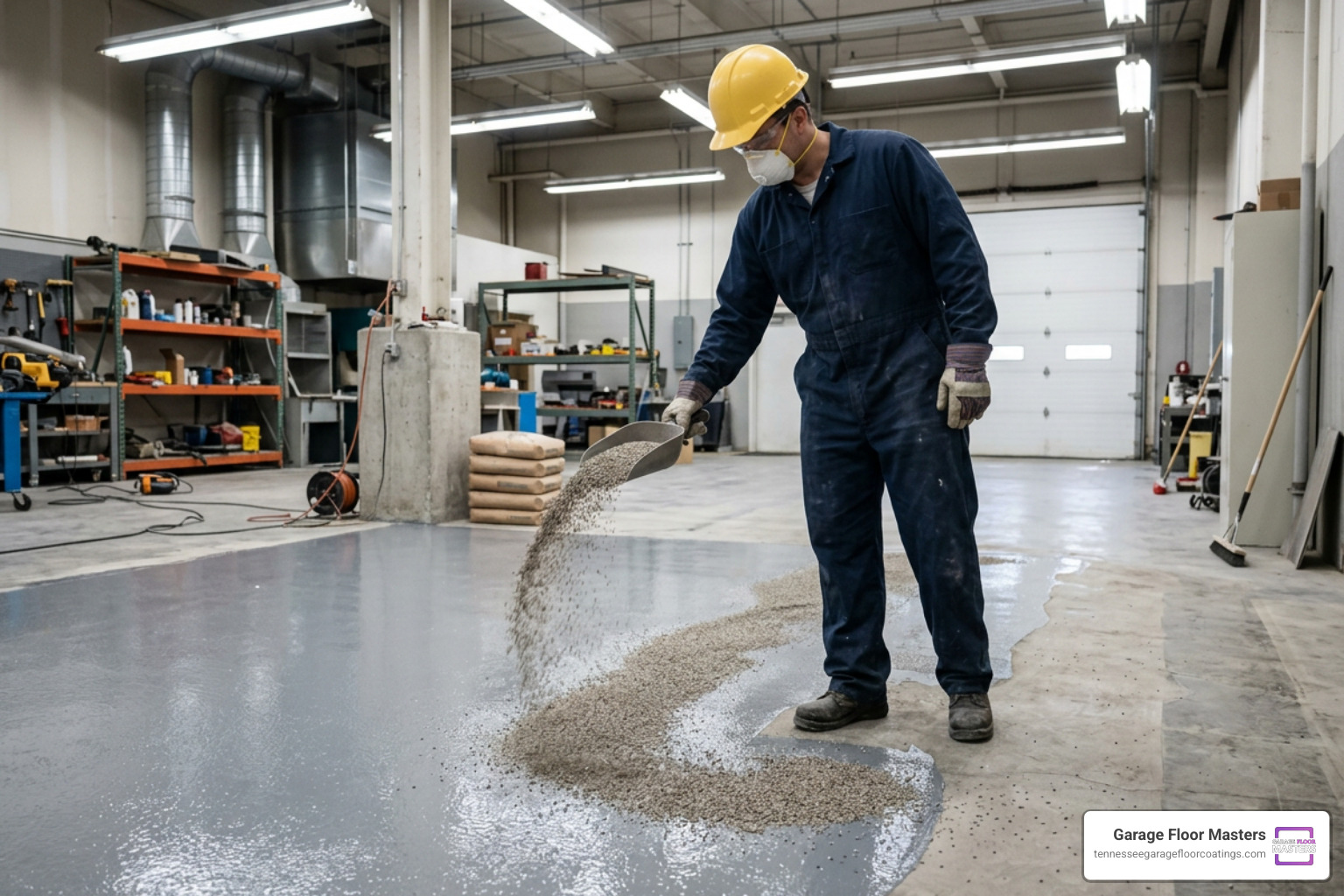
Achieving a uniform commercial finish requires using the correct technique for your chosen resin material:
- Roller Application: Best for single-pack polyurethane or scuff-resistant wall and floor paints. Use medium-nap rollers, maintaining a wet edge to avoid lap marks.
- Trowel Down and Squeegee/Back-roll: High-solids 100% epoxy resin or polyaspartic coatings are often poured in ribbons, spread with a notched squeegee or trowel, and back-rolled to achieve a uniform thickness.
- Self-Leveling Resin Pour: Recommended for badly pitted floors needing a flat surface. To see how self-leveling floors perform long-term, read about poured epoxy flooring commercial solutions that stand the test of time.
Selecting Safety Aggregates and Non-Slip Textures
Smooth floors can become dangerously slick when wet or coated with oils. Workplace safety guidelines recommend integrating anti-slip aggregates directly into the topcoat. To learn more about creating compliant, anti-slip work environments, see how to enhance workplace safety.
By wearing spiked shoes, installers can walk across the wet paint layer to broadcast aggregates like calcined bauxite or aluminum oxide evenly across high-risk zones. Typical aggregate broadcast rates range from 5 to 18 m² per 1 kg of aggregate, depending on whether you need a subtle satin texture or a coarse anti-slip grid for wet processing areas.
Performance Factors: Durability, Return to Service, and VOC Compliance
Commercial facility managers must weigh three main operational factors: wear resistance, downtime, and environmental compliance.
- Abrasion and Chemical Durability: Industrial floors encounter hot tires, battery acid, motor oil, and harsh cleaning agents. 100% solids epoxy and polyaspartic coatings provide top-tier impact and chemical resistance.
- UV Stability: Standard epoxies tend to amber or yellow when exposed to direct sunlight over time. Polyurea and polyaspartic topcoats are naturally UV-stable, keeping light-colored floors bright for years.
- VOC Regulations and Certifications: Indoor air quality is vital for occupied buildings. High-performance single-component acrylics and 100% solids resins meet strict low-VOC standards. For example, commercial interior coatings with VOC levels around 86.0 to 89.9 g/L meet CHPS (Collaborative for High Performance Schools) standards and qualify for LEED v4 environmental credits.
Evaluating Commercial Floor Paint Costs, Coverage, and Curing Times
When budgeting for a commercial floor coating project, consider the material coverage rates, dry film thickness (DFT), and curing speed.
- Coverage Rates: A standard 5-liter unit of single-pack commercial floor paint typically covers about 30 m² at a dry film thickness of 50 microns (from a 110-micron wet film thickness). High-solids polyaspartics and epoxies offer higher film builds per coat.
- Cure Windows:
- Single-pack polyurethanes: Touch dry in 4 to 6 hours at 20°C (68°F); light foot traffic in 24 hours.
- 100% Solids Epoxies: 60-minute pot life; light foot traffic in 12 to 16 hours; vehicle traffic in 36 to 48 hours.
- Fast-Cure Polyurea/Polyaspartic: Light foot traffic in 4 to 6 hours; full vehicle traffic in just 24 hours.
While material costs vary based on chosen features and substrate condition, total project costs depend heavily on surface prep, crack repair needs, and selected finish options. That is why Garage Floor Masters provides free on-site estimates across our East Tennessee service area to deliver exact, clear pricing tailored to your floor. Discover why your business needs professional epoxy resin floor installers.
Frequently Asked Questions About Commercial Floor Coatings
What is the main difference between standard paint and commercial floor paint?
Standard paint is formulated for low-impact vertical surfaces like walls. Commercial floor paint and specialized resin coatings contain higher solids content and tougher binders (such as epoxy, polyurethane, or polyaspartic resins). They form a thicker, cross-linked film designed to resist mechanical wear, tire abrasion, chemical spills, and heavy foot traffic without flaking or peeling. For more information on product lines, view our main page for commercial floor coatings.
How long must new concrete cure before applying a commercial floor coating?
New concrete generally requires a minimum curing period of 12 weeks before applying polyurethane or epoxy floor paint. Furthermore, surface moisture testing must confirm that relative humidity levels remain at or below 85% (per BS 8203) and overall moisture content remains under 6% to ensure the paint bonds properly.
How quickly can foot and vehicle traffic resume after coating application?
Return-to-service times vary significantly based on the product chemistry:
- Fast-Cure Polyurea / Polyaspartic: Accepts light foot traffic in 4 to 6 hours and vehicle traffic in 24 hours.
- 100% Solids Epoxy: Accepts light traffic in 12 to 16 hours and vehicle traffic in 36 to 48 hours.
- Concrete Repair Patches: Specialized polyurea repair compounds fully cure in as little as 15 minutes, while pourable concrete patches accept vehicle traffic in 2 hours.
Conclusion
Protecting your commercial facility’s concrete requires moving past quick surface fixes and selecting high-performance surface systems tailored to your operation. Whether managing a bustling warehouse, a school facility, or a local commercial garage, choosing the right combination of surface preparation, resin chemistry, and non-slip safety aggregates ensures a durable finish that resists daily wear.
At Garage Floor Masters, we serve businesses throughout East Tennessee—including Knoxville, Oak Ridge, Crossville, Vonore, Sevierville, Lenoir City, Maryville, Tazewell, LaFollette, Loudon, Friendsville, Powell, Jefferson City, Pigeon Forge, Clinton, Andersonville, and White Pine. Our UV-stable polyaspartic and epoxy floor systems are four times stronger than standard epoxy, installed in just one day, and available in over 140 colors.
Contact Garage Floor Masters today to schedule your free on-site estimate and learn more about our high-performance commercial floor coatings.