
Why Epoxy Flooring for Industrial Use Is the Gold Standard for Heavy-Duty Floors
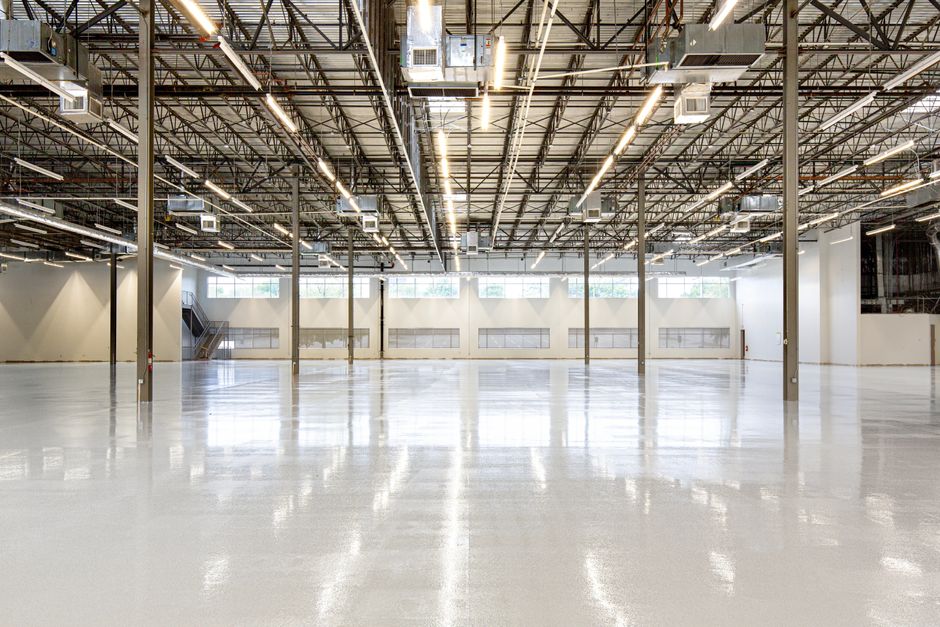
Epoxy flooring for industrial use is one of the most proven ways to protect concrete in high-demand environments — from warehouses and factories to food processing plants and EV battery facilities.
If you’re evaluating industrial flooring systems right now, here’s a quick snapshot of what matters most:
| Factor | What to Know |
|---|---|
| Best system types | Coatings (thin-mil), slurries, and mortars — each suited to different load levels |
| Top benefits | Chemical resistance, abrasion resistance, slip resistance, and seamless hygiene |
| Typical lifespan | 10–15+ years under heavy traffic and chemical exposure when properly installed |
| Cost range | Varies based on project condition, thickness, and system selected — free on-site estimate recommended |
| Key industries | Manufacturing, warehousing, food processing, automotive, cleanrooms, EV battery plants |
| Most critical step | Concrete surface preparation — inadequate prep is the #1 cause of coating failure |
Industrial floors take a beating every single day. Forklifts, heavy machinery, chemical spills, moisture — bare or poorly coated concrete simply cannot hold up. That’s why facility managers and business owners keep coming back to resinous epoxy systems: they’re durable, seamless, low-maintenance, and built to handle the kind of punishment that destroys standard floor coatings.
The challenge is that not all epoxy systems are equal. A thin decorative coating meant for a garage floor will fail fast in a manufacturing cell. A properly specified industrial system — the right thickness, the right chemistry, the right surface prep — can last well over a decade.
This guide walks you through the main system types, performance benchmarks, key industries, installation requirements, and cost realities so you can make a confident, informed decision.
Understanding Epoxy Flooring for Industrial Use
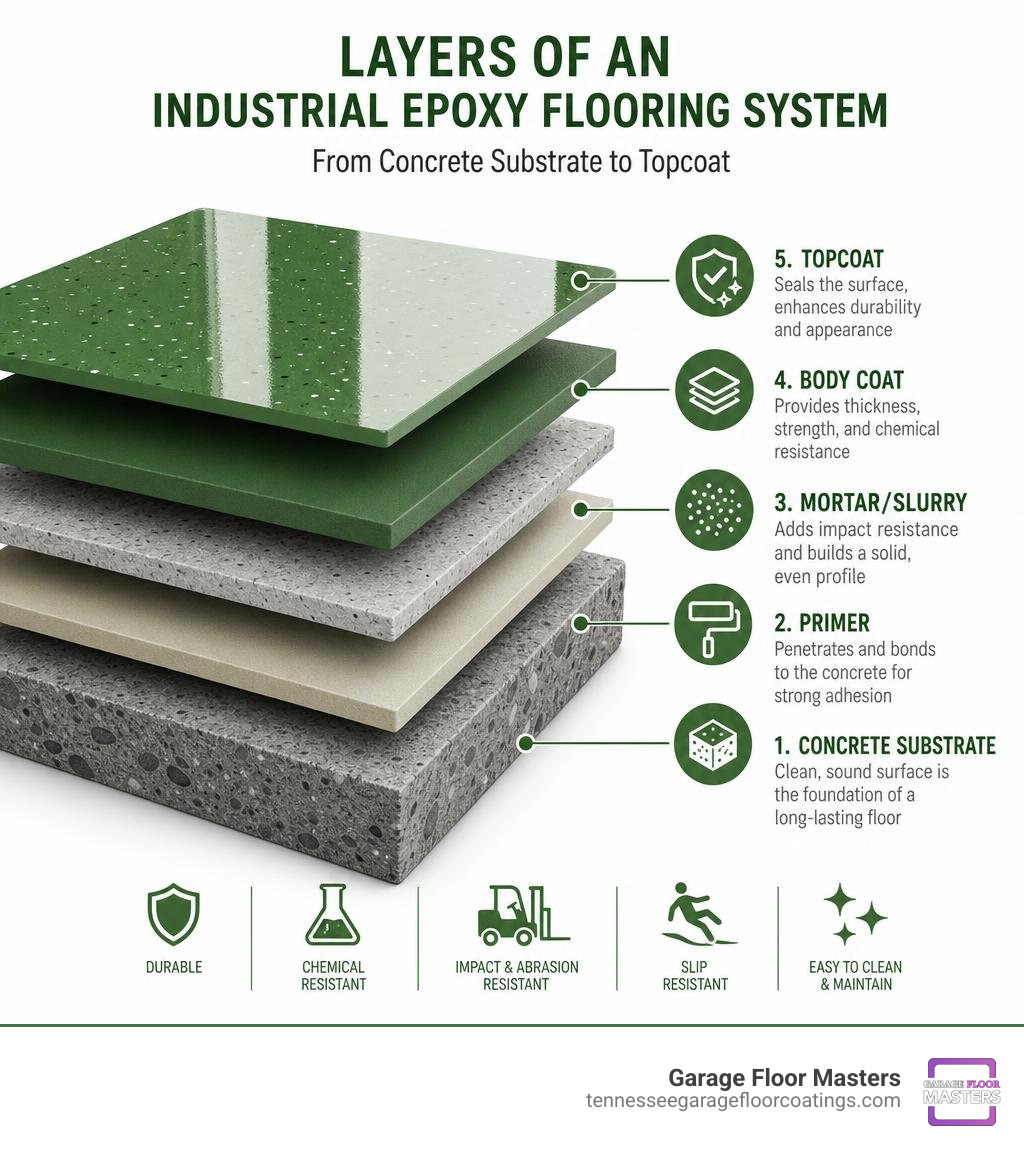
To choose the right floor for your facility, it helps to understand what epoxy flooring actually is. Unlike standard paint that simply dries on top of concrete, industrial epoxy is a poured-in-place, two-part polymer system consisting of a liquid resin (Part A) and a hardener (Part B). When we mix these components on-site, a chemical reaction occurs that bonds the material directly to the concrete, turning it into a solid, continuous plastic structure.
This seamless design is one of its greatest strengths. Without grout lines, seams, or joints, there are no weak points where dirt, moisture, or bacteria can hide. For a deep dive into how these modern systems compare to older concrete finishes, take a look at A Comprehensive Guide to Commercial Resin Flooring and Modern Coatings.
Key Formulations: 100% Solids and Novolac Systems
When selecting an epoxy flooring for industrial use, the chemical formulation determines how well the floor will perform under specific stresses:
- 100% Solids Epoxy: This is the heavy-duty workhorse of industrial facilities. “100% solids” means that the coating contains no solvents or water that evaporate during the curing process. What we roll out wet is exactly what remains dry. There is zero shrinkage, meaning you get a much thicker, more durable film that is highly resistant to heavy traffic and mechanical wear. You can learn more about these resilient coatings in our guide on Epoxy Floor Coatings.
- Novolac Epoxy: For environments exposed to aggressive chemicals, standard epoxies aren’t always enough. Novolac epoxies are formulated with a higher cross-linking density, making them incredibly dense and chemically resistant. A high-quality Novolac system can withstand continuous exposure to extreme substances like 70% sulfuric acid for over 90 days and handle constant dry temperatures exceeding 225°F.
- Water-Based Systems: These systems use water as a carrier. While they are low-odor and make excellent, easy-to-apply primers or light-duty base coats, they lack the thickness and ultimate durability required for heavy forklift lanes or high-impact manufacturing zones.
How Industrial Epoxy Systems Differ from Standard Coatings
It is common to confuse professional-grade industrial epoxy with DIY epoxy paints sold at big-box hardware stores, but they are worlds apart.
Standard DIY floor paint is typically a water-based product applied at a thin-film thickness of only 2 to 4 mils (one mil is 1/1000 of an inch). Under the weight of a single heavy vehicle, these thin coatings will wear down, peel, or blister within months.
In contrast, a professional-grade three-layer industrial epoxy system is applied at a heavy mil thickness — often starting at 25 mils and reaching up to 250+ mils (a quarter-inch or more) for heavy tonnage areas.
Furthermore, industrial-grade topcoats are engineered for extreme abrasion resistance. To put this in perspective, high-performance military-grade topcoats lose only about 4 mg of material under standard ASTM abrasion testing, whereas typical big-box retail epoxy loses 30 mg or more. This means professional systems are up to 7.5 times more wear-resistant, allowing them to withstand the relentless grinding of forklifts and steel-wheeled dollies for 10 to 15 years or more. For more context on how these heavy-duty coatings differ from standard residential applications, read The Definitive Guide to Epoxy Garage Floor Coating.
Comparing Industrial Epoxy Flooring Systems: Coatings, Slurries, and Mortars
Industrial epoxy systems are classified by their application method, aggregate content, and overall thickness. Choosing the right system is a balance between your facility’s daily abuse levels and your budget.
For a broader overview of how these options fit into commercial spaces, explore our Commercial Floor Coatings page.
| System Type | Thickness Range | Aggregate-to-Resin Ratio | Best Suited For | Key Benefit |
|---|---|---|---|---|
| Epoxy Coatings | 4 to 30 mils | None (or light slip-resistant broadcast) | Light manufacturing, assembly lines, walkways, auto shops | Cost-effective, easy to clean, high light reflectivity |
| Epoxy Slurries | 30 to 250 mils | Self-levelling sand slurry mixture | Warehouses, cleanrooms, packaging areas, EV battery plants | Extremely smooth, impact-resistant, self-levelling over rough concrete |
| Epoxy Mortars | 125 to 250+ mils (1/8″ to 1/4″+) | High ratio (typically 5:1 aggregate to resin) | Heavy manufacturing, loading docks, waste treatment, severe impact zones | Virtually indestructible, rebuilds badly damaged concrete, high compressive strength |
Performance Metrics of Epoxy Flooring for Industrial Use
When engineers and facility managers evaluate flooring options, they rely on standardized physical properties. A high-quality industrial epoxy system typically delivers these impressive performance metrics:
- Compressive Strength: Often reaches up to 12,000 psi (ASTM D695), which is three to four times stronger than the concrete substrate underneath it.
- Tensile Strength: Typically ranges from 3,900 psi to over 10,000 psi depending on the formulation, allowing the floor to flex slightly under load without cracking.
- Adhesion Strength: Exceeds 300 psi (ASTM D4541). When tested to failure, the concrete itself breaks before the epoxy loses its bond with the substrate.
- Hardness: Measures around 80 to 89 on the Shore D scale, offering excellent resistance to scratching and gouging.
- Slip Resistance: Can be adjusted from a smooth finish to highly textured profiles (R10 to R13 slip ratings) using quartz sand or calcined bauxite aggregates, achieving a safe wet Dynamic Coefficient of Friction (DCOF) of 0.70 or higher.
Choosing the Right Thickness for Heavy Traffic
Selecting the correct thickness is critical to ensuring your floor survives its environment.
If your facility only handles light foot traffic and occasional hand-cart movement, a thin-film coating of 10 to 15 mils will protect the concrete from dusting and light staining.
However, if your floor is subjected to heavy forklift traffic, pallet jacks, or heavy machinery, you must opt for a high-build self-levelling slurry or a troweled mortar system. Forklifts carrying multi-ton loads exert immense point-loading pressure on the floor. A thin coating will quickly crack under this stress, whereas a 1/8-inch or 1/4-inch slurry or mortar system distributes the weight, protecting the concrete substrate from cracking and keeping your operations running smoothly.
Key Applications and Industries Benefiting from Resinous Floors

Every industry has its own unique set of flooring challenges. Fortunately, the versatility of resinous epoxy allows us to customize the system to meet those demands. To see how these systems fit into logistics and storage facilities, check out Floor Coatings for Warehouses.
High-Performance Demands in EV Battery Plants and Cleanrooms
As of June 2026, the rapid expansion of advanced manufacturing — particularly electric vehicle (EV) battery plants and pharmaceutical cleanrooms — has raised the bar for industrial flooring performance.
In EV battery manufacturing, floors must withstand exposure to highly aggressive solvents like N-Methyl-2-pyrrolidone (NMP). Specialized slurry systems, such as ResuShield MPE Slurry EV, are specifically engineered to provide up to 7 days of continuous chemical resistance against NMP spills without blistering or degrading.
Additionally, electronics and cleanroom environments require Electrostatic Discharge (ESD) coatings. Standard epoxy acts as an insulator, allowing static electricity to build up. ESD epoxy floors utilize conductive primers and dissipative topcoats to safely channel static electricity to ground points, protecting sensitive electronic components and preventing hazardous sparks.
Safety and Hygiene Compliance in Food Processing and Warehouses
In the food, beverage, and pharmaceutical sectors, hygiene is non-negotiable. Traditional tiled floors have grout lines that absorb moisture, grease, and bacteria, making them incredibly difficult to sanitize.
Seamless epoxy flooring creates a completely impervious barrier. Many of our industrial coatings are formulated with 100% antibacterial and antimicrobial properties, meeting strict USDA and FDA guidelines for food contact.
Safety is also a major concern in wet processing areas and busy warehouses. By broadcasting aggregates like quartz sand or bauxite into the wet epoxy, we can create a customized slip-resistant texture that keeps workers safe even when the floor is wet or greasy. To learn more about how a textured floor protects your team, read about how to Enhance Workplace Safety.
Installation, Surface Preparation, and Moisture Mitigation
Many people assume that the quality of the epoxy resin is the most important factor in a successful floor. In reality, about 80% of any floor coating’s success or failure comes down to one thing: surface preparation. To understand why professional expertise is so critical during this phase, read Why Your Business Needs Professional Epoxy Resin Floor Installers.
The Critical Role of Concrete Surface Preparation
You cannot simply sweep a concrete floor and start pouring epoxy. Concrete must be mechanically “profiled” to create a rough texture that the liquid epoxy can grip onto.
To achieve this, we use heavy-duty diamond grinding machines or shot-blasting equipment. This process removes the weak top layer of concrete (known as laitance), opens up the concrete’s pores, and clears away any old paint, sealers, oils, or grease.
We aim for a specific Concrete Surface Profile (typically CSP 3 to CSP 5 for industrial applications) that matches the thickness of the system we are installing. If the concrete is not properly prepared and decontaminated, the epoxy will fail to bond, leading to peeling, bubbling, and premature failure.
Managing Moisture Vapor Transmission with Epoxy Flooring for Industrial Use
Moisture is the silent enemy of resinous floors. All concrete slabs contain some level of moisture, which constantly moves upward as vapor. If you seal the top of the concrete with a vapor-tight epoxy, that rising moisture can build up underneath the coating, creating immense hydrostatic pressure.
This pressure can easily exceed the bonding strength of the epoxy, causing the floor to blister, bubble, and delaminate.
To prevent this, we conduct professional moisture vapor emission (MVE) testing before starting any project. If moisture levels are high — or if we are coating “green” concrete that hasn’t fully cured — we apply a specialized moisture vapor barrier primer. These advanced primers can reduce hydrostatic pressure from a dangerous 12 to 20 pounds per 1,000 square feet down to a safe level of less than 1 pound, ensuring your industrial floor remains firmly bonded for the long haul.
Frequently Asked Questions About Industrial Epoxy Flooring
How long does industrial epoxy flooring last?
When designed correctly for your specific traffic levels and installed by professionals, a high-quality industrial epoxy floor will easily last 10 to 15+ years. To maximize this lifespan under heavy forklift wear, we often apply a highly abrasion-resistant polyurethane or polyaspartic topcoat. One of the greatest advantages of resinous flooring is that it does not need to be torn out when it eventually wears down; we can simply clean, lightly sand, and apply a fresh topcoat to rejuvenate the floor, keeping old materials out of landfills.
How much does epoxy flooring for industrial use cost per square foot?
The cost of an industrial epoxy floor can range anywhere from $3 to $30 per square foot. Why such a wide range? It all depends on the current condition of your concrete, the size of the project, the thickness of the system you need (coating vs. thick mortar), and specialized features like chemical-resistant Novolac or ESD static control. Because every facility is unique, we base our pricing on the specific features you select and the physical condition of your slab. That is why we always recommend scheduling a free on-site estimate to get an accurate, customized quote.
What are the maintenance requirements for industrial resin floors?
Industrial epoxy floors are incredibly low-maintenance. For daily cleaning, a simple sweep or dust mop followed by a damp mop with a pH-neutral cleaner is all it takes to keep the floor looking brand new. For heavily soiled areas or grease buildup in manufacturing zones, you can use a walk-behind floor scrubber equipped with a soft brush and a mild degreaser, followed by a clean water rinse. Avoid using harsh acids or highly abrasive cleaning tools, as these can dull the high-gloss finish over time.
Conclusion
Choosing the right epoxy flooring for industrial use is an investment in your business’s safety, efficiency, and long-term bottom line. Whether you manage a high-tech cleanroom, a busy shipping warehouse, or a heavy manufacturing plant, matching the right system thickness and formulation to your environment is the key to a floor that stands the test of time.
At Garage Floor Masters, we specialize in high-performance commercial and industrial concrete coatings throughout East Tennessee. While traditional epoxies are excellent for many heavy-duty applications, we also offer next-generation Polyaspartic Floor Coatings. Our UV-stable polyaspartic coatings are 4x stronger than standard epoxy, can be installed in as little as one day to minimize your business’s downtime, and are available in over 140 customizable colors.
Whether you need a heavy-duty epoxy mortar or a rapid-curing polyaspartic system, we have the expertise to deliver. We proudly serve businesses in Knoxville, TN, as well as Oak Ridge, Crossville, Vonore, Sevierville, Lenoir City, Maryville, Tazewell, LaFollette, Loudon, Friendsville, Powell, Jefferson City, Pigeon Forge, Clinton, Andersonville, and White Pine.
Ready to protect your facility’s concrete with a floor built for the long haul? Explore our Commercial Floor Coatings options and contact us today to schedule your free, no-obligation on-site estimate!