
Why Your Basement Floor Deserves More Than a Coat of Paint
When it comes to transforming an unfinished, cracked, or stained slab into a durable living space, professional basement floor installers make the difference between a floor that lasts decades and one that peels within a year.
Here’s a quick look at what professionals bring to the table:
| What You Get | Why It Matters |
|---|---|
| Moisture testing before installation | Prevents adhesion failure and mold |
| Diamond-ground surface prep | Creates a bond that holds for 15–20+ years |
| Industrial-grade coatings (polyaspartic, epoxy) | Far more durable than DIY paint or sealers |
| Decorative flake and color options | 140+ combinations for a custom finish |
| Lifetime limited warranties | Peace of mind backed by the installer |
| 1–3 day installation | Minimal disruption to your home |
Most homeowners don’t realize that up to 80% of a floor coating’s long-term success depends on surface preparation — not the coating itself. Without commercial-grade grinders, proper moisture testing, and the right primer system, even expensive materials will fail.
And the stakes are real. A poorly installed basement floor doesn’t just look bad — it can trap moisture, breed mold, void product warranties, and ultimately cost more to fix than it would have to do it right the first time.
The good news? Done correctly, new basement flooring can return up to 70% of its cost when you sell your home — and it makes your space genuinely usable in the meantime.
Pricing varies based on the condition of your slab, the materials you choose, and the square footage involved — which is why a free on-site estimate is always the right starting point.
This guide walks you through everything: the best flooring options, how moisture is handled, what the installation process actually looks like, and how to evaluate whether a company is worth hiring.
Top Flooring Solutions Recommended by Professional Basement Floor Installers
Choosing the right material for a basement is vastly different from picking a living room carpet. Basements are “below-grade,” which is a fancy construction term meaning they are essentially concrete boxes sitting in wet dirt. Because of this, professional basement floor installers usually point homeowners toward materials that won’t rot, warp, or grow a science experiment underneath them.
High-Performance Polyaspartic and Epoxy Blends
In May 2026, the gold standard for basement protection is a high-performance polyaspartic coating. While traditional epoxy has been the go-to for years, we’ve found that polyaspartic systems are 4x stronger and offer superior UV stability. This means they won’t yellow if you have basement windows letting in sunlight.
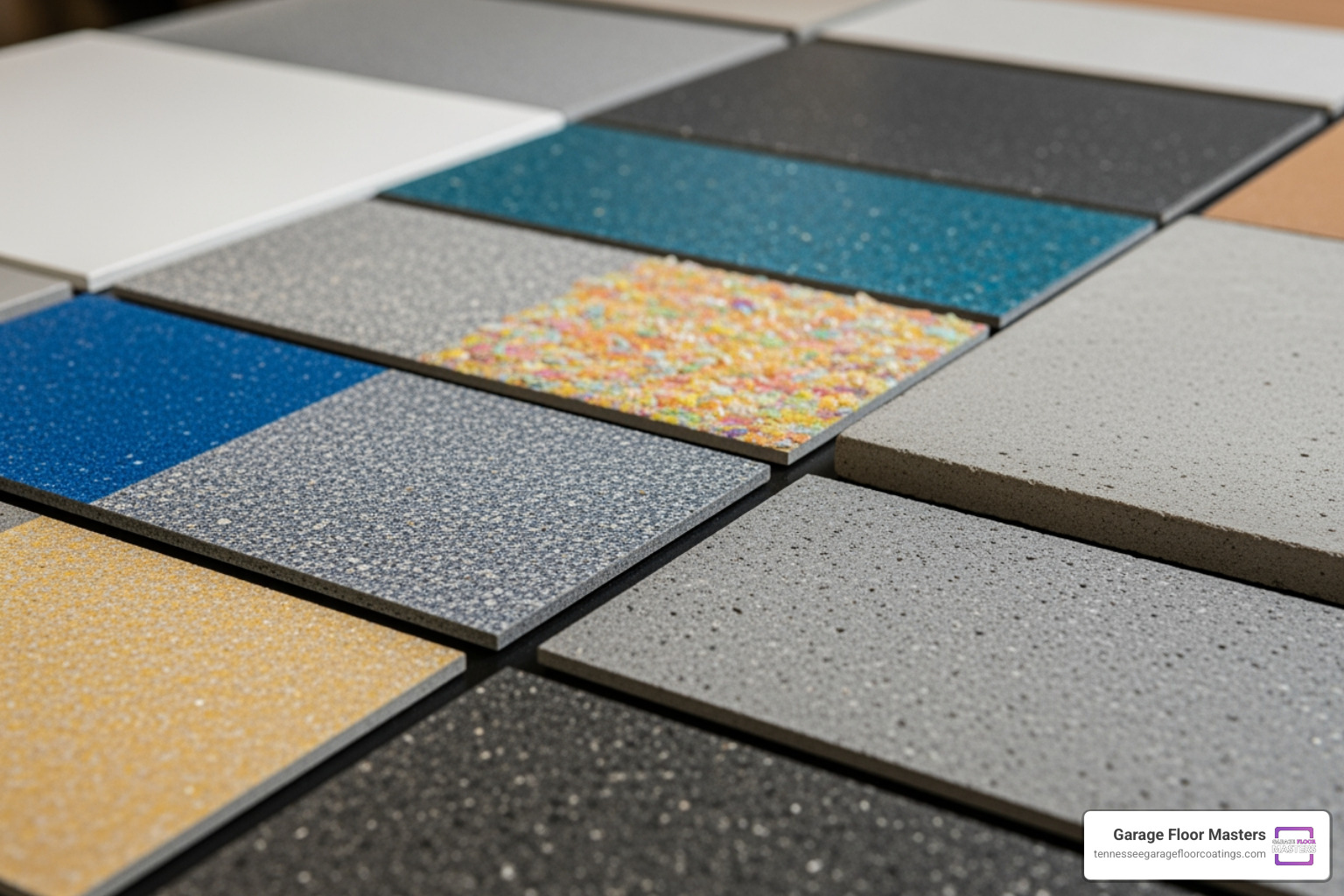
These systems are engineered for durability and chemical resistance. Whether your basement is a workshop, a home gym, or a playroom for the kids, these coatings handle the abuse. At Garage Floor Masters, we offer Basement Floor Coatings in over 140 colors, allowing you to match any aesthetic from “industrial chic” to “warm family den.”
Waterproof Luxury Vinyl Plank (LVP)
If you absolutely must have the look of wood in your basement, Luxury Vinyl Plank (LVP) is the only way to go. Unlike laminate or engineered hardwood, LVP is 100% waterproof. It’s made of PVC, so even if your water heater decides to give up the ghost, the floor won’t be ruined.
However, even with “waterproof” materials, moisture can still get trapped underneath. That’s why we often recommend a hybrid approach or ensuring a vapor barrier is perfectly installed first.
Polished Concrete and Moisture-Proof Tile
For those who love a minimalist look, polished concrete is a fantastic option. It involves grinding the concrete with progressively finer diamond pads until it shines. It’s incredibly low maintenance, though it can be chilly on the feet. Porcelain and ceramic tiles are also moisture-proof, but they are only as good as the grout and the subfloor prep—if the concrete cracks, your tiles will too.
Top Moisture-Resistant Materials for 2026:
- Polyaspartic Coatings (The “One and Done” solution)
- Industrial-Grade Epoxy Blends
- 100% Waterproof Luxury Vinyl Plank
- Polished Concrete
- Porcelain Tile
The Critical Role of Moisture Mitigation and Subfloor Prep
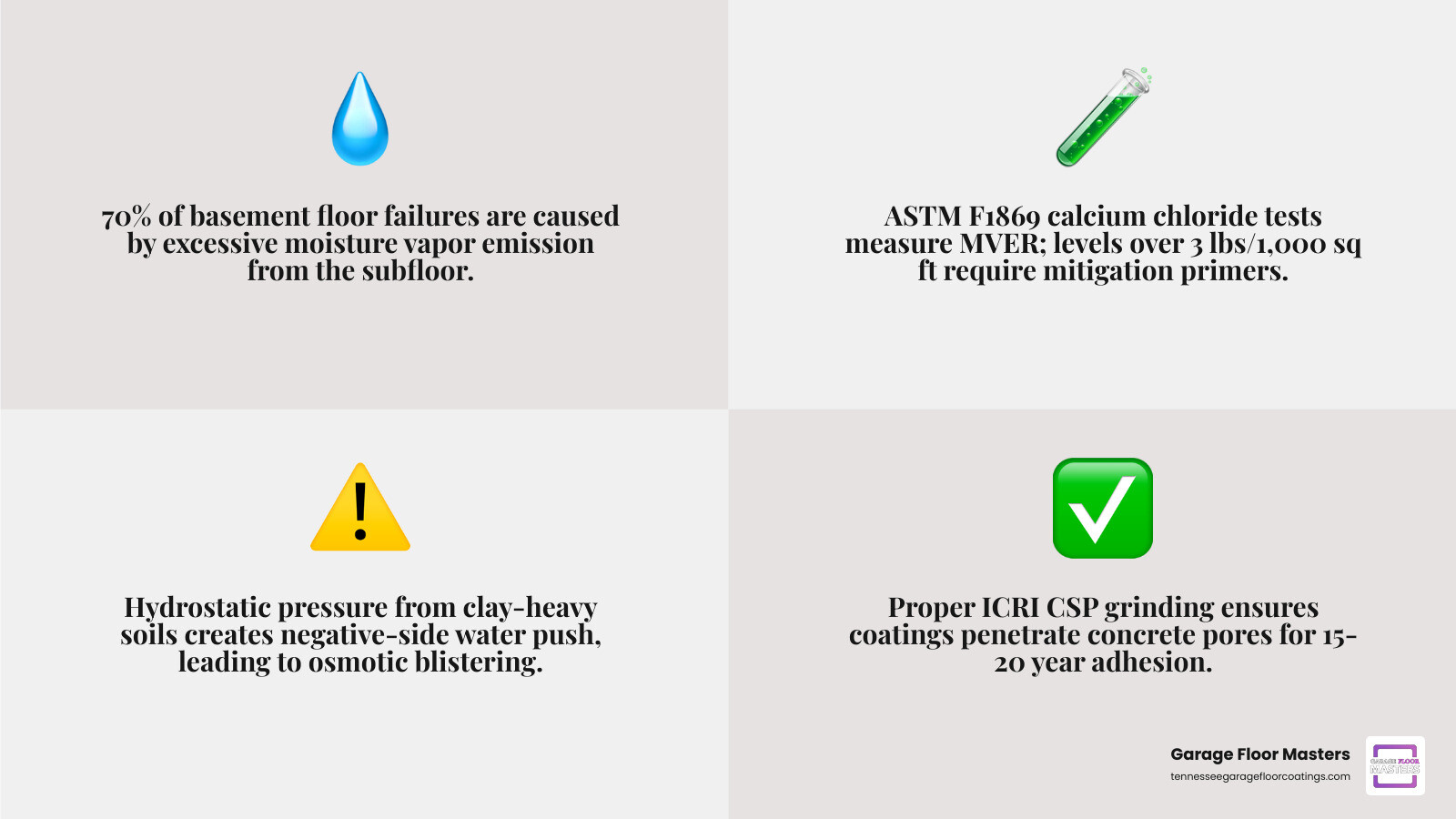
If you skip moisture testing, you’re basically gambling with your bank account. In Middle Tennessee, our clay-heavy soil is notorious for holding onto water. This creates hydrostatic pressure—water in the ground pushing against your basement slab.
How Professional Basement Floor Installers Prepare Concrete
We don’t just show up and start pouring. The first step is always mechanical preparation. We use industrial diamond grinders to “open up” the pores of the concrete. This is measured by ICRI CSP (Concrete Surface Profile) standards. A smooth floor is a weak floor; we want a texture similar to 80-grit sandpaper to ensure the coating dives deep into the pores.
We also handle:
- Crack Injection: We use specialized resins to stabilize control joints and cracks.
- Laitance Removal: Getting rid of that weak, “dusty” top layer of concrete.
- Floor Leveling: If your floor has “birdbaths” (low spots) or high ridges, we use self-leveling cement or grinding to make it flat.
Implementing Vapor Barriers and Mitigation Primers
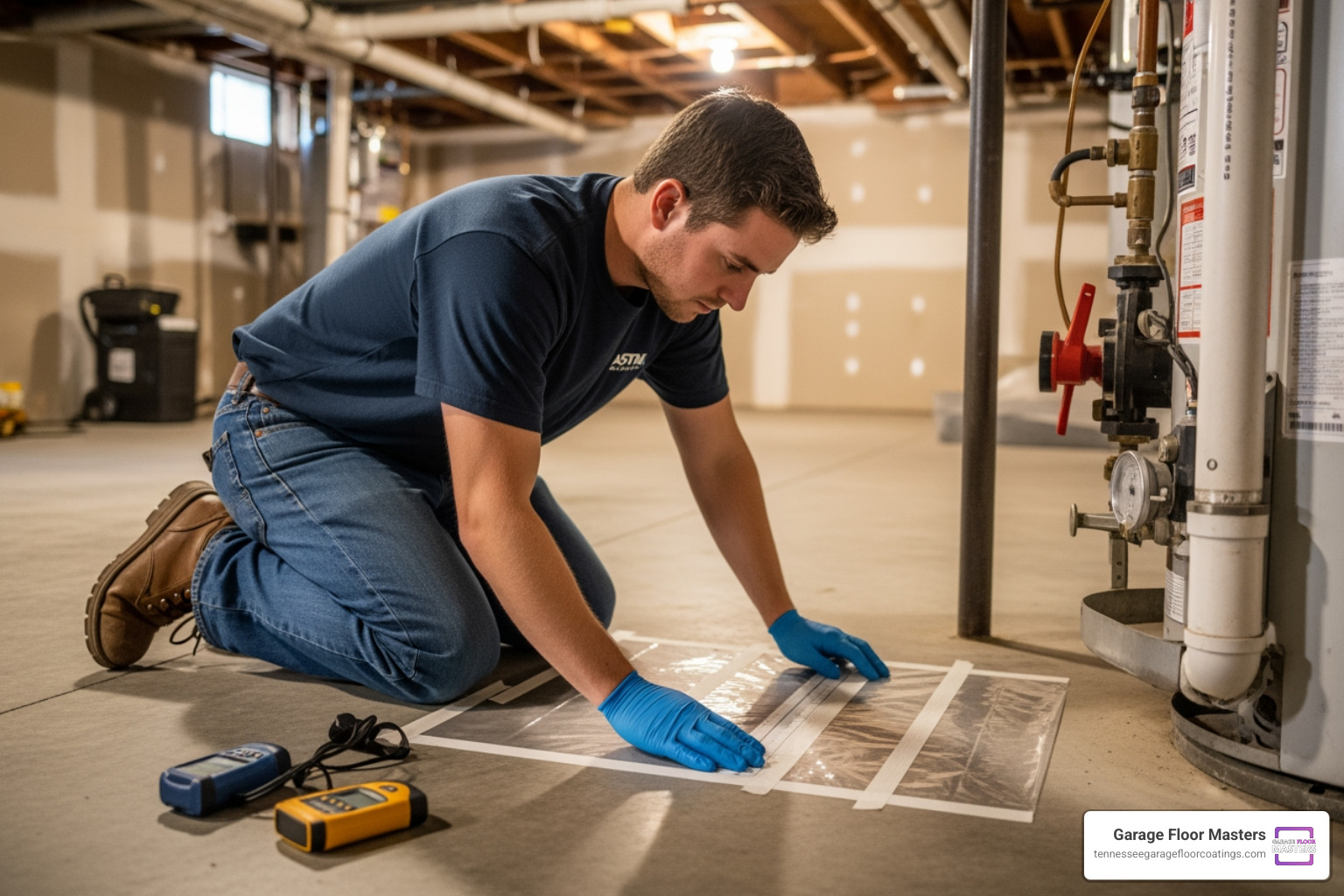
Before we even think about Sealing Your Basement Floor, we perform ASTM F1869 (Calcium Chloride) or ASTM F2170 (Relative Humidity) tests. If the Moisture Vapor Emission Rate (MVER) exceeds 3 lbs per 1,000 square feet, a standard coating will eventually blister and peel.
In these cases, we apply a vapor mitigation primer. This specialized layer is designed to withstand negative-side pressure, blocking capillary action and ensuring the bond integrity of your final floor. It’s the difference between a floor that looks good for a summer and one that stays put for twenty years.
The Professional Coating Installation Process
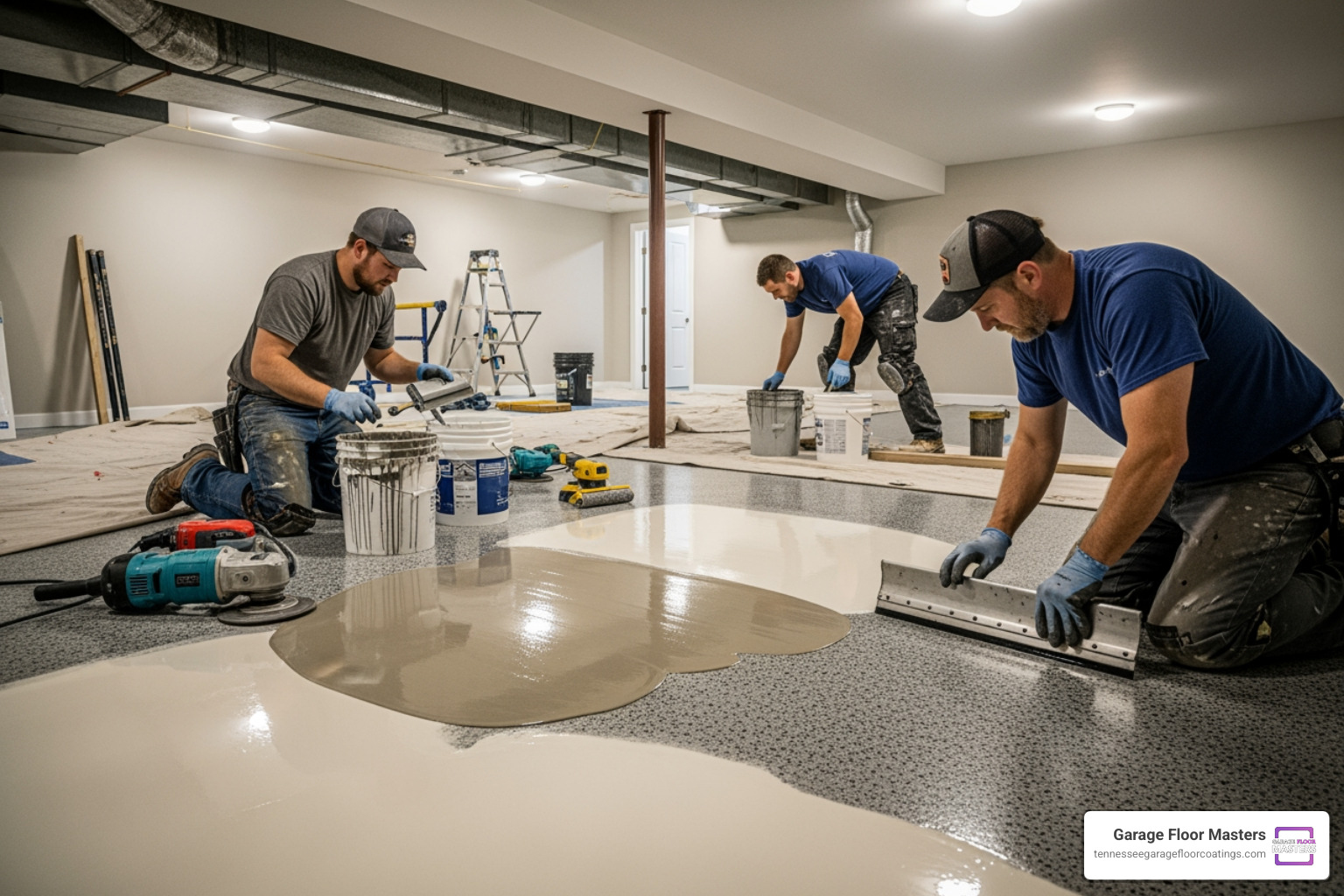
Ever wonder why a DIY kit takes a week and looks… well, “DIY,” while professional basement floor installers can finish a job in a fraction of the time with better results? It’s the process.
The Step-by-Step Transformation
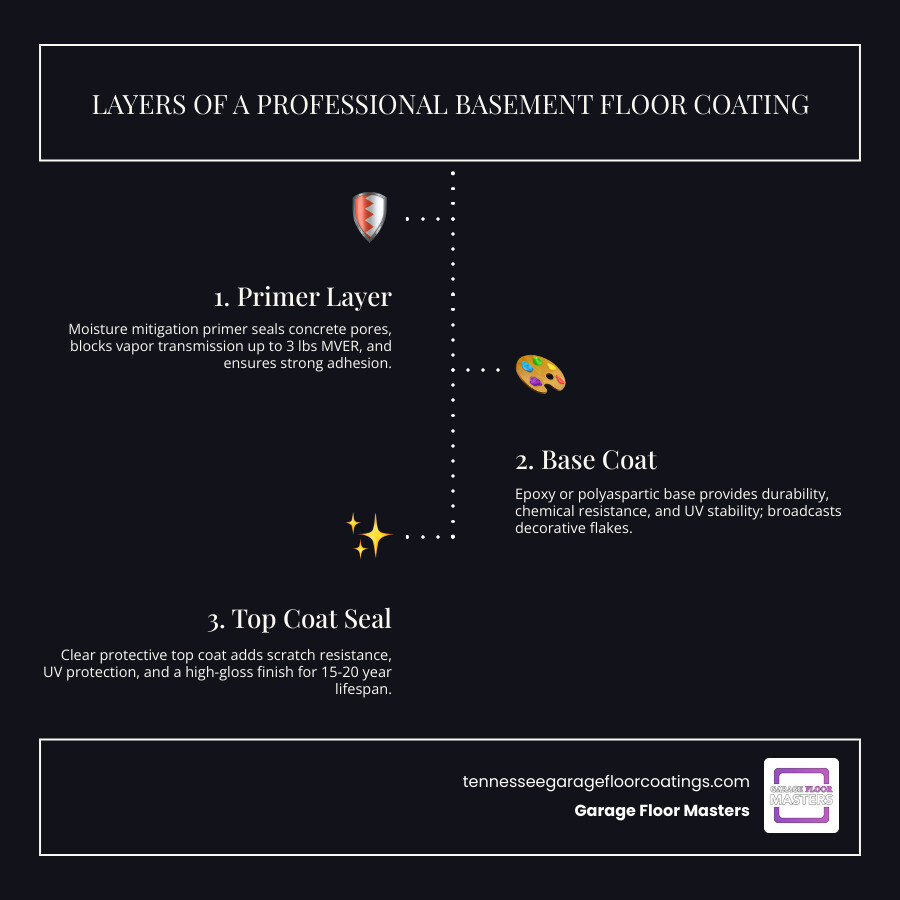
- Surface Assessment: We check for hardness (MOHS test) and moisture.
- Mechanical Grinding: Using HEPA-filtered vacuums and diamond grinders to prep the slab.
- Repair: Filling every crack and divot so the finish is seamless.
- Base Coat: Applying a high-solids polyaspartic or epoxy base.
- Flake Broadcast: We “limitless” broadcast decorative flakes for texture and color.
- Top Coat: Applying a clear, UV-stable top coat. We aim for a total thickness of 16-30 mils—much thicker than the paper-thin paint you find at big-box stores.
This process isn’t just for indoors, either. We often apply similar techniques to Basement Patio Projects where the transition from the basement to the outdoors needs to be seamless and weather-resistant.
Timeline and Curing Expectations in 2026
In the world of May 2026, nobody wants to be locked out of their basement for a week.
- Day 1: Prep, repair, and base coat application.
- Day 2: Top coat application.
- 24 Hours Post-Install: You can walk on it in socks.
- 72 Hours Post-Install: Bring back the heavy gym equipment or pool tables.
Maintenance for Long-Term Durability
One of the best parts about a professionally installed floor is how easy it is to clean. You don’t need wax or harsh chemicals.
- Daily: A simple dust mop or broom.
- Weekly: Use a squeegee and a pH-neutral cleaner.
- Longevity: With basic care, these floors easily last 15+ years.
| Feature | Professional Polyaspartic | Traditional Epoxy |
|---|---|---|
| Cure Time | 24 hours | 3-7 days |
| UV Resistance | Excellent (No yellowing) | Poor (Will yellow) |
| Flexibility | High (Resists cracking) | Low (Brittle) |
| Maintenance | Squeegee/Mop | Scrubbing/Waxing |
Why Hiring Professional Basement Floor Installers is a High-ROI Investment
We get it—the “Save Money” angel on your shoulder is whispering about a $100 bucket of floor paint. But the “Investment” angel knows better. Adding new, professional flooring can yield up to a 70% ROI when selling your home. In Knoxville and Maryville, a finished, moisture-protected basement is a massive selling point.
Understanding the Cost of Professional Basement Floor Installers
Let’s talk numbers. The average homeowner spends about $3,000 on professional flooring installation, with ranges typically falling between $1,500 and $4,500. For high-end flake concrete coatings, you’re looking at roughly $7.00 to $8.00 per square foot.
Why the range? It depends on:
- The condition of your concrete (lots of cracks = more prep).
- Moisture levels (high moisture = specialized primers).
- The specific features and colors you select.
This is why we offer a free on-site estimate. We need to see the “bones” of your basement to give you an honest price.
Avoiding the Pitfalls of DIY Basement Painting
DIY kits are the leading cause of “Floor Regret.” Without industrial grinders, you’re applying paint to a surface that isn’t ready to receive it.
- Adhesion Failure: The paint peels up under your shoes.
- Moisture Entrapment: DIY sealers can trap water, leading to mold growth under the coating.
- Warranty Voidance: Most high-end material warranties are only valid if installed by a certified pro.
Frequently Asked Questions about Basement Flooring
How long does a professional basement floor last?
When installed by professional basement floor installers, a polyaspartic or high-grade epoxy system should last at least 15 to 20 years. Because polyaspartic penetrates the concrete rather than just sitting on top, it doesn’t “peel”—it becomes part of the floor.
Is moisture testing mandatory before installation?
Absolutely. We follow ASTM standards for every job. If an installer says they can “just tell” by looking at the concrete, run the other way. Preventing delamination (the coating popping off) requires scientific data on the slab’s moisture levels.
Can professionals fix uneven or cracked basement slabs?
Yes! Through a combination of diamond grinding (to take down high spots) and self-leveling compounds or specialized menders (to fill low spots and cracks), we can make even a 50-year-old slab look brand new.
Conclusion
Your basement is more than just a place to hide the Christmas decorations. It’s potential square footage that can increase your home’s value and your family’s quality of life. Whether you are in Knoxville, Oak Ridge, Maryville, or any of our surrounding service areas, Garage Floor Masters is here to ensure your transformation is handled with professional precision.
Don’t settle for a dusty, damp slab. Get a floor that is 4x stronger than epoxy, UV stable, and backed by a lifetime limited warranty.
Ready to stop messing around with your basement floor? Basement Floor Coatings are just a phone call away. Contact us today for your free on-site estimate!