
What Does a Pebble Epoxy Patio Actually Cost?
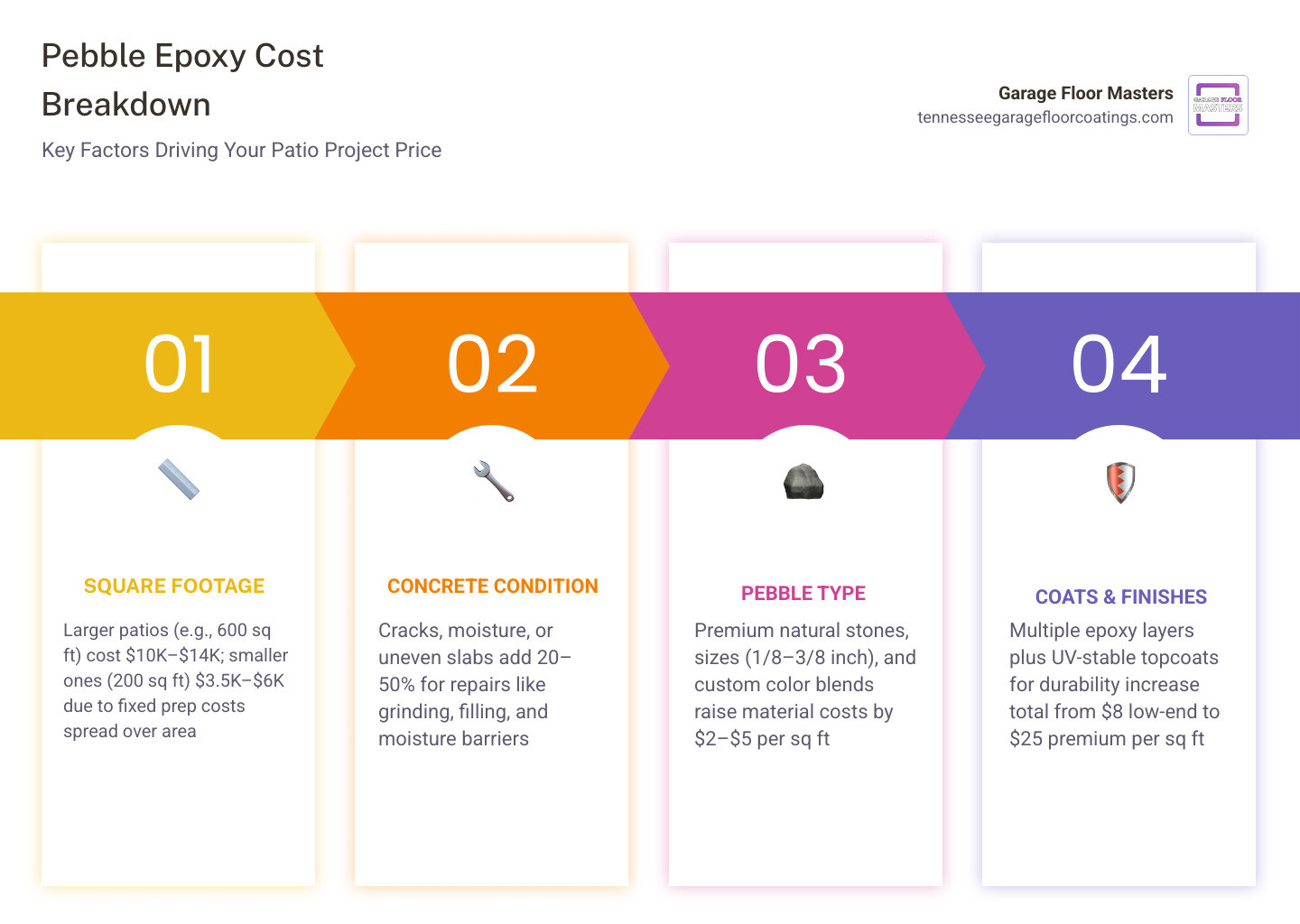
Pebble epoxy patio cost typically ranges from $8 to $25 per square foot installed, depending on the condition of your existing surface and the features you choose. For a standard 200–600 sq ft patio, most homeowners budget somewhere between $3,500 and $14,000 for a complete professional installation.
Here’s a quick snapshot:
| Project Size | Low End | Average | High End |
|---|---|---|---|
| 200 sq ft (basic) | $3,500 | $4,500 | $6,000 |
| 350 sq ft (mid-range) | $5,900 | $7,000 | $8,000 |
| 600 sq ft (premium) | $10,000 | $12,000 | $14,000 |
Key cost factors at a glance:
- Square footage of the patio
- Condition of existing concrete (cracks, moisture, leveling)
- Pebble type, size, and color blend
- Number of epoxy coats and topcoat finish
- Labor rates in your region
Every project is different, so the ranges above are starting points — not fixed prices. The only way to get an accurate number is with a free on-site estimate.
So what is pebble epoxy, and why are so many homeowners looking at it for their patios? In short, it’s a system where small natural stones are mixed with an epoxy resin binder and troweled directly over existing concrete. The result is a surface that looks like natural stone, drains well, and holds up to outdoor conditions — without tearing out your old slab.
It’s a genuinely appealing option. But like any home improvement project, the cost depends heavily on your specific situation. This guide breaks down exactly what you’ll pay, what drives the price up or down, and what to expect from the installation process.
Understanding Pebble Epoxy vs. Traditional Coatings
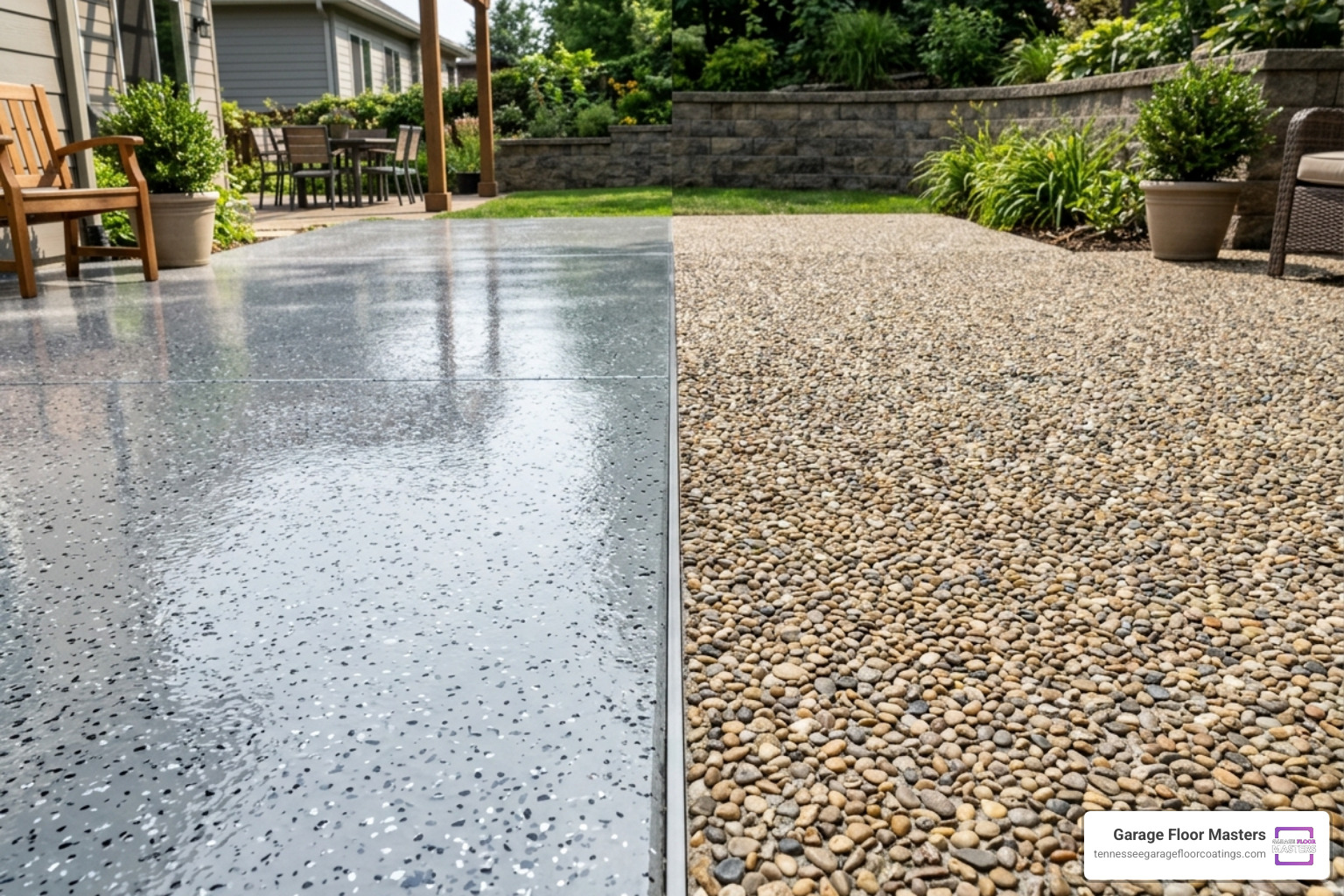
When you hear “epoxy,” you might immediately think of the shiny, smooth floors found in high-end showrooms or modern garages. However, a Decorative Stone Overlay in Knoxville TN is a completely different animal.
Traditional Epoxy Floor Coatings are typically thin-film systems. They are painted or rolled onto the concrete, often with decorative flakes broadcast into the wet resin. While beautiful and durable for indoor use, they create a non-porous, smooth surface.
Pebble epoxy, on the other hand, uses a much higher stone-to-resin ratio (often around 15 parts stone to 1 part resin). This creates a thick, “open-graded” matrix. Because the stones are physically mixed with the binder before being troweled out at a thickness of 1/2 inch to 1 inch, the floor has incredible visual depth.
One of the biggest advantages for patio owners is the built-in slip resistance. While a smooth epoxy can become a skating rink when wet, the natural “peaks and valleys” of the pebbles provide a micro-grip texture that is much safer for poolside lounging or rainy afternoons in East Tennessee.
Pros and Cons for Outdoor Use
Is pebble epoxy the right choice for your backyard? Let’s look at the trade-offs.
The Pros:
- Aesthetic Appeal: It offers a high-end, “resort” look that mimics natural riverbeds or mountain stone.
- Drainage: Because the system is porous, water can often travel through the stone matrix rather than puddling on top (provided your sub-slab is pitched correctly).
- Comfort: Surprisingly, many homeowners find it more comfortable underfoot than plain concrete because the stones don’t absorb as much radiant heat.
- Covering Imperfections: It’s excellent at hiding hairline cracks and minor pitting in your old concrete.
The Cons:
- UV Sensitivity: Standard epoxies can yellow over time when exposed to the harsh Tennessee sun. This is why we often recommend UV-stable topcoats or polyaspartic alternatives.
- Maintenance: To keep it looking fresh and to prevent “stone loss,” you’ll need to Spruce Your Patio in Summer with regular cleaning and a re-glaze every few years.
- Cleaning: Dirt and debris can get trapped between the stones, requiring an occasional pressure wash.
Breaking Down the Pebble Epoxy Patio Cost
When budgeting for your project, it’s helpful to see how the numbers shift based on the “tier” of the project. While we always provide a free on-site estimate to give you a firm price, these 2026 industry averages provide a solid baseline.
| Component | Basic Project | Mid-Range Project | Premium Project |
|---|---|---|---|
| Materials (per sq ft) | $2.50 – $3.50 | $4.00 – $5.50 | $6.00 – $9.00 |
| Labor (per sq ft) | $1.50 – $3.00 | $3.50 – $5.00 | $6.00 – $8.00 |
| Prep Work (Total) | $500 – $1,200 | $1,500 – $3,000 | $3,500+ |
| Total Est. (per sq ft) | $8 – $12 | $13 – $18 | $20 – $25+ |
The Garage Floor Coating Cost for standard flake systems is often lower because the material volume is significantly less. With pebble epoxy, you are paying for hundreds (sometimes thousands) of pounds of natural stone and a substantial amount of specialized resin.
Average Pebble Epoxy Patio Cost per Square Foot
As noted, the pebble epoxy patio cost generally lands between $8 and $25 per square foot. Why such a wide range?
For a large, flat, 1,000-square-foot patio in good condition, the price per square foot usually drops due to economies of scale. However, a small 150-square-foot porch with lots of stairs and vertical edges requires significantly more detail work. Applying pebble epoxy to vertical surfaces (like the face of a step) is incredibly labor-intensive because the material wants to succumb to gravity.
Professional installation is almost always recommended for outdoor Patio Floor Coatings. If the stone-to-resin ratio is off by even a small percentage, the floor may fail to cure properly or the stones may begin to “pop” out within the first year.
Factors That Influence Your Pebble Epoxy Patio Cost
Several “hidden” variables can swing your final quote:
- Stone Type and Rarity: Standard river gravel is affordable. If you want imported marble chips, exotic quartz, or custom color-blended stones, expect the material cost to rise.
- Epoxy Quality: Not all resins are created equal. High-solids, UV-resistant epoxies cost more upfront but prevent the “yellowing” effect common in cheaper DIY kits.
- Surface Preparation: This is the most critical part. If your concrete is crumbling or has major drainage issues, we have to fix those first. Basement Patio Projects often require moisture mitigation or specialized primers to ensure the epoxy bonds for the long haul.
- Custom Borders and Designs: Adding a contrasting color border or a custom logo/medallion into the stone adds significant labor time.
- Moisture Levels: High moisture vapor transmission in the concrete can blow the coating off from the inside out. Testing and treating this adds to the initial investment but saves you from a total failure later.
DIY vs. Professional Installation: A Price Comparison
The temptation to DIY is real. You’ll see various products on Amazon or at big-box retailers like:
- McKinnon Stone Bond: A popular 4-gallon kit (approx. $199.99).
- Decu Accuclear: A 1.5-gallon re-coat kit (approx. $129.00).
- Petra Max Rock Glue: Often used for stabilizing mulch or light gravel (approx. $33.23 for 32oz).
- Easihold Gravel Binder: A ready-to-use binder for paths (approx. $59.99 for 1.3 gallons).
While these products can be great for small repairs or garden paths, a full patio installation is a different beast. DIY costs for materials alone might run you $3 to $6 per square foot, but you have to factor in the cost of renting a diamond grinder, buying specialized trowels, and the risk of a “botched” mix.
Customer reviews for many DIY binders highlight the difficulty of getting a consistent finish. If you mix the stones too “dry,” they won’t stick. If you mix them too “wet,” the epoxy puddles at the bottom, creating an uneven, sticky mess that yellows in the sun.
When you invest in a Floor Coating Upgrade, you aren’t just paying for the stone; you’re paying for the industrial-grade equipment and the expertise to handle Tennessee’s humidity and temperature swings.
The Installation Process and Prep Work
A professional install isn’t just “mix and pour.” Here is the typical workflow:
- Preparation: We start with diamond grinding or high-pressure washing to open the concrete pores. This is the most important step for Garage Floor Coatings and patios alike.
- Repair: We fill cracks and pits with a specialized epoxy filler.
- Priming: A “tack coat” or primer is often applied to ensure the stone mix doesn’t slide and bonds deeply into the slab.
- Mixing: We mix the stones and resin in precise batches using a mortar mixer or large-capacity drill.
- Troweling: Our crews hand-trowel the mixture to a consistent depth, usually 1/2 inch. This requires a “feel” for the material to ensure it’s flat and compacted.
- Curing: The floor needs 24–48 hours to cure before foot traffic and up to a week for a full chemical cure.
Long-Term Value: Durability, Maintenance, and Alternatives
In Knoxville and surrounding areas like Maryville or Sevierville, our floors have to survive “The Big Freeze” in winter and “The Big Bake” in summer. Pebble epoxy is flexible enough to handle these freeze-thaw cycles better than rigid tile, which often cracks when the ground shifts.
A well-maintained pebble patio can last 10 to 15 years. To reach that milestone, you should:
- Clean it annually: Use a garden hose and a mild soap to wash out dust.
- Re-glaze: Every 3–5 years, apply a fresh clear topcoat to keep the stones “locked” in place and maintain the shine. This usually costs about $1.50 to $2.50 per square foot.
If you love the look but want something even tougher, consider Garage Porch and Patio in Silverton Flake Knoxville TN. At Garage Floor Masters, we specialize in polyaspartic coatings. While pebble epoxy is beautiful, our polyaspartic systems are 4x stronger than epoxy, UV-stable (they won’t yellow), and can be installed in just one day.
With over 140 Flake Colors available, you can get a decorative look that is even lower maintenance than pebble stone.
Frequently Asked Questions about Pebble Epoxy
How long does a pebble epoxy patio last?
With professional installation and regular maintenance (re-glazing every 3-5 years), you can expect a lifespan of 10 to 15 years. Without maintenance, the stones can begin to break loose (raveling) as the epoxy breaks down from UV exposure.
Is pebble epoxy slippery when wet?
Actually, it’s one of the most slip-resistant Patio Floor Coatings available. The texture of the natural stones provides excellent traction. For pool decks, we can even add specialized “anti-skid” glass beads into the final topcoat for extra safety.
Can pebble epoxy be installed over cracked concrete?
Yes! One of its biggest selling points is that it is an “overlay.” It can bridge small hairline cracks and level out minor dips. However, if your concrete has major structural cracks (wider than a quarter-inch) or is actively sinking, those issues must be addressed before the overlay is applied.
Conclusion
A pebble epoxy patio is a fantastic way to transform a tired, gray concrete slab into a beautiful, natural-looking outdoor oasis. While the pebble epoxy patio cost of $8 to $25 per square foot is an investment, the increase in property value and the sheer enjoyment of your outdoor space often make it well worth the price.
At Garage Floor Masters, we are proud to serve homeowners across East Tennessee—from Knoxville and Oak Ridge to Maryville, Sevierville, and Loudon. Whether you are looking for the natural look of stone or the indestructible power of our one-day polyaspartic coatings, we are here to help.
Ready to see what your project will cost? Our experts will come to your home, measure your space, and provide a detailed, no-obligation quote based on your specific needs.